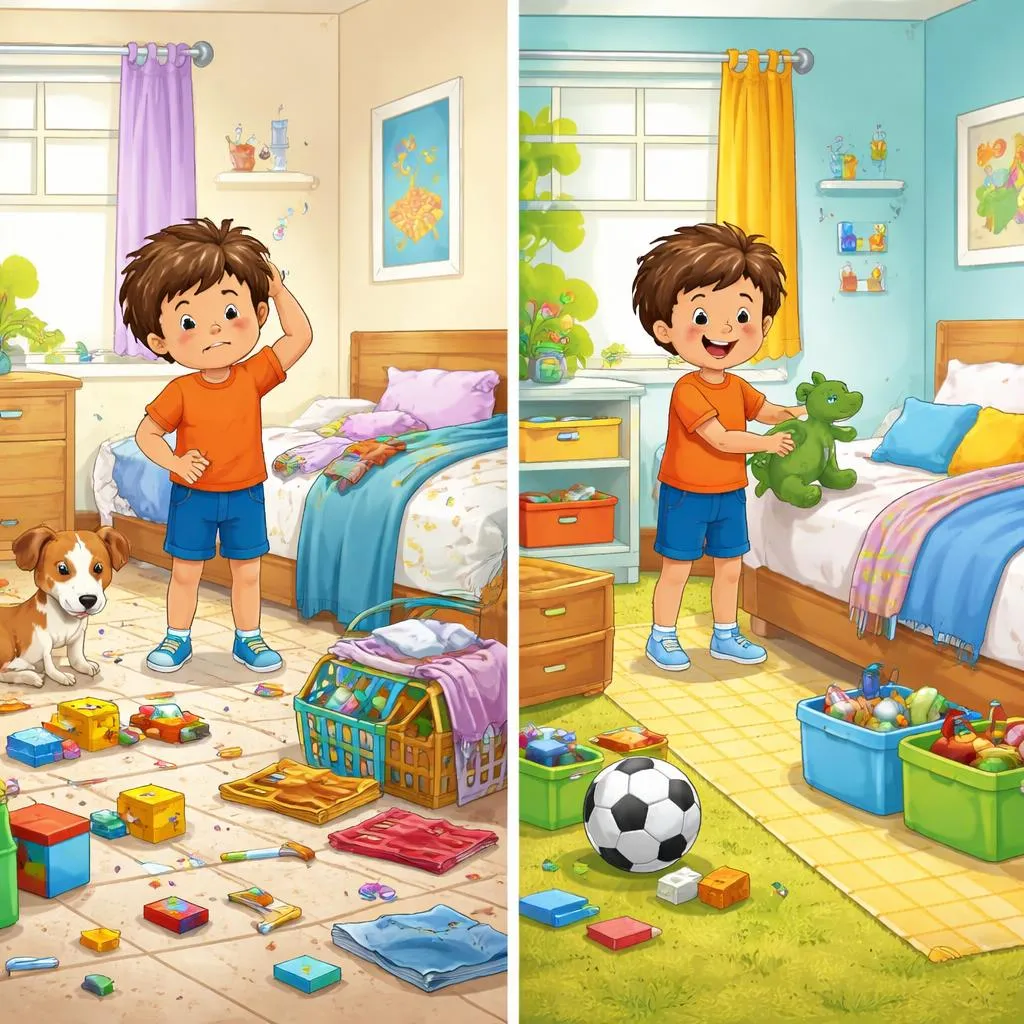

Bedrooms get messy. Toys on the floor. Clothes on chairs. Two common phrases ask for order. “Clean up” and “Tidy up.” Both mean “make a space neat.” But one can mean washing and scrubbing. One means putting things in their place. Parents and kids can learn together. Cleaning is a life skill. The right words tell a child what to do. Let us explore these two organizing expressions.
What Do These Expressions Mean? “Clean up” means “remove dirt, spills, or trash. Make a space sanitary and fresh.” It can involve soap, water, wipes, or a vacuum. It is about hygiene and removing grime.
For a child, think of wiping spilled juice off the table. “Clean up” says “Use a cloth. Make it spotless. Remove the sticky mess.”
“Tidy up” means “put things in their proper places. Arrange items neatly. Remove clutter.” It is about organization, not dirt.
For a child, think of putting LEGOs in a bin and books on a shelf. “Tidy up” says “Put everything where it belongs. Make the room look neat.” Both phrases mean to improve a space. Both say “make it better.” They seem similar because people use both when a room is messy. Yet one is about removing dirt. One is about organizing objects.
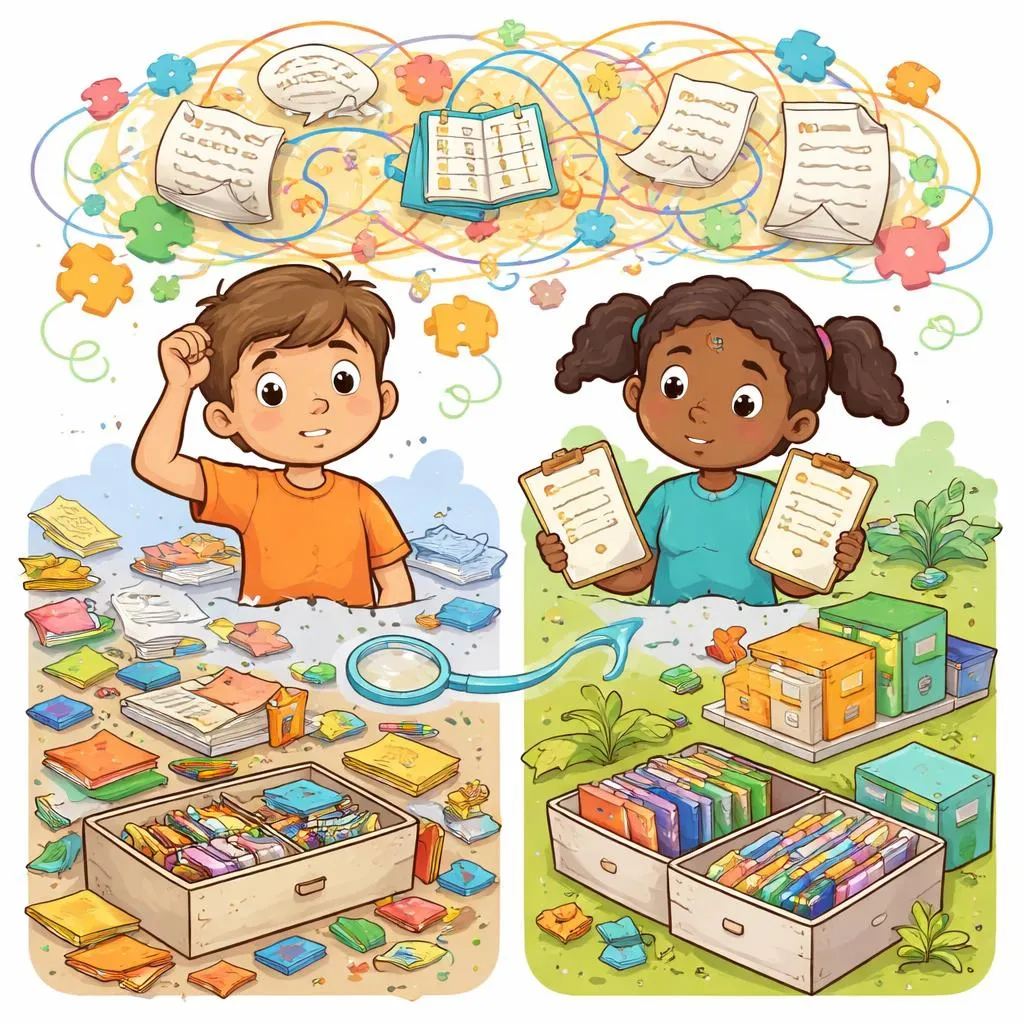
What’s the Difference? The main difference is dirt versus clutter. “Clean up” involves removing dirt, spills, germs, or trash. You clean a sticky table or a dirty floor. “Tidy up” involves putting objects away. You tidy toys, clothes, and papers.
Another difference is tools. “Clean up” uses soap, water, sponges, brooms, vacuums. “Tidy up” uses hands, bins, shelves, hooks. No soap needed.
One more difference is frequency. You tidy up every day. You put toys away. You clean up when there is a spill or once a week for deep cleaning.
Also, “clean up” can mean to wash yourself. “Go clean up before dinner.” That means wash hands and face. “Tidy up” does not mean that.
Teach children that both improve a room. One removes dirt. One organizes items.
When Do We Use Each One? Use “Clean up” for spills and dirt. “Clean up the spilled milk.” “Clean up the mud on your shoes.” “Clean up the paint on the table.”
Use “Clean up” for bathrooms and kitchens. “Clean up the bathroom sink.” “Clean up the kitchen counter.”
Use “Clean up” for your body. “Go clean up before dinner.”
Use “Tidy up” for toys and clutter. “Tidy up your LEGOs.” “Tidy up the books on the shelf.” “Tidy up your clothes.”
Use “Tidy up” for daily straightening. “Before bed, tidy up your room.” “Tidy up the living room before guests come.”
Use “Tidy up” for arranging things neatly. “Tidy up the pillows on the couch.”
Parents can model both. Say “clean up” for dirt and spills. Say “tidy up” for putting things away.
Example Sentences for Kids Here are simple sentences children can say.
Clean up:
Please clean up the juice you spilled.
I cleaned up my room with a vacuum.
Clean up the paintbrushes in the sink.
After the party, we cleaned up the mess.
Go clean up your hands before dinner.
Tidy up:
Tidy up your toys before bed.
I tidied up my desk and found my pencil.
Please tidy up the shoes by the door.
She tidied up the blankets on the couch.
Tidy up your closet. It is a mess.
Read these aloud. Notice how “clean up” is for dirt and spills. Notice how “tidy up” is for organizing objects.
Common Mistakes to Avoid Children make mistakes with these phrases. Here are common errors.
Mistake 1: Using “tidy up” for a sticky spill. “Tidy up the spilled syrup” is wrong. You cannot tidy liquid. You must clean it. Correct: Say “Clean up the spilled syrup.”
Mistake 2: Using “clean up” for putting toys away. “Clean up your LEGOs” is common but not precise. You are not washing LEGOs. You are tidying them. Correct: Say “Tidy up your LEGOs” for putting them away.
Mistake 3: Forgetting that “clean up” includes washing yourself. “Tidy up before dinner” does not mean wash hands. Correct: Say “Clean up before dinner” for washing.
Mistake 4: Using “tidy up” for a dirty bathroom. “Tidy up the toilet” is wrong. The toilet needs cleaning, not tidying. Correct: Say “Clean up the toilet.”
Mistake 5: Not doing either. The biggest mistake is leaving the mess. Correct: Always clean or tidy when asked.
Easy Memory Tips Here are simple memory tricks.
Memory tip 1: Think of a sponge and a bin. “Clean up” is a sponge. Removes dirt. “Tidy up” is a bin. Puts things away.
Memory tip 2: Use your hands. Wipe motion for “clean up.” Putting-hand motion for “tidy up.”
Memory tip 3: Ask “is it dirty or just messy?” Dirty = “clean up.” Messy (things out of place) = “tidy up.”
Memory tip 4: Draw two pictures. A child wiping a table = “clean up.” A child putting toys in a box = “tidy up.”
Memory tip 5: Use the “spill test.” If you can wipe it with a cloth, say “clean up.” If you can pick it up with your hands, say “tidy up.”
Practice these tips during daily chores. Name the action.
Quick Practice Time Try these exercises. Parents read aloud. Children answer.
Exercise 1: Choose the best phrase.
Your child spilled cereal and milk on the floor. Do you say: a) Clean it up b) Tidy it up
Your child left clothes and toys all over their room. Do you say: a) Clean up your room b) Tidy up your room
Your child has paint on their hands. Do you say: a) Tidy up your hands b) Clean up your hands
Answers: 1(a), 2(b), 3(b)
Exercise 2: Fill in the blank.
“Please __________ the mud off your boots.” (remove dirt)
“Let us __________ the living room before Grandma comes.” (put things in place)
Answers: 1. clean up, 2. tidy up
Bonus: Play the “Dirty or Messy” game. Name a situation. “Spilled juice.” “Toys on floor.” “Dirty sink.” “Books on couch.” “Muddy shoes.” The child says “clean up” (dirty) or “tidy up” (messy). Discuss why.
Wrap-up Use “clean up” for removing dirt, spills, and grime; also for washing yourself. Use “tidy up” for putting objects in their proper places and arranging things neatly. Both make a space better. One removes dirt. One organizes clutter. Teach children that a clean home is healthy. A tidy home is peaceful. Do both every day. Clean up after spills. Tidy up before bed. Small actions make a big difference. Happy cleaning. Happy tidying. A neat space is a happy space.