
Telling a story in English feels magical. You can describe what happened. You can also set the scene. But sometimes one action interrupts another. That is where past continuous and past simple work together.
Children often mix these two tenses. Adults do too. That is normal. Learning to combine them creates clear, exciting stories. This guide helps parents and kids understand the difference. You will read together. You will practice together. And you will feel proud of your progress.
Let us begin with the basics.
What Is Past Continuous and Past Simple?
Past simple describes finished actions. The action started and ended in the past. It is like a dot on a timeline. For example: “She opened the door.” The opening happened once. It ended.
Past continuous describes actions in progress. The action took time. It is like a line on a timeline. For example: “She was walking home.” The walking continued for a while.
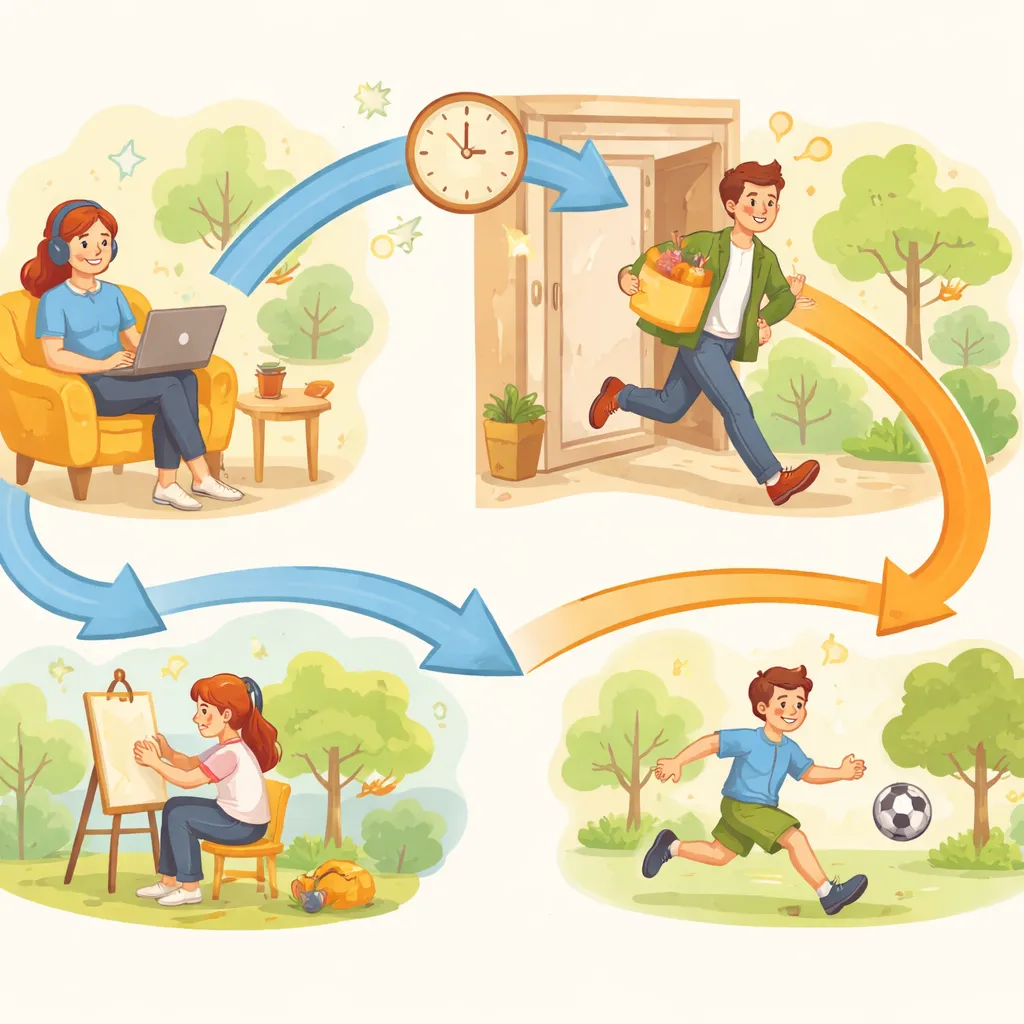
Now combine them. One action interrupts another. “She was walking home when it started to rain.” Walking (past continuous) took time. Starting to rain (past simple) happened in one moment. The rain interrupted the walk.
Think of a movie. The past continuous shows the background scene. The past simple shows the main event. Together they tell a complete story.
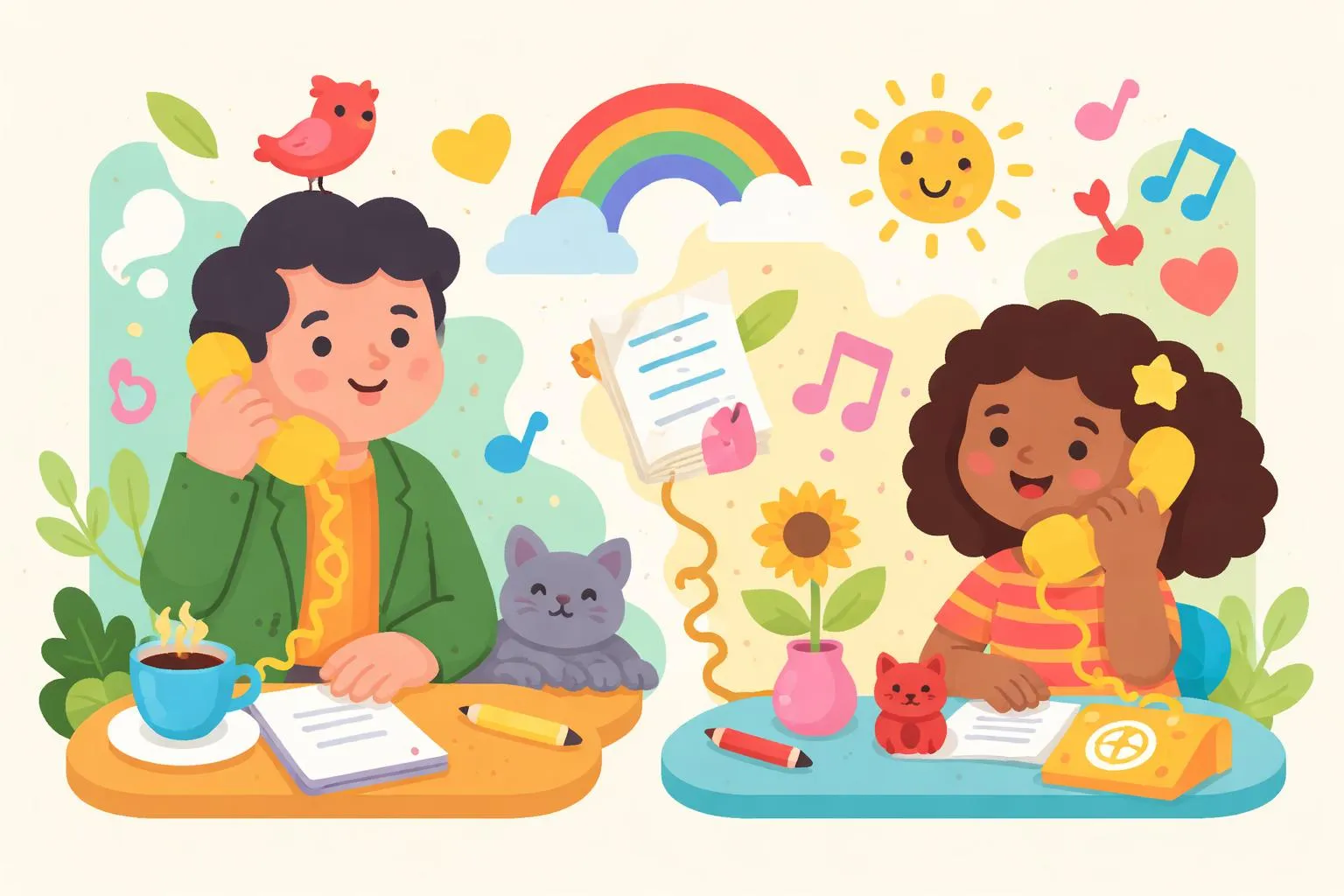
Children understand this easily with examples. “I was eating dinner when the phone rang.” Eating took time. The phone rang suddenly. The ring interrupted the meal.
Parents can ask: What were you doing when something happened? This question uses both tenses naturally.
Rules of Past Continuous and Past Simple
Rules help us avoid mistakes. They are simple to learn.
Past simple rule: Use verb + -ed for regular verbs. Example: walk → walked. Use special forms for irregular verbs. Example: go → went, eat → ate, see → saw.
Past continuous rule: Use was/were + verb + -ing. I/he/she/it + was. You/we/they + were. Example: I was sleeping. They were playing.
Combined rule: Use past continuous for the longer action. Use past simple for the shorter interruption. Connect them with “when” or “while.”
“When” usually comes before the past simple action. “When the phone rang, I was taking a shower.” The phone rang first? No. The shower started first. The phone rang during the shower.
“While” usually comes before the past continuous action. “While I was taking a shower, the phone rang.” Same meaning. Different word order.
Remember: The past continuous action starts first. The past simple action happens later. The simple action interrupts the continuous one.
Children remember this rule: Long action = was/were + -ing. Short action = past simple. The short action cuts into the long action like scissors.
How to Use Past Continuous and Past Simple
Use these tenses together in three common situations.
Situation one: Interruptions
Something stops another action. “I was reading a book when my brother shouted.” Reading took time. Shouting happened fast. The shout broke the reading.
Situation two: Background and event
Set the scene with past continuous. Then state the main event with past simple. “The sun was shining. Birds were singing. Then a car stopped outside.” The sun and birds set the scene. The car stopping is the event.
Situation three: Two actions at the same time
Sometimes two continuous actions happen together. But one action might interrupt the other. “While Mom was cooking, Dad was watching TV. Then the smoke alarm beeped.” Mom and Dad did two long actions. The beep interrupted both.
Parents can use daily life as examples. “You were playing with your toy when I called your name.” “We were driving home when we saw a rainbow.” Real moments make learning stick.
Children can practice by describing their day. “I was brushing my teeth when I remembered my homework.” “My friend was telling a joke when the teacher walked in.” These sentences feel natural. They tell small stories.
Examples of Past Continuous and Past Simple
Examples build confidence. Read these aloud with your child.
Example set one: Interruptions
She was walking to school when she found a coin.
They were watching a movie when the power went out.
He was fixing his bike when he hurt his finger.
We were laughing at a video when the doorbell rang.
Example set two: Scenes and events
The wind was blowing strongly. Suddenly a tree branch fell.
Everyone was dancing happily. Then the music stopped.
The baby was sleeping peacefully. A loud truck passed by.
I was thinking about dinner. My friend texted me a photo of pizza.
Example set three: While and when
While I was waiting for the bus, I saw an old friend.
When the teacher arrived, the students were talking loudly.
While the cat was sleeping, the mouse ran across the floor.
When the rain started, we were playing soccer in the park.
Example set four: Questions
What were you doing when the earthquake happened?
Was it raining when you left the house?
Who was singing when you walked into the room?
Were you sleeping when I called last night?
Read each example twice. Ask your child to identify the long action (past continuous) and the short action (past simple). This takes five minutes. It works like a game.
Common Mistakes
Mistakes help us learn. Do not fear them. Fix them gently.
Mistake one: Using past simple for both actions
Wrong: “I ate dinner when the phone rang.”
Right: “I was eating dinner when the phone rang.”
The eating took time. The ringing interrupted. Both actions cannot be past simple. The long action needs past continuous.
Mistake two: Using past continuous for the interruption
Wrong: “I was sleeping when my alarm was ringing.”
Right: “I was sleeping when my alarm rang.”
The alarm ringing is short. It is an interruption. It needs past simple.
Mistake three: Forgetting “was” or “were”
Wrong: “They playing outside when it started to rain.”
Right: “They were playing outside when it started to rain.”
Past continuous needs was or were. Always check.
Mistake four: Wrong irregular verb form
Wrong: “She breaked her toy while she was playing.”
Right: “She broke her toy while she was playing.”
Break is irregular. Broke is past simple. Practice irregular verbs slowly. Make a list together.
Mistake five: Using “while” incorrectly
Wrong: “While the phone rang, I was cooking.”
Right: “When the phone rang, I was cooking.” or “While I was cooking, the phone rang.”
“While” prefers the long action. “When” works with the short action. But both can work if you change word order.
Celebrate mistakes as steps forward. Every wrong sentence teaches a new right sentence.
Comparison: Past Continuous vs. Past Simple Alone
Sometimes you only need one tense. Other times you need both.
Past simple alone: List of actions. One after another. “I woke up. I ate breakfast. I went to school.” This tells a sequence. No interruption. No background.
Past continuous alone: Describe a scene. No event. “The sun was shining. Birds were singing. Children were laughing.” This paints a picture. Nothing happens suddenly.
Both together: Scene plus event. “The sun was shining when a dark cloud appeared.” The shining scene continues. The appearing event interrupts.
Think of a photo album. Past simple alone is one photo. Past continuous alone is a video with no action. Both together is a video where something suddenly changes.
Children understand with this example: “I walked home” (one photo). “I was walking home” (video of walking). “I was walking home when I saw a shooting star” (video plus exciting moment).
Use past simple alone for quick reports. “She closed the window.” Use past continuous alone for descriptions. “She was closing the window slowly.” Use both for stories. “She was closing the window when a butterfly flew inside.”
Practice Exercises
Try these exercises with your child. Write answers on paper. Take your time.
Exercise one: Choose the correct tense
Fill in the blank with past continuous or past simple.
I __________ (watch) TV when the lights __________ (go) out.
While we __________ (eat) lunch, the dog __________ (run) away.
She __________ (read) a book when her friend __________ (call).
They __________ (play) soccer when it __________ (start) to snow.
He __________ (drive) to work when he __________ (see) an accident.
Exercise two: Correct the mistakes
Each sentence has one mistake. Rewrite the sentence correctly.
I sleeped when the phone ringed.
While she was cook dinner, the cat was jump on the table.
They were play video games when their mom came home.
He was walking to the store when he was finding a wallet.
We were study when the fire alarm was ringing.
Exercise three: Complete the sentence
Finish each sentence with your own idea. Use both tenses.
While I was doing my homework, _______________.
When the teacher walked into the room, _______________.
My sister was singing loudly when _______________.
We were riding our bikes when _______________.
The dog was sleeping peacefully when _______________.
Exercise four: Write two short stories
Write three sentences for each story. Use both tenses.
Story A: A surprise visitor at dinner time.
Story B: An interruption during your favorite TV show.
Answers and Explanations
Check your answers together. Explain each correction.
Answers for exercise one:
was watching, went
were eating, ran
was reading, called
were playing, started
was driving, saw
Answers for exercise two:
6. I was sleeping when the phone rang.
(Sleep and ring are irregular. Use past continuous for sleeping. Use past simple for rang.)
While she was cooking dinner, the cat jumped on the table.
(Cook needs was. Jump is regular. Use past simple jumped for the interruption.)
They were playing video games when their mom came home.
(Play needs were. Playing is correct. Come is irregular. Came is past simple.)
He was walking to the store when he found a wallet.
(Find is irregular. Found is past simple. Do not use was finding.)
We were studying when the fire alarm rang.
(Study changes to studying. Remove y, add ing. Ring is irregular. Rang is past simple.)
Explanations for common patterns:
The long action always uses was/were + -ing.
The short interruption always uses past simple.
“When” connects both naturally.
“While” starts the long action first.
If your child made mistakes, review the Rules section. Practice one more time. Laugh about the funny sentences. Learning works best with patience and smiles.
Learning Tips
Make grammar a daily habit. Five minutes each day works better than one hour each week.
Tip one: Tell bedtime stories differently.
Say one sentence with both tenses. “The princess was sleeping when the dragon roared.” Ask your child to add the next sentence. “The dragon was breathing fire when the knight arrived.” Take turns.
Tip two: Use picture books.
Open any children’s book. Point to a picture. Ask “What was happening when the main character appeared?” Describe the scene together.
Tip three: Create interruption games.
One person starts a long action. “I was walking through a jungle.” The other person interrupts. “When a monkey stole my hat!” Switch roles. Make it silly.
Tip four: Write a family journal.
Every night, write one sentence about your day. “We were eating dinner when the delivery person knocked.” Read last week’s sentences. See how much you learned.
Tip five: Listen for both tenses in songs and shows.
Pause a cartoon. Ask “What was the character doing when something changed?” Kids learn faster when grammar connects to fun moments.
Tip six: Celebrate small wins.
Did your child say “I was brushing my teeth when I dropped my toothbrush”? That is perfect grammar. Give a high five. Notice the success. Do not correct every mistake. Correct one thing at a time.
Tip seven: Be the learner too.
Parents can say “I was making coffee when I forgot the sugar. Is that past continuous and past simple?” Children love teaching adults. Let them explain the rules to you.
Learning past continuous and past simple together opens doors to storytelling. Your child will describe memories clearly. They will write creative stories. They will understand English movies and books better.
Keep practicing for five minutes daily. Use the examples in this guide. Laugh at the silly interruption sentences. You will see progress in two weeks.
Now go tell a story together. “Once upon a time, a child was learning grammar when suddenly…”