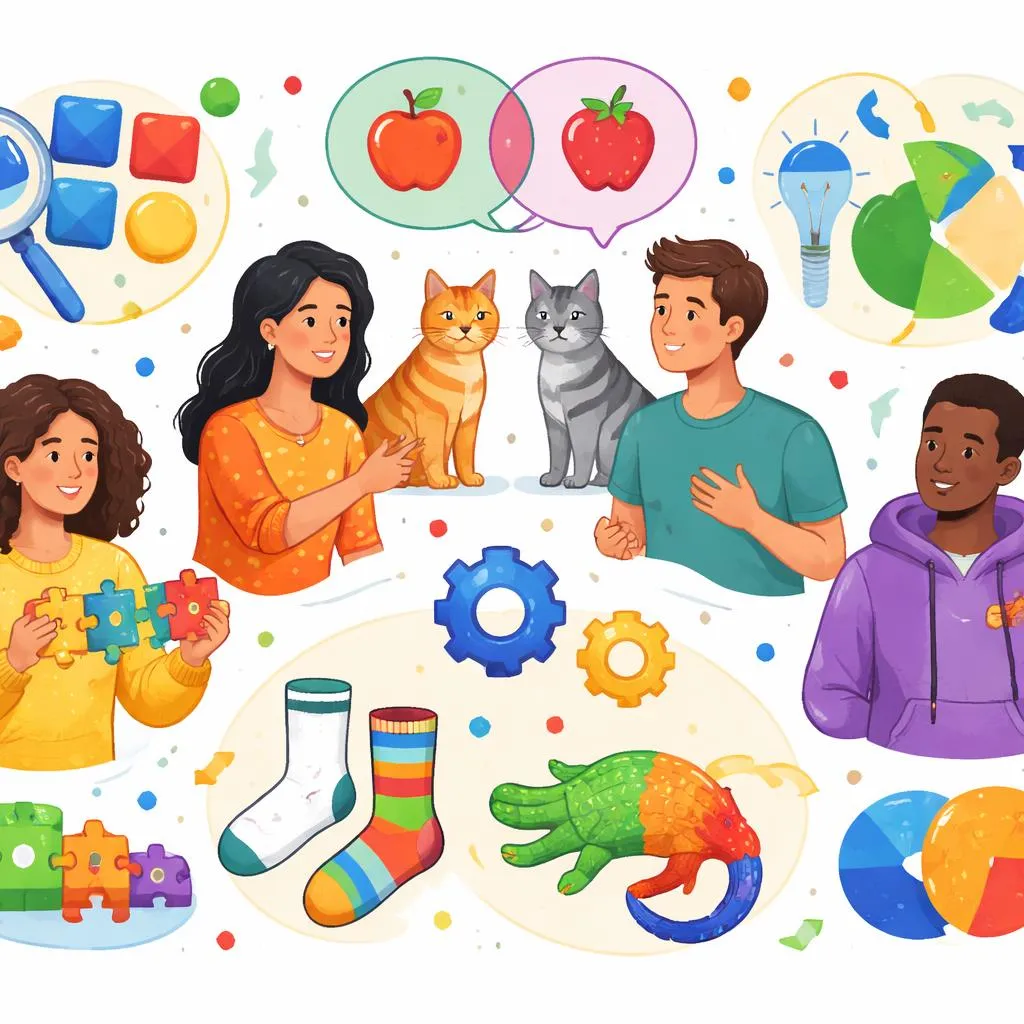

What Does “Same Word, Different Forms” Mean? One root word can grow into four comparing forms. “Differ, difference, different, differently” share one meaning. That meaning is “to be not the same.” Each form has a different job in a sentence. One word shows an action. One word names a way things are not the same. One word describes things that are not the same. One word tells how something is done in another way. Learning these four forms builds respect for diversity.
Personal Pronouns Change Their Form This rule applies to pronouns like “they, them, their.” But word families work the same way for other words. “Differ” is a verb. “Difference” is a noun. “Different” is an adjective. “Differently” is an adverb. Each form answers a different question. What action? Differ. What thing or amount? Difference. What kind of thing? Different. How is something done? Differently.
From Verb to Noun to Adjective to Adverb – One Family, Many Words This family starts with the verb “differ.” People differ in their opinions. Twins may differ in height. From “differ,” we make the noun “difference.” “Difference” names the way things are not the same. Example: “The difference between a square and a circle is clear.” From “differ,” we make the adjective “different.” “Different” describes things that are not the same. Example: “My backpack is different from yours.” From “different,” we make the adverb “differently.” “Differently” tells how an action is done in another way. Example: “He solved the puzzle differently than his sister.”
One Root, Many Roles – How Words Grow from Actions to Qualities Think of two children drawing a cat. Their drawings “differ” in color and shape. That is the verb. The way the drawings are not the same is the “difference.” That is the noun. The drawings themselves are “different” from each other. That is the adjective. Each child draws “differently” using their own style. That is the adverb. The root meaning stays “not the same.” The role changes with each sentence.
Same Meaning, Different Jobs – Is It a Verb or a Noun? “Differ” is always a verb. It shows the action of being not the same. Example: “Your answer differs from mine.” “Difference” is always a noun. It names the way things are not the same. Example: “The difference in age is two years.” “Different” is always an adjective. It describes nouns. Example: “We have different favorite colors.” “Differently” is always an adverb. It describes how actions are done. Example: “You and I think differently about this.” Same family. Different jobs.
Adjectives and Adverbs – When Do We Add -ly? “Different” becomes “differently” by adding -ly. This is a simple and common pattern. Important becomes importantly. Patient becomes patiently. Quiet becomes quietly. “Differently” follows the same rule. The adverb describes actions done in another way. Example: “The two teams approached the game differently.”
Watch Out for Tricky Spelling Changes (Double Letters, y to i, and More) “Differ” has no double letters. But it has a double “f”? Differ – D i f f e r. Yes, double “f.” When we add “-ence,” we keep the double “f.” Differ + ence = difference (double f). When we add “-ent,” we keep the double “f.” Differ + ent = different (double f). When we add “-ly,” we keep “different” and add “ly.” Different + ly = differently (double f in the middle of different, then add ly). A common mistake is writing “differ” with one “f” (difer). The correct spelling has double “f” – differ. Another mistake is writing “difference” with one “f” (diference). The correct spelling has double “f” – difference. Another mistake is writing “different” with an “a” after the “e” (differant). The correct spelling is different (e then e? no – d i f f e r e n t. Yes, two e’s and two f’s.) Write slowly at first. Remember: differ, difference, different, differently.
Let’s Practice – Can You Choose the Right Form? Try these sentences with your child. Fill in the blank with differ, difference, different, or differently.
Cats and dogs _______ in many ways.
The _______ between the two toys is the color.
We have _______ opinions about the movie.
She tied her shoes _______ than her friend.
How do these two pictures _______?
Can you spot the _______ in these two drawings?
Each person has a _______ way of learning.
He _______ solved the problem using a new method.
Answers:
differ
difference
different
differently
differ
difference
different
differently
Go through each answer slowly. Ask your child why the word fits. Praise effort and open-minded thinking. Keep practice short and respectful.
Tips for Parents – Help Your Child Learn Word Families in a Fun Way You can teach “differ, difference, different, differently” through daily life. Use food, clothes, and preferences.
At dinner, say “Our tastes differ. You like broccoli, I do not.” Ask “What action word did I use?”
When you compare two toys, say “The difference is the size.” Ask “What is a difference?”
When you choose shirts, say “We picked different colors.” Ask “What does different mean?”
When you solve a problem, say “You approached it differently than me.” Ask “What does differently mean?”
Play a “spot the difference” game. Write the four words on sticky notes. Say a sentence. Let your child hold up the correct word. Example: “Our answers differ.” Child holds “differ.” “The difference is small.” Child holds “difference.” “We have different shoes.” Child holds “different.” “She walks differently.” Child holds “differently.”
Draw a four-part poster. Write “differ” with a picture of two paths going apart. Write “difference” with a picture of a Venn diagram. Write “different” with a picture of two different fruits. Write “differently” with a picture of two ways to draw a star. Hang it on the wall.
Use a “how are we different” game. Say “You have brown hair. I have blonde. That is a difference.” Ask “What else is different about us?”
Keep each session under five minutes. Repeat games on different days. Children learn through playful comparison and acceptance.
When your child makes a mistake, smile. Say “Good try. Let me show you again.” Use the correct word in a simple sentence. Then continue.
No need for grammar drills. No need for tests. Just warm examples and real differences every day. Soon your child will master “differ, difference, different, differently.” That skill will help them compare things, respect diversity, and express uniqueness.