
Children want more. More crackers. More playtime. More stories. Two common words describe extra amount. “More” and “Additional.” Both mean “extra” or “increasing the number.” But one is everyday speech. One is more formal. Parents and kids can learn together. Asking for more is normal. The right words make your request clear. Let us explore these two increase expressions.
What Do These Expressions Mean? “More” means “a greater amount or number.” It is the simplest way to ask for extra. One word. Four letters. Everyone understands it.
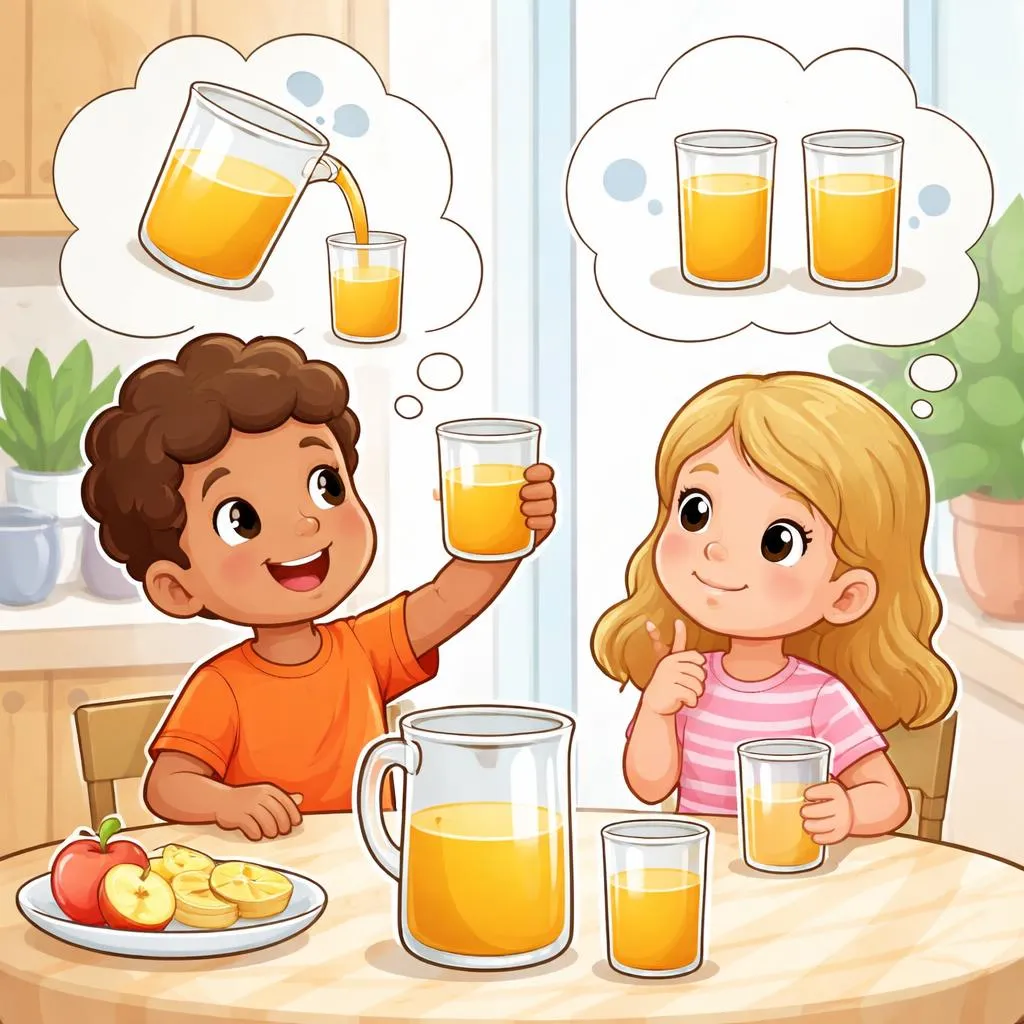
For a child, think of an empty cup. “More” says “Give me extra. Fill it again. I want what I had before plus some.”
“Additional” means “extra, added to what is already there.” It comes from “add.” It sounds more formal and specific. It often appears in instructions or lists.
For a child, think of a pizza with extra toppings. “Additional” says “Besides the cheese, we need extra pepperoni.” Both phrases mean extra. Both say “not less, not the same.” They seem similar because people use both when the first amount is not enough. Yet one is for everyday talk. One is for formal or written instructions.
What’s the Difference? The main difference is formality. “More” is casual and everyday. You say it at the dinner table. In the car. At a friend’s house. “Additional” sounds formal. You see it on forms, in rules, or in school assignments.
Another difference is usage. “More” works as an adjective, adverb, or noun. “More juice” (adjective). “Eat more” (noun). “More quickly” (adverb). “Additional” is only an adjective. You cannot say “eat additional.” It needs a noun. “Additional food.”
One more difference is length. “More” has one syllable. Quick. “Additional” has four syllables. It takes longer to say.
Also, “more” can stand alone. “Want more?” “Yes, more.” “Additional” cannot stand alone. “Want additional?” sounds strange.
Teach children that both mean extra. One is for fast, everyday requests. One is for formal descriptions.
When Do We Use Each One? Use “More” for everyday requests. “Can I have more milk?” “I want more time to play.” “More cookies, please.” It is natural and kind.
Use “More” for comparisons. “She has more toys than me.” “This is more fun.” “More” works for any situation.
Use “More” as a short answer. “More?” “Yes, please.” Simple and clear.
Use “Additional” for formal instructions. “Please answer the additional questions on page two.” “Additional fees may apply.” This sounds official.
Use “Additional” in writing. “We need additional volunteers.” “The additional cost is five dollars.” It looks professional.
Use “Additional” when you want to sound careful or precise. “In addition to the three books, we have two additional resources.” It avoids repeating “more.”
Parents can model both. Say “more” for everyday wishes. Use “additional” when explaining rules or writing lists.
Example Sentences for Kids Here are simple sentences children can say.
More:
Can I have more crackers, please?
I want more time on the swing.
There is more snow today than yesterday.
More than half the class is here.
Please pour more juice into my cup.
Additional:
The teacher gave us additional homework.
We need an additional chair for the guest.
There is an additional charge for extra cheese.
Please read the additional notes at the bottom.
She bought an additional gift for her friend.
Read these aloud. Notice how “more” sounds natural for requests. Notice how “additional” sounds more like an instruction or fact.
Common Mistakes to Avoid Children make mistakes with these words. Here are common errors.
Mistake 1: Using “additional” in everyday requests. “Can I have additional juice?” This sounds too formal for a child. Correct: Say “Can I have more juice?”
Mistake 2: Using “more” when “another” is better. “I want more cookie” (one cookie) should be “another cookie.” “More cookie” could mean a bigger cookie or an extra cookie. Correct: Use “another” for one extra item. Use “more” for a larger amount.
Mistake 3: Forgetting that “additional” needs a noun after it. “I need additional.” This is incomplete. Additional what? Correct: Say “I need additional time” or “I need more.”
Mistake 4: Using “more” after “another.” “Another more cookie” is wrong. Correct: Say “another cookie” or “one more cookie.”
Mistake 5: Overusing “additional” in speech. It sounds strange to say “additional” many times in a casual conversation. Correct: Use “more” for speech. Save “additional” for writing.
Easy Memory Tips Here are simple memory tricks.
Memory tip 1: Think of a quick hand and a formal letter. “More” is a quick hand reaching out. “More, please.” “Additional” is a formal letter. “Additional information enclosed.”
Memory tip 2: Use your hands. Cup your hands for “more” (give me more). Tap one finger on your other hand for “additional” (adding one more item).
Memory tip 3: Ask “am I talking or writing?” Talking = “more.” Writing a form or list = “additional.”
Memory tip 4: Draw two pictures. A child asking for more juice with a smile = “more.” A list with a bullet point saying “additional item” = “additional.”
Memory tip 5: Use the “another” test. If you mean one more of something, say “another.” If you mean a larger amount, say “more.” If you are writing formally, say “additional.”
Practice these tips during meals. Ask for more. Notice when “another” fits better.
Quick Practice Time Try these exercises. Parents read aloud. Children answer.
Exercise 1: Choose the best phrase.
You want another cookie. Do you say: a) More cookie b) Another cookie
You want extra milk in your cup. Do you say: a) More milk b) Additional milk
A school form asks if you need extra time for a test. It is a formal question. Do you say: a) I need more time b) I need additional time
Answers: 1(b), 2(a), 3(b — formal context)
Exercise 2: Fill in the blank.
“Can I have __________ bread, please?” (everyday request)
“The __________ instructions are on the back of the page.” (formal, written)
Answers: 1. more, 2. additional
Bonus: Play the “More or Another” game. Place a few toys on a table. Ask your child to say “more” if they want a larger amount of the same toy (more blocks) or “another” if they want one more of something (another block). Learn the difference.
Wrap-up Use “more” for everyday requests and comparisons. Use “additional” for formal writing or instructions. Both mean extra. One is quick and natural. One is precise and formal. Teach children that asking for more is fine. Using the right word for the situation makes you a better communicator. More practice makes perfect. And perhaps an additional game will help too.