
Teeth need care every day. Morning and night. Two common phrases tell children to clean their teeth. “Brush your teeth” and “Clean your teeth.” Both mean “remove food and plaque from teeth.” But one means use a toothbrush and toothpaste. One is more general. Parents and kids can learn together. Healthy teeth help children eat, speak, and smile. The right words tell a child the best way. Let us explore these two dental expressions.
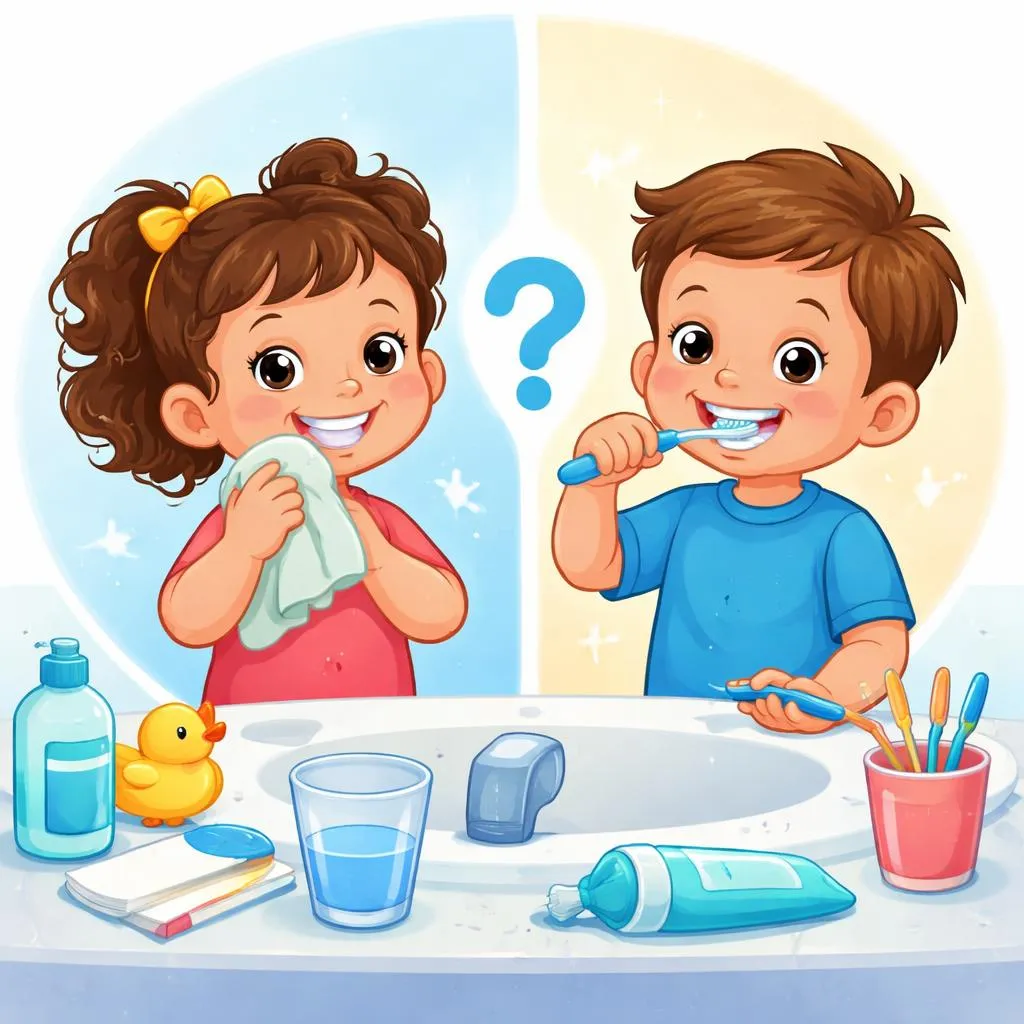
What Do These Expressions Mean? “Brush your teeth” means “use a toothbrush and toothpaste to scrub your teeth.” You brush in circles, on all sides. This is the best way to remove plaque.
For a child, think of the toothbrush in the bathroom. “Brush your teeth” says “Put toothpaste on the brush. Scrub every tooth. Spit. Rinse.”
“Clean your teeth” means “make your teeth free of food and plaque.” It can be done with brushing, flossing, or even wiping with a cloth. It is a more general phrase.
For a child, think of a parent wiping a baby’s first teeth. “Clean your teeth” says “Use a cloth or a brush. Just get the bits off.” Both phrases mean to remove food and plaque. Both say “make teeth clean.” They seem similar because people use both for dental care. Yet one means a full brush with toothpaste. One means any cleaning method.
What’s the Difference? The main difference is method. “Brush your teeth” specifically means using a toothbrush and toothpaste. It is the standard for dental health. “Clean your teeth” is general. It could be brushing, flossing, or using a cloth.
Another difference is age. Babies “clean their teeth” with a cloth before they have teeth. Toddlers “brush their teeth” with a soft brush.
One more difference is thoroughness. Brushing reaches all surfaces. Cleaning with a cloth or rinse only gets some surfaces.
Also, “brush your teeth” implies a routine. “Clean your teeth” could be a quick fix after a meal.
Teach children that both make teeth clean. One is the full routine. One is for babies or quick cleaning.
When Do We Use Each One? Use “Brush your teeth” for the morning and bedtime routine. “Brush your teeth before bed.” “Brush your teeth after breakfast.”
Use “Brush your teeth” with toothpaste. “Put a pea-sized amount of toothpaste on your brush.”
Use “Brush your teeth” for two minutes. “Brush your teeth for the whole song.”
Use “Clean your teeth” for babies or toddlers. “Let me clean your teeth with this soft cloth.”
Use “Clean your teeth” after a meal when brushing is not possible. “Here is a toothpick to clean your teeth.”
Use “Clean your teeth” as a general reminder. “Do not forget to clean your teeth before the dentist visit.”
Parents can model both. Say “brush your teeth” for the main routine. Say “clean your teeth” for babies or quick cleaning.
Example Sentences for Kids Here are simple sentences children can say.
Brush your teeth:
Brush your teeth every morning and night.
I brushed my teeth for two minutes.
Please brush your teeth before you go to bed.
She forgot to brush her teeth after breakfast.
Use a soft toothbrush to brush your teeth.
Clean your teeth:
The baby’s first teeth need to be cleaned with a cloth.
After eating candy, clean your teeth.
He cleaned his teeth with a toothpick at the restaurant.
Please clean your teeth before the dentist checks them.
You can clean your teeth with floss too.
Read these aloud. Notice how “brush your teeth” is for the full routine. Notice how “clean your teeth” is more general.
Common Mistakes to Avoid Children make mistakes with these phrases. Here are common errors.
Mistake 1: Saying “clean your teeth” when they need to brush. “Clean your teeth” after breakfast is fine, but “brush” is better for plaque removal. Correct: Say “Brush your teeth” for the full routine.
Mistake 2: Saying “brush your teeth” for a baby with no teeth. A baby has no teeth to brush. You clean their gums with a cloth. Correct: Say “Clean your gums” or “Clean your baby teeth.”
Mistake 3: Forgetting the steps of brushing. Wet brush, add toothpaste, brush all sides (front, back, top), brush tongue, spit, rinse. Correct: Teach the full routine.
Mistake 4: Brushing too hard. Hard brushing hurts gums. Correct: Use gentle circles.
Mistake 5: Not brushing for two minutes. Thirty seconds is not enough. Correct: Use a timer or a song.
Easy Memory Tips Here are simple memory tricks.
Memory tip 1: Think of a toothbrush and a cloth. “Brush your teeth” is a toothbrush with paste. Full clean. “Clean your teeth” is a cloth for babies or quick cleaning.
Memory tip 2: Use your hands. Pretend to brush in circles for “brush your teeth.” Pretend to wipe with a cloth for “clean your teeth.”
Memory tip 3: Ask “how old is the child?” Baby or toddler = “clean your teeth” with a cloth. Older child = “brush your teeth.”
Memory tip 4: Draw two pictures. A child with a toothbrush and toothpaste = “brush your teeth.” A baby with a parent wiping gums = “clean your teeth.”
Memory tip 5: Use the “two minutes” test. If you have two minutes, say “brush your teeth.” If you have 30 seconds, say “clean your teeth” or “rinse your mouth.”
Practice these tips morning and night. Make brushing a fun routine.
Quick Practice Time Try these exercises. Parents read aloud. Children answer.
Exercise 1: Choose the best phrase.
It is bedtime. Your child needs to clean their teeth properly. Do you say: a) Brush your teeth b) Clean your teeth
You have a baby with two new teeth. You want to wipe them after feeding. Do you say: a) Brush your teeth b) Clean your teeth
Your child ate sticky candy at a party. No toothbrush is available. Do you say: a) Brush your teeth b) Clean your teeth with water or a toothpick
Answers: 1(a), 2(b), 3(b)
Exercise 2: Fill in the blank.
“Please __________ for two minutes. Sing the alphabet song.” (full routine)
“Let me __________ with this soft cloth.” (baby, no toothbrush yet)
Answers: 1. brush your teeth, 2. clean your teeth
Bonus: Play the “Brush or Clean” game. Name a situation. “After breakfast at home.” “All day at a picnic with no sink.” “A baby after a bottle.” “A child before the dentist.” The child says “brush your teeth” (full routine) or “clean your teeth” (quick or baby). Discuss why.
Wrap-up Use “brush your teeth” for the full, thorough cleaning routine with a toothbrush and toothpaste, twice a day for two minutes. Use “clean your teeth” for babies, quick cleaning, or when brushing is not possible. Both keep teeth healthy. One is the gold standard. One is for special situations. Teach children that brushing twice a day prevents cavities. Clean teeth mean a bright smile. Brush in circles. Brush the front, back, and top. Spit, don’t swallow. Rinse. Smile. Every day. Twice a day. A healthy smile is a happy smile. Now go brush. Two minutes starts now.