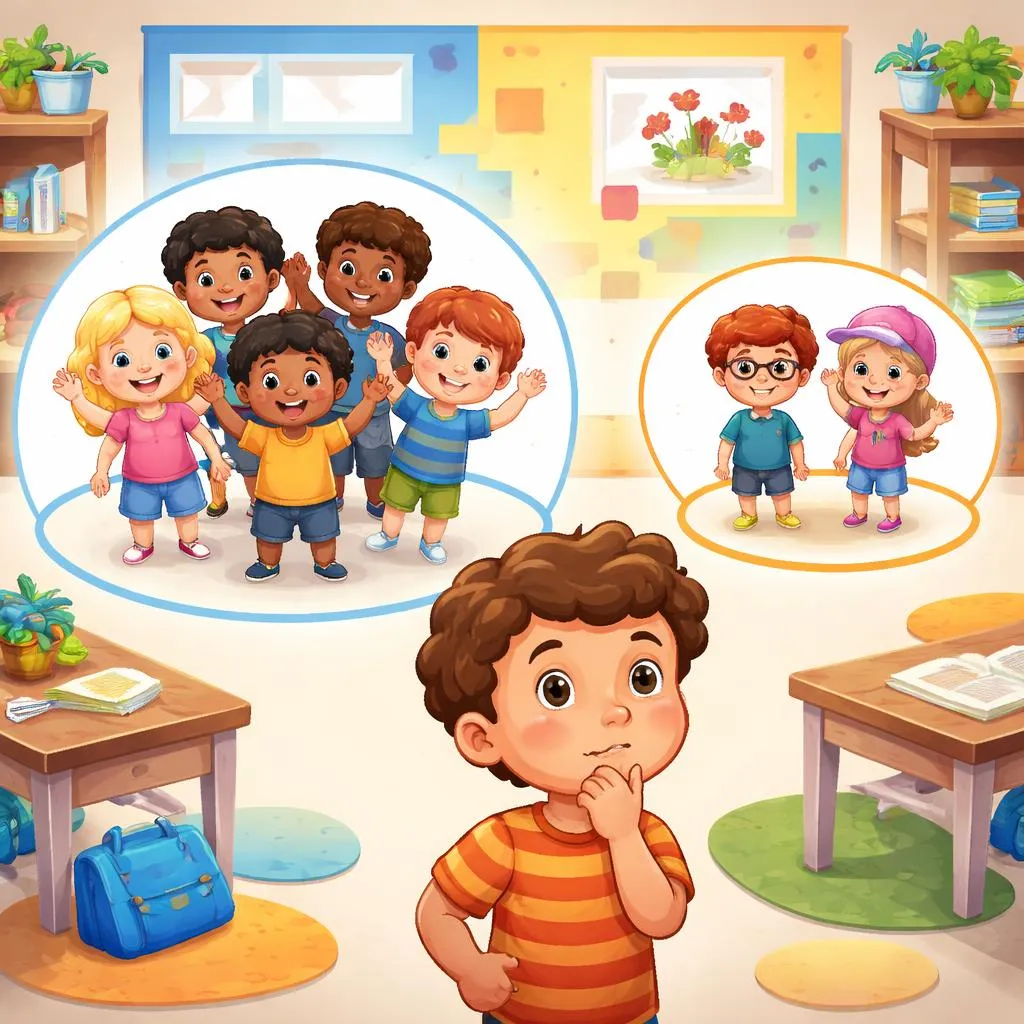

Children look at groups. Most of the class. The majority of the team. Both phrases mean “more than half.” Both say “the larger part.” But one is short and everyday. One is longer and more formal. Parents and kids can learn together. Describing groups helps children understand the world. The right words show how big the larger part is. Let us explore these two majority expressions.
What Do These Expressions Mean? “Most” means “almost all” or “the greatest number.” It is simple and common. It can mean anything from 51 percent to 99 percent. Most often, it means “nearly all.”
For a child, think of a pizza with one slice missing. “Most” says “Almost the whole pizza is there. Just a little bit is gone.”
“The majority” means “more than half.” It is more precise. It often means just over 50 percent. It could be 51 percent. It sounds more formal and exact.
For a child, think of a vote. “The majority” says “More than half of the people chose this option. Not almost all. Just more than half.” Both phrases mean the larger part. Both say “not all, not half.” They seem similar because people use both when a group is bigger than the other part. Yet one means “nearly all.” One means “just over half.”
What’s the Difference? The main difference is proportion. “Most” usually means a large majority, often 80-99 percent. “Most of the class passed” means almost everyone passed. “The majority” means just over 50 percent. “The majority of voters chose candidate A” could be 51 percent.
Another difference is formality. “Most” is everyday speech. Children say it all the time. “The majority” sounds more formal. You hear it in news reports, school presentations, and voting.
One more difference is usage with singular and plural. “Most” can be used with singular uncountable nouns. “Most of the water is clean.” “The majority” is used with plural or singular. “The majority of voters ARE happy” (plural) or “The majority IS happy” (singular).
Also, “most” has no article. “The majority” always has “the.” This is a clear difference.
Teach children that both mean “more than half.” One means almost all. One means just over half.
When Do We Use Each One? Use “Most” for everyday observations. “Most kids like pizza.” “Most of my toys are in the box.” “Most days are sunny here.”
Use “Most” when the number is very high. “Most of the cake is gone.” “Most people agree.” This means almost everyone.
Use “Most” before nouns without “of” for general statements. “Most dogs like walks.” “Most fruit is sweet.”
Use “The majority” for formal or exact situations. “The majority of students voted for the field trip.” “The majority opinion is important.”
Use “The majority” in voting or elections. “She won the majority of the votes.” This is the correct term.
Use “The majority” in writing or speeches. “The majority of the evidence supports this theory.” It sounds professional.
Parents can model both. Say “most” for daily talk. Say “the majority” for formal discussions or voting.
Example Sentences for Kids Here are simple sentences children can say.
Most:
Most of my friends like the same games.
Most of the cookies are gone.
Most days, I walk to school.
Most birds can fly.
Most of the snow has melted.
The majority:
The majority of the class voted for pizza.
She won the majority of the votes.
The majority of the committee agreed.
The majority of the water was clean.
In most families, the majority of chores are shared.
Read these aloud. Notice how “most” sounds natural for everyday. Notice how “the majority” sounds more formal.
Common Mistakes to Avoid Children make mistakes with these phrases. Here are common errors.
Mistake 1: Using “the majority” with a singular verb when it feels plural. “The majority of the class is happy” is correct. “The majority are happy” is also common. Both fine. No big mistake. Correct: Trust your ear. Singular or plural both work.
Mistake 2: Forgetting “the” before “majority.” “Majority of people like ice cream” is wrong. You need “The majority.” Correct: Always say “THE majority.”
Mistake 3: Using “most” when you mean exactly 51 percent. “Most people voted for her” could mean 80 percent. If it was 51 percent, say “the majority.” Correct: Be honest about the proportion.
Mistake 4: Using “most of” before a pronoun without “of.” “Most us” is wrong. Say “Most of us.” Correct: “Most of” before pronouns.
Mistake 5: Using “the majority” for uncountable nouns. “The majority of water” sounds strange. Use “most of the water.” Correct: Use “most” for uncountable things.
Easy Memory Tips Here are simple memory tricks.
Memory tip 1: Think of a full jar and a half-full jar. “Most” is a jar filled to the top. Only a little empty space. “The majority” is a jar filled just over the halfway line. 51 percent.
Memory tip 2: Use your hands. Hold your hands wide apart for “most” (almost all). Hold one hand just above the other for “the majority” (just over half).
Memory tip 3: Ask “is this formal?” If yes, use “the majority.” If no, use “most.”
Memory tip 4: Draw two pictures. A pizza with one slice missing = “most.” A pizza cut into two parts: one part slightly larger = “the majority.”
Memory tip 5: Use the “almost” test. If you can say “almost” before it, use “most.” “Almost most” is redundant. But think: if it is almost all, say “most.” If it is just over half, say “the majority.”
Practice these tips during voting at home. Which movie to watch? Who chooses the game?
Quick Practice Time Try these exercises. Parents read aloud. Children answer.
Exercise 1: Choose the best phrase.
Your family has five cookies. You eat one. Four remain. Do you say: a) Most of the cookies are left b) The majority of the cookies are left
A class of 20 students. 11 vote for pizza. 9 vote for burgers. Do you say: a) Most students want pizza b) The majority of students want pizza
A glass of water is 95 percent full. Do you say: a) Most of the water is in the glass b) The majority of the water is in the glass
Answers: 1(a — 80 percent is “most”), 2(b — 55 percent is “the majority”), 3(a — 95 percent is “most”)
Exercise 2: Fill in the blank.
“__________ of the toys are broken. Only one still works.” (almost all)
“__________ of the committee voted for the new rule. It passed by one vote.” (just over half)
Answers: 1. Most, 2. The majority
Bonus: Play the “Majority or Most” game. Gather 10 toys. Take away 1. Ask “Is this most or the majority?” (Most — 90 percent). Then split 6 and 4. Ask “Is this most or the majority?” (The majority — 60 percent). Learn the difference by seeing the numbers.
Wrap-up Use “most” for very large proportions in everyday speech. Use “the majority” for formal situations and when the number is just over half. Both mean the larger part. One means nearly all. One means just more than half. Teach children that words about groups help us share information clearly. Most learning happens with practice. The majority of these lessons will stick with time.