
Things go missing. Cookies disappear. Toys get lost. Two common phrases describe zero amount. “None” and “Not any.” Both mean “zero” or “not a single one.” Both say “nothing there.” But one is a single word. One is two words. Parents and kids can learn together. Talking about nothing helps children describe absence. The right words make your meaning clear. Let us explore these two zero expressions.
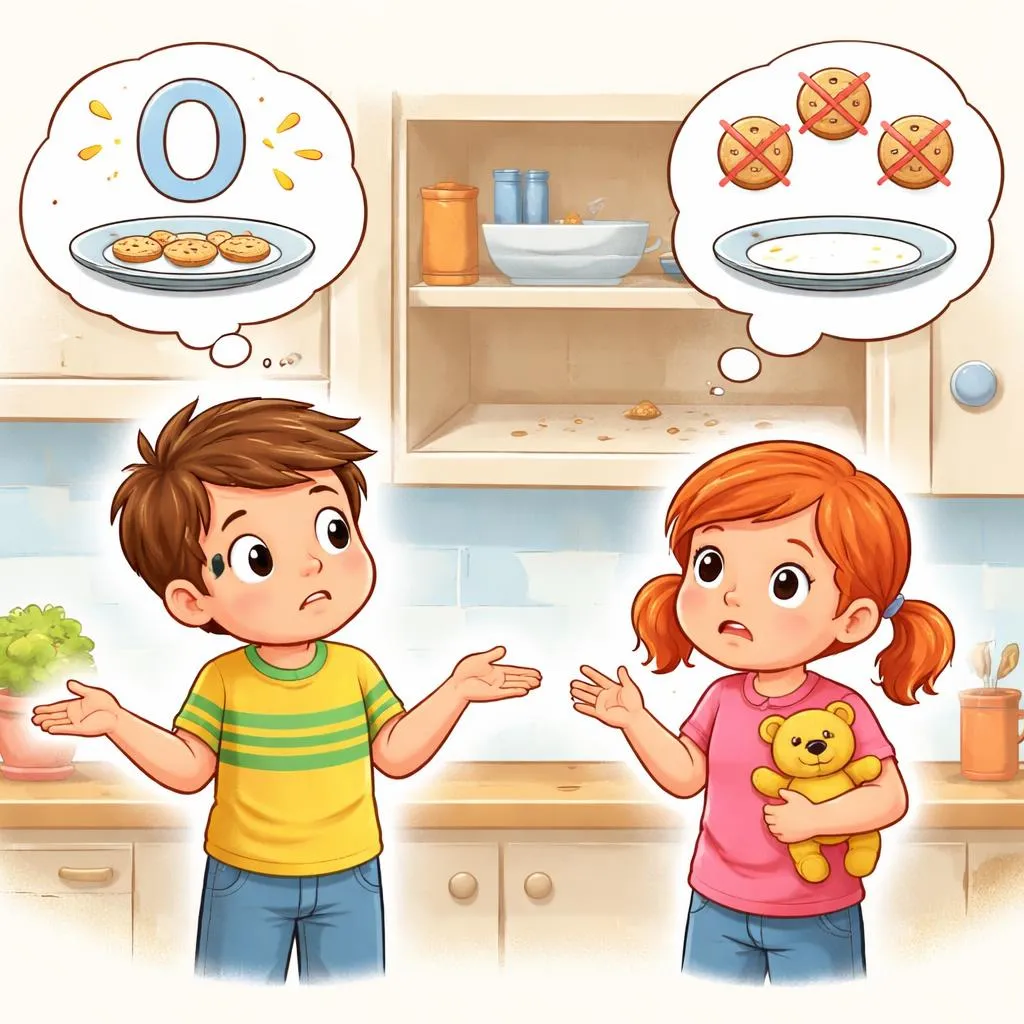
What Do These Expressions Mean? “None” means “not one” or “zero.” It is a single word. It stands alone. It means no amount or no number of something. For a child, think of an empty bowl. “None” says “There are zero cookies. The bowl has nothing.”
“Not any” also means “zero.” It has two words. “Not” means negative. “Any” means even one. Together they mean “not even one.” For a child, think of a piggy bank with no coins. “Not any” says “There is not even one coin. Zero.” Both phrases mean zero. Both say “nothing.” They seem similar because people use both when something is missing. Yet one is shorter. One is more emphatic.
What’s the Difference? The main difference is word count. “None” is one word. Quick and direct. “Not any” is two words. It adds a little emphasis.
Another difference is grammar. “None” can stand alone. “How many cookies are left?” “None.” “Not any” usually needs more words. “There are not any cookies left.” It sounds incomplete alone.
One more difference is formality. “None” works in any setting. “Not any” sounds a bit more conversational. You hear it more in everyday talk.
Also, “none” can be used with “of.” “None of the cookies are left.” “Not any” cannot use “of.” You cannot say “not any of.”
Teach children that both mean zero. One is short. One adds “not” and “any.”
When Do We Use Each One? Use “None” for short answers. “Any milk left?” “None.” “Any problems?” “None.” It is quick and clear. Use “None” with “of” for groups. “None of my friends came.” “None of the apples are ripe.” This is common and correct. Use “None” in writing. It looks cleaner than “not any.”
Use “Not any” for emphasis in sentences. “There are not any clean cups.” “I do not have not any time.” Wait, that is a double negative! Let me fix. “I do not have any time.” Actually, “not any” goes with “there is/are.” “There are not any cookies.” Use “Not any” in everyday speech. “We do not have not any.” No. Say “We do not have any.” The “not” is in “do not.” So “not any” appears after “there is/are.” “There is not any milk.” This is fine.
Parents: The clearest way: “None” stands alone or with “of.” “Not any” follows “there is/are” or “have.”
Example Sentences for Kids Here are simple sentences children can say.
None:
How many candies are left? None.
None of the flowers are blue.
I wanted chips, but there were none.
None of my friends like that game.
She ate the whole pizza. None remains.
Not any:
There are not any clean spoons.
I do not have not any. Wait. Correction: I do not have any. (Better to say “I have none.”)
Let me try again: There is not any juice left.
We found not any shells on the beach.
There are not any clouds in the sky.
Note: “Not any” is tricky. Most native speakers say “no” instead. “There are no clean spoons.” “There is no juice left.” Teach children “no” as an easier alternative.
Parents: For simplicity, teach “none” and “no” rather than “not any.” It will save confusion.
Common Mistakes to Avoid Children make mistakes with these phrases. Here are common errors.
Mistake 1: Using “none” with a plural verb. “None of the cookies is left” is correct. “None are left” is also correct in everyday English. Both fine. Correct: “None” can take singular or plural. Trust your ear.
Mistake 2: Using “not any” without “there is/are.” “I have not any” is awkward. Say “I have none” or “I do not have any.” Correct: Use “there is not any” or “there are not any.”
Mistake 3: Double negatives. “I do not have none” means you have some. Two negatives make a positive. Correct: Say “I have none” or “I do not have any.”
Mistake 4: Saying “not any” as a short answer. “Any cookies?” “Not any.” This sounds strange. “None” is correct. Correct: “Any cookies?” “None.”
Mistake 5: Forgetting “of” after “none” before a noun. “None the cookies” is wrong. “None of the cookies” is correct. Correct: Always say “none of” before a specific group.
Easy Memory Tips Here are simple memory tricks.
Memory tip 1: Think of an empty hand and a shaking head. “None” is an empty hand. Zero. “Not any” is shaking your head “no” to each item. “No... no... no.”
Memory tip 2: Use your hands. Show an empty palm for “none.” Shake your index finger “no” for “not any.”
Memory tip 3: Ask “short or long answer?” Short answer = “none.” Long sentence = “there are not any” or “no.”
Memory tip 4: Draw two pictures. An empty jar labeled “none.” A jar with a red circle and line through it labeled “not any” (also zero).
Memory tip 5: Use the “of” test. If you can say “none of,” use “none.” If you need “there is/are,” use “not any” or better, “no.”
Practice these tips during snack time. Notice when things run out.
Quick Practice Time Try these exercises. Parents read aloud. Children answer.
Exercise 1: Choose the best phrase.
Someone asks “How many cookies are left?” The jar is empty. Do you say: a) None b) Not any
You want to say there are zero clean shirts in a sentence. Do you say: a) There are none clean shirts b) There are not any clean shirts
Answers: 1(a), 2(b — though “no clean shirts” is even better)
Exercise 2: Fill in the blank.
“__________ of the crayons work. They are all dried out.” (short, with “of”) 2. “There are __________ clean plates in the cupboard.” (use “not any” or “no”)
Answers: 1. None, 2. not any (or “no”)
Bonus: Play the “Empty or Not” game. Gather a small group of toys. Take them away one by one. Ask “Are there any left?” When none remain, answer “None.” Practice saying it clearly.
Wrap-up Use “none” for short answers and with “of” to mean zero. Use “not any” in longer sentences with “there is/are,” but “no” is often simpler. Both mean zero. One is short. One is a phrase. Teach children that “none” is powerful. It closes the door on counting. No more. Zero. And that is fine. Empty means ready for something new.