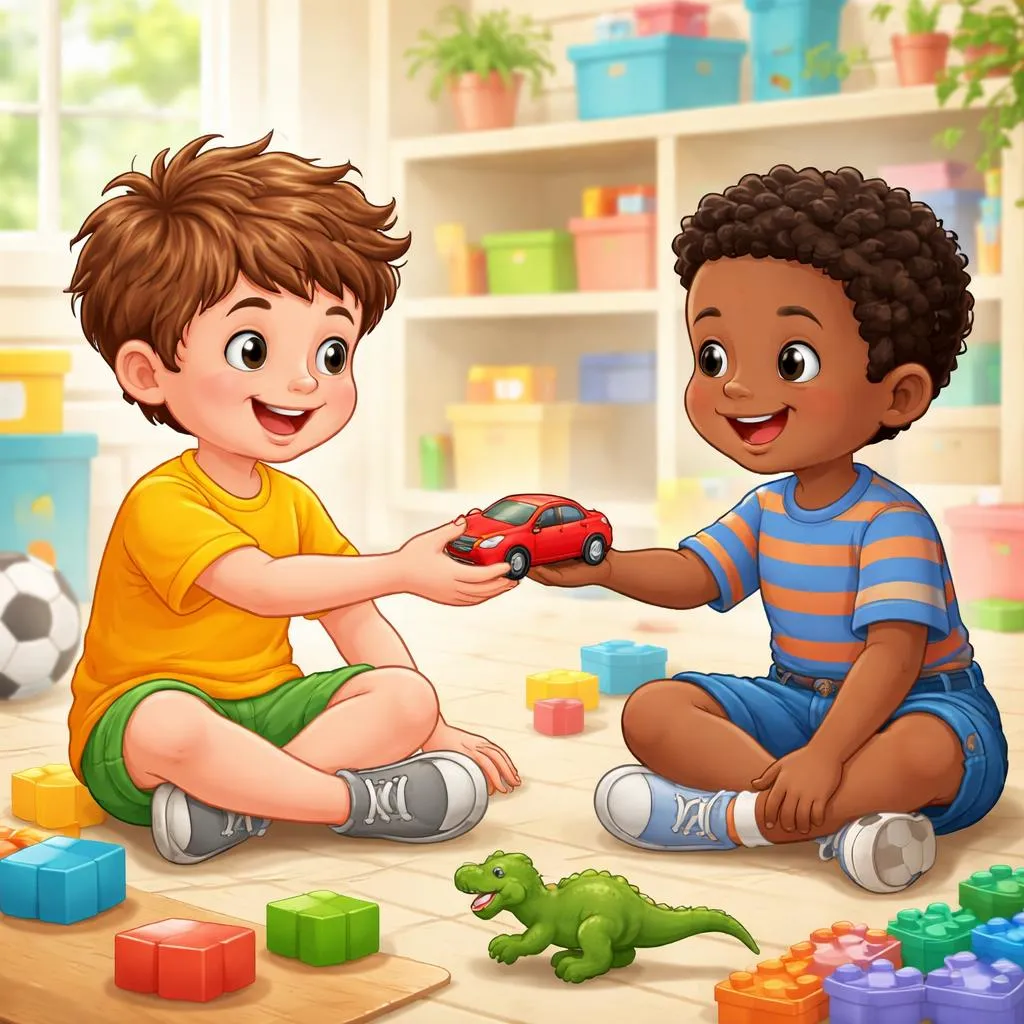

Children offer things to each other. A cracker. A turn on the swing. A pencil. Two common phrases invite someone to take something. “Take it” and “Grab it.” Both mean “hold this” or “accept this.” But one sounds calm. One sounds hurried or rough. Parents and kids can learn together. Offering with kind words makes the other person feel welcome. The right words share without pressure. Let us explore these two offering expressions.
What Do These Expressions Mean? “Take it” means “hold this in your hand” or “accept this from me.” It is calm and neutral. It offers the thing without hurry.
For a child, think of offering a toy to a friend. “Take it” says “Here. This is for you. You can hold it now.”
“Grab it” means “take it quickly” or “seize it.” “Grab” suggests speed and sometimes force. It can sound urgent or even rough.
For a child, think of catching a ball before it falls. “Grab it” says “Quick, snatch it before it is gone.” Both phrases mean to take something. Both say “this is for you.” They seem similar because people use both when giving something. Yet one is calm and gentle. One is fast and urgent.
What’s the Difference? The main difference is speed and force. “Take it” is calm and neutral. No hurry. No force. “Grab it” suggests speed and sometimes a snatching motion. It can sound like you are rushing or afraid the thing will get away.
Another difference is politeness. “Take it” is polite and gentle. “Grab it” can sound rude or impatient. “Just grab it” sounds like you do not care about being careful.
One more difference is the feeling of sharing. “Take it” feels like a kind offer. “Grab it” feels like a command to snatch.
Also, “grab” can mean catching something moving. “Grab the ball before it rolls away.” “Take” does not imply urgency.
Teach children that both mean to take something. One is gentle. One is rough or fast.
When Do We Use Each One? Use “Take it” for kind offers. “Here, take it. I do not need it.” “Take it, please.” “You can take it home.” It sounds generous.
Use “Take it” for calm instructions. “Take your time.” “Take it easy.” “Take it from the table.” No hurry.
Use “Take it” when you want to be polite. “Take it if you like.” “Please take it.” This is very kind.
Use “Grab it” for urgent situations. “The ball is rolling away. Grab it!” “Grab it before the dog eats it.” Urgency matters.
Use “Grab it” for quick actions in games. “Grab the prize!” “Grab a crayon and start drawing.” Still, it sounds rushed.
Use “Grab it” carefully. It can sound rude. “Grab it and go” sounds like a command. Use “take it” for offers.
Parents can model both. Say “take it” for kind offers. Say “grab it” only for fast, urgent moments.
Example Sentences for Kids Here are simple sentences children can say.
Take it:
Here is your snack. Take it.
Take it. I want you to have it.
You can take it home with you.
Please take it. It is yours now.
Take it from my hand gently.
Grab it:
The toy is falling. Grab it!
Grab it before it rolls under the couch.
Quick, grab it and run to first base.
Grab a cookie before they are all gone.
He grabbed it out of my hand. (Not nice)
Read these aloud. Notice how “take it” sounds calm and generous. Notice how “grab it” sounds fast and urgent.
Common Mistakes to Avoid Children make mistakes with these phrases. Here are common errors.
Mistake 1: Using “grab it” for a kind offer. “Here, grab it” sounds rough. The other person may feel rushed. Correct: Say “Here, take it” for kind offers.
Mistake 2: Using “take it” for an urgent catch. “The ball is rolling. Take it!” This sounds strange. “Take” is too slow. Correct: Say “Grab it!” for urgent catches.
Mistake 3: Not saying “please” when offering. “Take it” without please is fine for casual offers. But “Take it, please” is kinder. Correct: Add “please” for extra politeness.
Mistake 4: Using “grab” for taking something politely. “May I grab a cookie?” sounds informal but acceptable. “May I take a cookie?” is more polite. Correct: For polite requests, use “take.”
Mistake 5: Forgetting that “grab” can mean to take roughly. “He grabbed the toy from me” means it was not nice. Correct: Teach children that “grab” can be aggressive. Use carefully.
Easy Memory Tips Here are simple memory tricks.
Memory tip 1: Think of a gift and a race. “Take it” is a gift. Calm, kind, generous. “Grab it” is a race. Fast, urgent, rough.
Memory tip 2: Use your hands. Slowly reach out palm up for “take it” (gentle, open). Quickly snatch with your hand for “grab it” (fast, clutching).
Memory tip 3: Ask “is there urgency?” If no, say “take it.” If yes, say “grab it.”
Memory tip 4: Draw two pictures. A smiley face offering a flower = “Take it.” A child catching a flying ball = “Grab it!”
Memory tip 5: Use the “politeness” test. If you want to be polite, say “take it.” If you are in a game or emergency, “grab it” is fine.
Practice these tips during play. Offer toys kindly. Grab things only when needed.
Quick Practice Time Try these exercises. Parents read aloud. Children answer.
Exercise 1: Choose the best phrase.
You want to give your friend a cookie. You are not in a hurry. Do you say: a) Take it b) Grab it
A ball is about to roll into the street. You need to stop it fast. Do you say: a) Take it b) Grab it
You are playing a game and need to pick up a card quickly. Do you say: a) Take it b) Grab it
Answers: 1(a), 2(b), 3(b — in a game, quick action)
Exercise 2: Fill in the blank.
“Here, __________. I am done with this book.” (calm, kind)
“__________ before the elevator door closes!” (urgent, quick)
Answers: 1. take it, 2. Grab it
Bonus: Play the “Kind or Quick” game. One person holds a toy. Another asks for it. The giver says “Take it” (kind) or “Grab it” (quick). The taker acts out the difference. Discuss how each feels.
Wrap-up Use “take it” for kind, calm offers when you want to be generous and polite. Use “grab it” for urgent, quick moments in games or when something might be lost. Both mean to take something. One is gentle like a gift. One is fast like a catch. Teach children that offering with “take it” and a smile makes friends happy. Grabbing is for emergencies. Kindness always wins. Take it to heart.