
Sometimes things go wrong. The worst day. The poorest score. Two common words describe the lowest quality. “Worst” and “The poorest.” Both mean “of the lowest quality” or “the least good.” But one is everyday speech. One is more about lack or deficiency. Parents and kids can learn together. Recognizing the worst helps us improve. The right words share disappointment without destroying hope. Let us explore these two lowest expressions.
What Do These Expressions Mean? “Worst” means “of the lowest quality or most unpleasant.” It is the superlative of “bad.” Nothing is worse. It is the bottom. It is the most common way to say something is the least good.
For a child, think of a race where someone comes last. “Worst” says “That runner is number last. Everybody else did better.”
“The poorest” also means “the lowest in quality or amount.” But it comes from “poor,” meaning lacking. It often refers to performance, results, or condition. It sounds less harsh than “worst” in some ways, but more about deficiency.
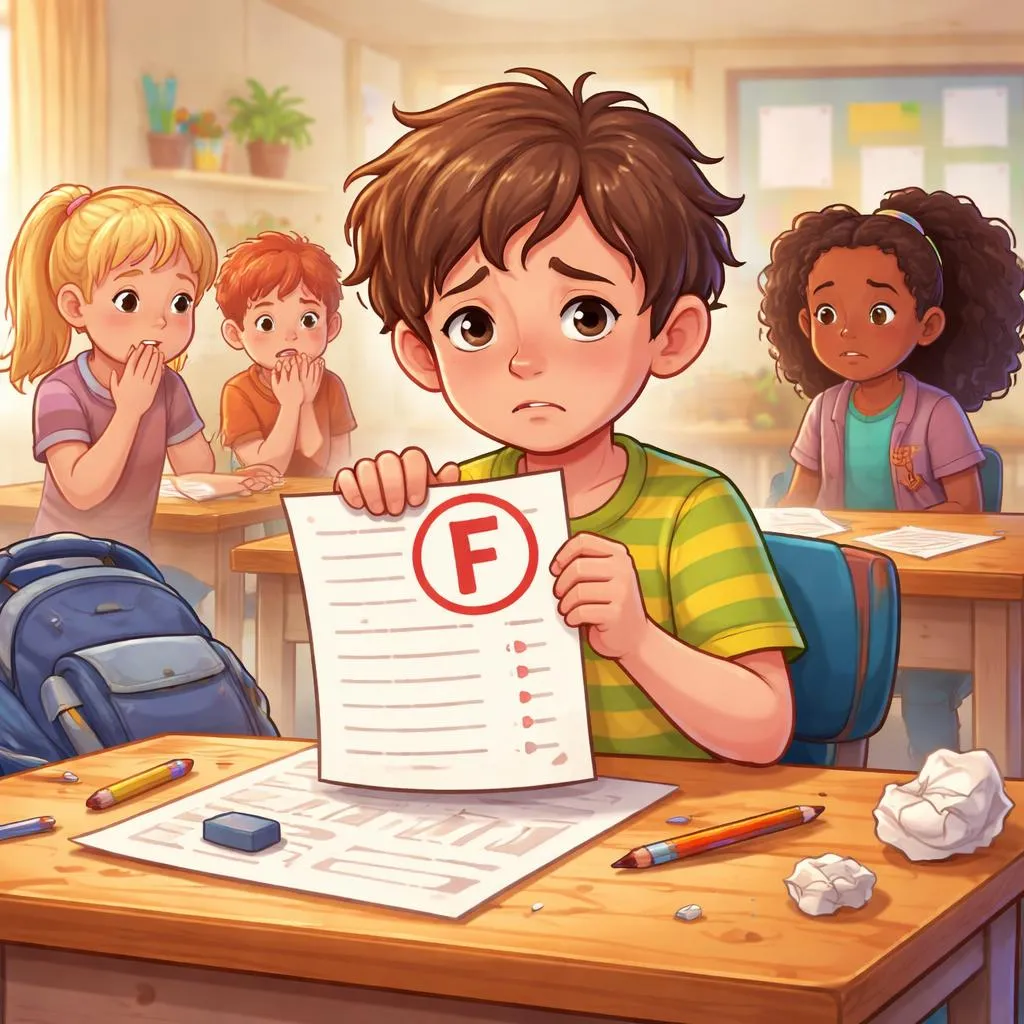
For a child, think of a test score that is very low. “The poorest” says “That result is very low. Not enough.” Both phrases mean the bottom. Both say “nothing worse.” They seem similar because people use both for the lowest quality. Yet one is about being the most bad. One is about lacking enough.
What’s the Difference? The main difference is harshness. “Worst” is very direct. It can sound very negative. “This is the worst day ever.” “The poorest” sounds a little softer. It focuses on lack, not on badness. “The poorest performance” means not enough effort or skill, not necessarily terrible.
Another difference is usage. “Worst” works for almost anything. Worst food, worst movie, worst feeling. “The poorest” is often used for performance, scores, condition, or resources. “Poorest quality” “poorest result” “poorest family” (meaning least money). Be careful with that last one.
One more difference is formality. “Worst” is everyday. “The poorest” sounds slightly more formal or careful. You see it in reports or evaluations.
Also, “the poorest” can mean having the least money. “The poorest people.” “Worst” cannot mean that.
Teach children that both mean the bottom. One is direct. One is about lack.
When Do We Use Each One? Use “Worst” for everyday lowest quality. “This is the worst pizza I ever ate.” “That was the worst movie.” “My worst subject is math.”
Use “Worst” for feelings. “I feel my worst in the morning.” “That was the worst news.” Very direct.
Use “Worst” in phrases. “Worst-case scenario.” “At worst.” “The worst is over.”
Use “The poorest” for performance or evaluation. “She gave the poorest performance in the play.” “His poorest test score was a D.”
Use “The poorest” for condition or quality. “The poorest quality shoes fell apart quickly.” “The poorest example of writing had many mistakes.”
Use “The poorest” carefully about people. “The poorest families need help” means least money. This is fine. “He is the poorest player” means least skilled. This can hurt feelings. Use “worst” or “least skilled” instead.
Parents can model both. Say “worst” for direct negatives. Use “the poorest” for performance or lack.
Example Sentences for Kids Here are simple sentences children can say.
Worst:
This is the worst day ever.
That was the worst joke I ever heard.
I got the worst grade in the class.
Which is the worst smell? A skunk or old garbage?
The worst part was waiting in line.
The poorest:
He made the poorest choice of all his friends.
The poorest quality crayons break easily.
Her poorest subject is spelling.
The poorest example of teamwork was when nobody shared.
In the contest, the poorest drawing got no votes.
Read these aloud. Notice how “worst” sounds strong and direct. Notice how “the poorest” sounds more about lack of quality or performance.
Common Mistakes to Avoid Children make mistakes with these words. Here are common errors.
Mistake 1: Using “the poorest” for everyday bad things. “This is the poorest pizza” sounds strange. Use “worst.” Correct: Say “This is the worst pizza.”
Mistake 2: Using “worst” when “poorest” is more precise for lack. “His worst skill is math” is fine. “His poorest skill” is also fine. Both work. Correct: Either is okay. “Poorest” sounds more formal.
Mistake 3: Forgetting “the” before “poorest.” “Poorest performance” is okay but “the poorest performance” is better. Correct: Say “THE poorest” in full sentences.
Mistake 4: Using “worst” without “the” for superlative. “She is worst player” is wrong. “She is the worst player” is correct. Correct: Always use “the” with “worst” as a superlative adjective.
Mistake 5: Confusing “worst” with “worse.” “This is the worse of the two” is correct. “This is the worst of the three.” Correct: Use “worst” for three or more. Use “worse” for two.
Easy Memory Tips Here are simple memory tricks.
Memory tip 1: Think of a broken toy and an empty wallet. “Worst” is a broken toy. Completely bad. “The poorest” is an empty wallet. Lacking, not enough.
Memory tip 2: Use your hands. Put your hand all the way down for “worst” (bottom). Shake your empty hand for “the poorest” (lacking).
Memory tip 3: Ask “is this about being bad or lacking?” Being bad = “worst.” Lacking quality or amount = “the poorest.”
Memory tip 4: Draw two pictures. A broken crayon labeled “worst.” A half-empty glass labeled “the poorest” (smallest amount).
Memory tip 5: Use the “money test.” “Poorest” can mean least money. “Worst” cannot. If you mean money, use “poorest.” If you mean bad, use “worst.”
Practice these tips during bad moments. Name the worst part of a bad day. Name the poorest effort.
Quick Practice Time Try these exercises. Parents read aloud. Children answer.
Exercise 1: Choose the best phrase.
Your child says a day was very bad, the worst ever. Do you say: a) This is the worst day b) This is the poorest day
A student did very badly on a test. You want to say their score was the lowest. Do you say: a) The worst score b) The poorest score
A family has very little money. Do you say: a) The worst family b) The poorest family
Answers: 1(a), 2(a or b — both fine, “poorest” sounds softer), 3(b)
Exercise 2: Fill in the blank.
“That was the __________ movie I have ever seen.” (direct, negative)
“The __________ quality shoes fell apart after one week.” (lacking quality)
Answers: 1. worst, 2. poorest
Bonus: Play the “Worst or Poorest” game. Name a situation. “A very bad cold.” “A test score of 50 percent.” “A family with no food.” “A broken toy.” The child says “worst” or “poorest.” Talk about why. A broken toy = worst. A low score = poorest.
Wrap-up Use “worst” for everyday things that are the most bad or unpleasant. Use “the poorest” for lack of quality, performance, or resources, often in more formal contexts. Both mean the bottom. One is direct and strong. One is about deficiency. Teach children that it is okay to have a worst day. It is okay to have a poorest effort. What matters is learning and trying again. Tomorrow can be better. Even from the worst, we grow.