
Television is part of life. Cartoons, shows, movies. Two common phrases describe looking at the screen. “Watch TV” and “View television.” Both mean “look at a television program.” But one is everyday speech. One is formal and technical. Parents and kids can learn together. Screen time needs balance. The right words fit the situation. Let us explore these two viewing expressions.
What Do These Expressions Mean? “Watch TV” means “look at a television program for entertainment or information.” It is the common, everyday phrase. Everyone uses it. “Watch” means to look with attention.
For a child, think of Saturday morning cartoons. “Watch TV” says “Sit on the couch. Look at the screen. Enjoy your show.”
“View television” also means “look at television.” But it sounds very formal and technical. “View” is a more formal word for look. You might see it in manuals or surveys.
For a child, think of a scientific study. “View television” says “Observe the screen as part of an experiment.” Both phrases mean to look at a TV. Both say “use your eyes on the screen.” They seem similar because people use both for the same activity. Yet one is for everyday talk. One is for formal or technical writing.
What’s the Difference? The main difference is formality. “Watch TV” is casual and everyday. You say it at home, with friends, in school. “View television” is formal. You might see it in a research paper or a user manual.
Another difference is commonness. “Watch TV” is very common. “View television” is rare in speech. It sounds old-fashioned or overly formal.
One more difference is the verb. “Watch” implies paying attention. “View” is more neutral. It just means to look.
Also, “view” is used for other things: “view a painting,” “view a website.” “Watch” is used for moving images over time.
Teach children that both mean to look at television. One is for talking. One is for formal writing.
When Do We Use Each One? Use “Watch TV” for everyday talk. “Can I watch TV after homework?” “I watched TV all Saturday morning.” “Let us watch TV together.”
Use “Watch TV” for instructions to children. “Please do not watch TV too close.” “Watch TV with the lights on.”
Use “Watch TV” for any casual situation.
Use “View television” in formal writing. “The study surveyed children who view television for three hours daily.” “Participants will view television programs in a lab.”
Use “View television” in technical manuals. “To view television, press the power button.”
Use “View television” when you want to sound very professional.
Parents should use “watch TV” with children. “View television” is not for kids.
Example Sentences for Kids Here are simple sentences children can say.
Watch TV:
Can I watch TV after I eat lunch?
I watch TV for one hour every day.
She watched TV until her show ended.
Please do not watch TV too late.
We watch TV together as a family on Fridays.
View television:
The scientists asked people to view television for a study.
In the lab, participants will view television clips.
The manual says: “To view television, connect the antenna.”
Researchers measured how children view television.
The survey asked how many hours you view television per week.
Read these aloud. Notice how “watch TV” sounds natural. Notice how “view television” sounds like a research study.
Common Mistakes to Avoid Children make mistakes with these phrases. Here are common errors.
Mistake 1: Saying “view television” at home. “I want to view television” sounds strange. Your family will laugh. Correct: Say “I want to watch TV.”
Mistake 2: Saying “watch TV” in a formal paper. “The children watched TV for the experiment” is fine, but “viewed television” is more formal. Not a big mistake. Correct: Both work. “View” is more formal.
Mistake 3: Forgetting that “view” is not common. Children do not need to use “view television” in daily life. Correct: Teach it as a formal option, not a daily phrase.
Mistake 4: Watching too much TV. Too much screen time is not healthy. Correct: Set limits. One hour per day is a good rule.
Mistake 5: Sitting too close to the screen. Sitting too close can hurt eyes. Correct: Sit at least six feet away.
Easy Memory Tips Here are simple memory tricks.
Memory tip 1: Think of a couch and a laboratory. “Watch TV” is a couch. Cozy, everyday. “View television” is a laboratory. Formal, scientific.
Memory tip 2: Use your hands. Sit back and relax for “watch TV.” Hold a clipboard and take notes for “view television.”
Memory tip 3: Ask “am I talking or writing?” Talking = “watch TV.” Formal writing = “view television.”
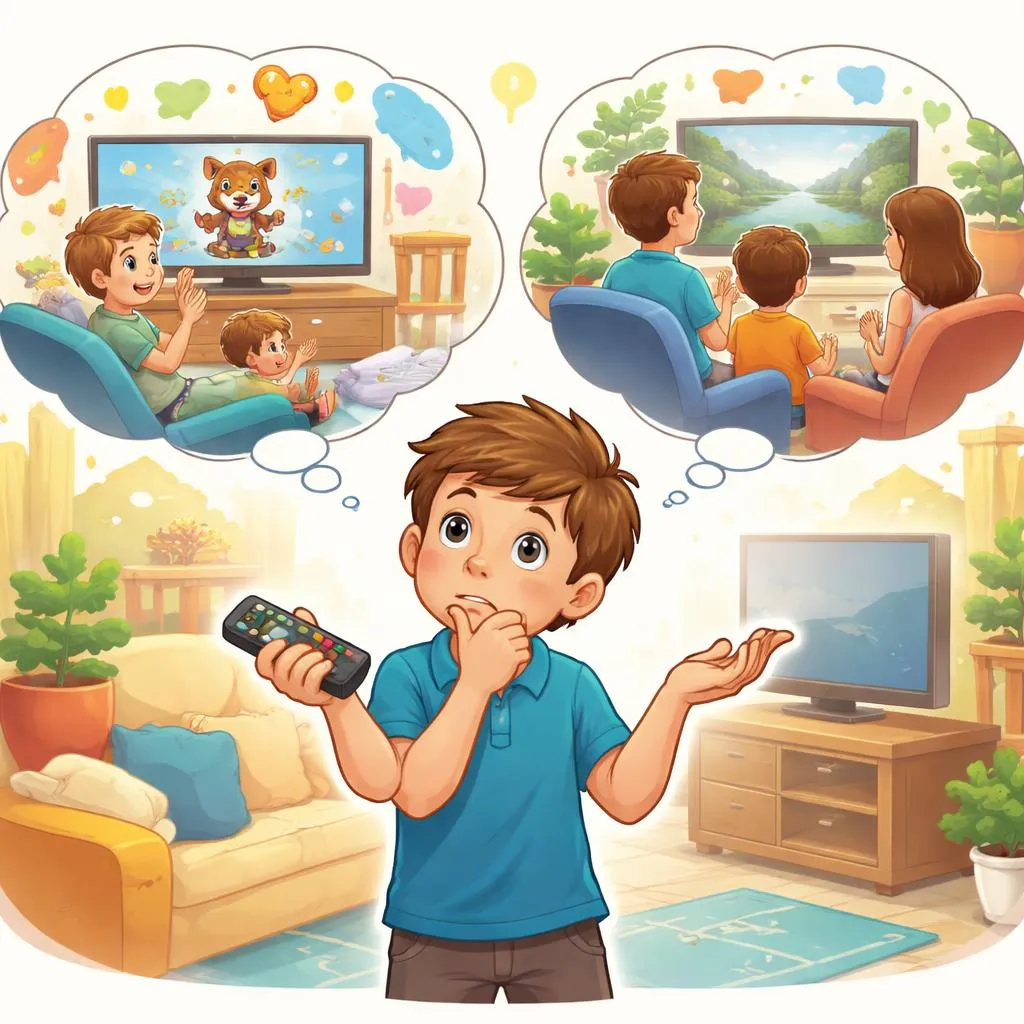
Memory tip 4: Draw two pictures. A child on a couch with popcorn = “watch TV.” A scientist with a clipboard and a TV = “view television.”
Memory tip 5: Use the “study” test. If you are in a research study, say “view television.” If you are at home, say “watch TV.”
Practice these tips during screen time. Use the right phrase for the situation.
Quick Practice Time Try these exercises. Parents read aloud. Children answer.
Exercise 1: Choose the best phrase.
Your child asks to turn on cartoons. Do you say: a) You may watch TV b) You may view television
A research paper says: “Participants will _____ for two hours.” Do you say: a) watch TV b) view television
A parent tells a child: “It is time to _____.” Do you say: a) watch TV b) view television
Answers: 1(a), 2(b), 3(a)
Exercise 2: Fill in the blank.
“Let us __________ after dinner.” (everyday, home)
“The study monitored how many hours families __________ per week.” (formal research)
Answers: 1. watch TV, 2. view television
Bonus: Play the “Formal or Casual” game. Say a sentence. “I want to watch cartoons.” (casual). “The subjects will view the stimulus.” (formal). Have your child identify which is “watch TV” and which is “view television.” Then talk about why we use different words in different situations.
Wrap-up Use “watch TV” for everyday, casual conversation at home and with friends. Use “view television” only in formal writing, research, or technical manuals. Both mean to look at a television screen. One is for life. One is for labs. Teach children that how we say things depends on where we are and who we are talking to. At home, watch TV. That is normal. In a science report, view television. That is correct. Now go watch TV. But not too long. Balance is key. Enjoy your show. Then go play outside. That is the healthy way. Happy viewing. Happy watching. Happy living.