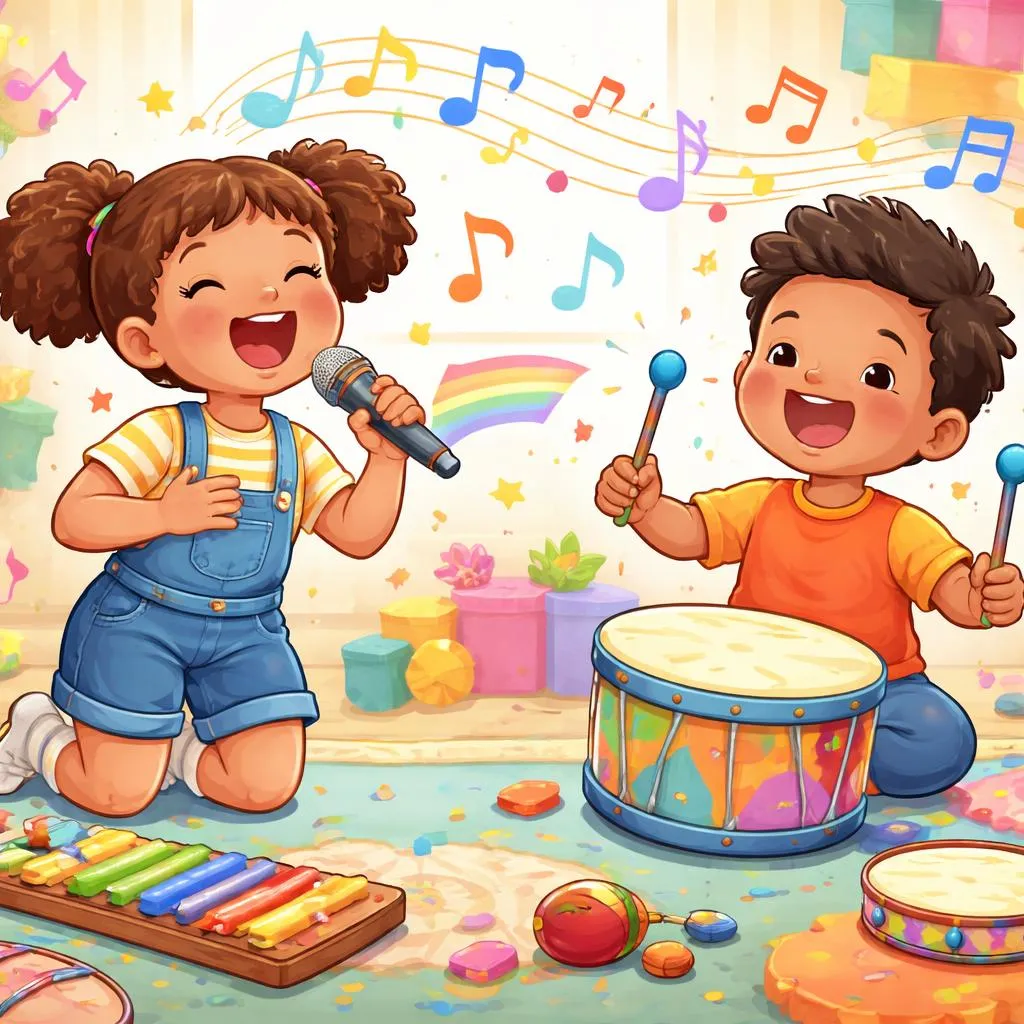

Music fills homes. Lullabies, nursery rhymes, silly songs. Two common phrases describe making music with your voice. “Sing a song” and “Chant a tune.” Both mean “use your voice to make musical sounds.” But one has melody and pitch. One has rhythm and spoken words. Parents and kids can learn together. Music lifts moods and builds brains. The right words describe the type of vocal music. Let us explore these two vocal expressions.
What Do These Expressions Mean? “Sing a song” means “produce musical sounds with your voice using pitch and melody.” You go up and down in tone. You hold notes. You follow a tune.
For a child, think of “Twinkle, Twinkle, Little Star.” “Sing a song” says “Use your singing voice. Make the notes go high and low.”
“Chant a tune” means “speak or recite words in a rhythmic pattern without pitch changes.” A chant is like a rhythmic speech. It has beat but not melody.
For a child, think of a sports cheer. “Chant a tune” says “Say the words in rhythm. Clap or stomp along. No singing voice needed.” Both phrases mean vocal music. Both say “use your voice.” They seem similar because people use both for making music. Yet one uses melody. One uses rhythm only.
What’s the Difference? The main difference is melody. “Sing a song” uses pitch changes. You sing high notes and low notes. “Chant a tune” uses one pitch or spoken voice. It is rhythmic speech.
Another difference is complexity. Singing usually has a wider range of notes. Chanting is simpler. It can be done by anyone, even without singing ability.
One more difference is commonness. Children sing songs all the time. They chant in games (“Eeny, meeny, miny, moe”) or cheers.
Also, chanting is often used in groups. “Let us chant together.” Singing can be solo or group.
Teach children that both are fun. One is for melody. One is for rhythm.
When Do We Use Each One? Use “Sing a song” for melodies. “Let us sing a song together.” “She sang a song at the talent show.” “Sing a lullaby to help the baby sleep.”
Use “Sing a song” for nursery rhymes with tunes. “Sing ‘The Wheels on the Bus.’”
Use “Sing a song” for any time you use a singing voice.
Use “Chant a tune” for rhythmic speech. “Let us chant a tune while we march.” “The crowd chanted the team’s name.”
Use “Chant a tune” for counting rhymes. “Chant the numbers in rhythm.”
Use “Chant a tune” for games. “Chant ‘Duck, Duck, Goose’ as you walk around.”
Parents can model both. Sing songs at bedtime. Chant during games and cheers.
Example Sentences for Kids Here are simple sentences children can say.
Sing a song:
Let us sing a song about the rain.
I love to sing a song when I am happy.
She sang a song for her grandmother.
Sing a song with me. Do you know “Old MacDonald”?
He sang a song in the school play.
Chant a tune:
The children chanted a tune as they jumped rope.
Let us chant a tune to help us clean up.
Chant a rhythm: “Left, left, left, right, left.”
The crowd chanted the player’s name.
She chanted the spelling words to remember them.
Read these aloud. Notice how “sing a song” has melody. Notice how “chant a tune” has rhythm and spoken voice.
Common Mistakes to Avoid Children make mistakes with these phrases. Here are common errors.
Mistake 1: Saying “chant a song.” “Chant a song” is not common. A chant is not a song. A song has melody. Correct: Say “sing a song” for melody. Say “chant” for rhythm.
Mistake 2: Saying “sing a chant.” A chant is spoken, not sung. So you cannot sing a chant. Correct: Say “perform a chant” or “chant.”
Mistake 3: Forgetting that chanting is spoken. Use your speaking voice, not your singing voice. Correct: Speak in rhythm.
Mistake 4: Thinking chanting is less valuable. Chanting builds rhythm, memory, and group bonding. Correct: Value both singing and chanting.
Mistake 5: Being shy. Everyone can chant. You do not need a good singing voice. Correct: Encourage participation.
Easy Memory Tips Here are simple memory tricks.
Memory tip 1: Think of a bird and a drum. “Sing a song” is a bird. Melody. “Chant a tune” is a drum. Rhythm.
Memory tip 2: Use your hands. Move your hand up and down like a melody for “sing a song.” Tap a steady beat for “chant a tune.”
Memory tip 3: Ask “does it have high and low notes?” Yes = “sing a song.” No, just rhythm = “chant a tune.”
Memory tip 4: Draw two pictures. A child with music notes floating = “sing a song.” A child with rhythm dots = “chant a tune.”
Memory tip 5: Use the “voice test.” Singing voice = “sing a song.” Speaking voice = “chant.”
Practice these tips during music time. Try both.
Quick Practice Time Try these exercises. Parents read aloud. Children answer.
Exercise 1: Choose the best phrase.
You want to sing “Happy Birthday” with melody. Do you say: a) Sing a song b) Chant a tune
A sports crowd shouts “De-fense! De-fense!” in rhythm. Do you say: a) Sing a song b) Chant
A child recites “One, two, buckle my shoe” in rhythm without melody. Do you say: a) Sing a song b) Chant
Answers: 1(a), 2(b), 3(b)
Exercise 2: Fill in the blank.
“Let us __________ about friendship.” (melody)
“The class __________ the multiplication tables.” (rhythm, spoken)
Answers: 1. sing a song, 2. chanted
Bonus: Play the “Melody or Rhythm” game. Hum a melody. Ask “Did I sing a song?” (yes). Tap a rhythm and speak words. Ask “Did I chant a tune?” (yes). Then switch. Have your child guess which is which.
Wrap-up Use “sing a song” for vocal music with melody, pitch changes, and a singing voice. Use “chant a tune” for rhythmic spoken words without melody, often in games, cheers, or memory aids. Both are joyful expressions of music. One uses melody. One uses rhythm. Teach children that music comes in many forms. Sing in the shower. Chant while you clean. Make a joyful noise. The world needs your voice. So sing a song. Chant a tune. Fill the air with happiness. That is music. That is life. Now start singing. Or chanting. Just start. The first note is the hardest. Then the joy begins. Enjoy every sound. You are a musician. Believe it. Sing on. Chant on. Joy on.