
Mealtime comes every day. Breakfast, lunch, dinner. Two common phrases invite a child to eat. “Eat your food” and “Have your meal.” Both mean “consume your nourishment.” But one is direct and about the food itself. One is more about the whole experience. Parents and kids can learn together. Eating is important for growing bodies. The right words make mealtime pleasant. Let us explore these two eating expressions.
What Do These Expressions Mean? “Eat your food” means “put the food on your plate into your mouth, chew, and swallow.” It focuses on the action of eating. It is very direct.
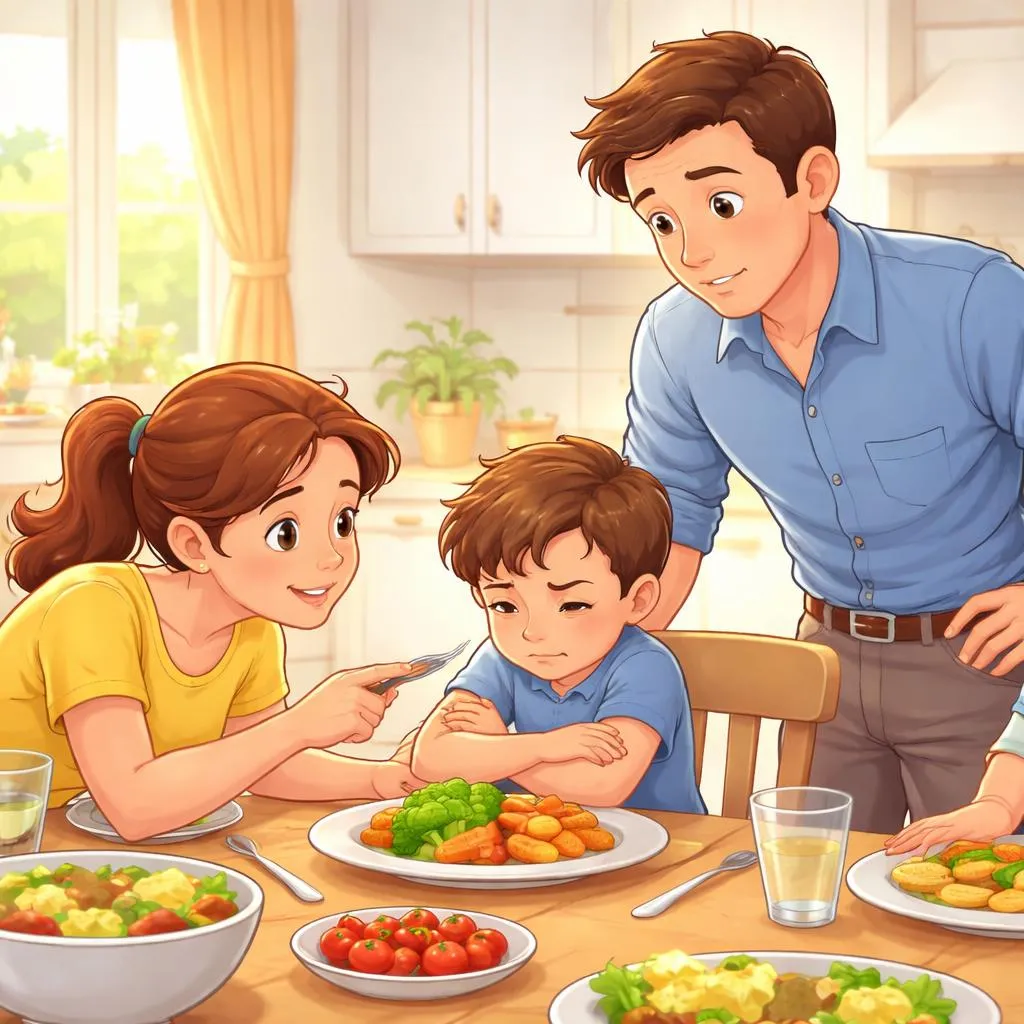
For a child, think of a parent pointing at a plate. “Eat your food” says “Take bites. Chew. Finish what is in front of you.”
“Have your meal” means “participate in the mealtime experience.” It includes eating, but also sitting, using utensils, and enjoying the time together. It is less about the food and more about the event.
For a child, think of a family sitting down to dinner. “Have your meal” says “Let us all eat together. Enjoy this time.” Both phrases relate to eating. Both mean “consume food.” They seem similar because people use both at the table. Yet one is about the action of eating. One is about the whole mealtime experience.
What’s the Difference? The main difference is focus. “Eat your food” focuses on the food and the act of eating. It is often used when a child is not eating enough. “Have your meal” focuses on the mealtime as an experience. It includes sitting, eating, and being together.
Another difference is directness. “Eat your food” is direct and can sound like a command. “Have your meal” sounds softer and more like an invitation.
One more difference is usage with picky eaters. “Eat your food” is what parents say when children refuse to eat. “Have your meal” is what you say when you invite someone to the table.
Also, “have your meal” is less common in everyday speech. People say “eat your dinner” more often.
Teach children that both are about eating. One is about the action. One is about the occasion.
When Do We Use Each One? Use “Eat your food” when a child is not eating. “Please eat your food. It is getting cold.” “Eat your food so you can grow strong.”
Use “Eat your food” for specific foods. “Eat your vegetables.” “Eat your chicken.” “Eat your soup.”
Use “Eat your food” as a gentle reminder during the meal.
Use “Have your meal” as an invitation. “It is time to have your meal.” “Please have your meal before it gets cold.”
Use “Have your meal” for the whole experience. “Let us have our meal together as a family.” “Have your meal and then you can play.”
Use “Have your meal” in more formal settings or in writing. “Guests may have their meal in the dining room.”
Parents can model both. Say “eat your food” for direct eating reminders. Say “have your meal” for the mealtime experience.
Example Sentences for Kids Here are simple sentences children can say.
Eat your food:
Please eat your food. It is lunchtime.
Eat your food slowly so you do not choke.
I ate all my food and asked for more.
Eat your food before it gets cold.
She does not want to eat her food today.
Have your meal:
It is time to have your meal at the table.
Let us have our meal together as a family.
Please have your meal and then wash your dishes.
She had her meal in the garden.
Have your meal while it is still warm.
Read these aloud. Notice how “eat your food” focuses on the food. Notice how “have your meal” focuses on the mealtime event.
Common Mistakes to Avoid Children make mistakes with these phrases. Here are common errors.
Mistake 1: Using “have your meal” for a quick snack. “Have your meal” for a cookie is too grand. A meal is breakfast, lunch, or dinner. Correct: Say “Eat your snack” or “Have a cookie.”
Mistake 2: Using “eat your food” as an invitation to the table. “Eat your food” when the food is not yet on the plate is strange. Correct: Say “Come have your meal” to invite.
Mistake 3: Forgetting “your” in “have your meal.” “Have meal” is wrong. It needs “your.” Correct: Say “have YOUR meal.”
Mistake 4: Using “eat your food” for formal invitations. An invitation that says “Please eat your food” sounds odd. Correct: Say “Please have your meal.”
Mistake 5: Not being specific about which meal. “Have your meal” is vague. “Have your dinner” is clearer. Correct: Say “have your dinner” or “have your lunch.”
Easy Memory Tips Here are simple memory tricks.
Memory tip 1: Think of a fork and a table. “Eat your food” is a fork. Action. “Have your meal” is the whole table. Experience.
Memory tip 2: Use your hands. Pretend to put food in your mouth for “eat your food.” Pretend to sit at a table for “have your meal.”
Memory tip 3: Ask “am I reminding or inviting?” Reminding = “eat your food.” Inviting = “have your meal.”
Memory tip 4: Draw two pictures. A child taking a bite = “eat your food.” A family at the dinner table = “have your meal.”
Memory tip 5: Use the “snack test.” For a small snack, say “Eat your food.” For a full meal, say “Have your meal” or “Eat your dinner.”
Practice these tips during meals. Notice the difference between reminding and inviting.
Quick Practice Time Try these exercises. Parents read aloud. Children answer.
Exercise 1: Choose the best phrase.
Your child is playing with their peas instead of eating. Do you say: a) Eat your food b) Have your meal
You want to invite your family to the dinner table. Do you say: a) Eat your food b) Have your meal
A friend offers you a sandwich at lunch. You want to accept. Do you say: a) I will eat my food b) I will have my meal
Answers: 1(a), 2(b), 3(b — “have my meal” is polite for lunch)
Exercise 2: Fill in the blank.
“Please __________. You need energy.” (direct reminder)
“Come to the table and __________ with us.” (invitation to the experience)
Answers: 1. eat your food, 2. have your meal
Bonus: Play the “Remind or Invite” game. Name a situation. “A child is staring at broccoli.” “A family coming to the table.” “A kid asking for more chicken.” The child says “eat your food” (reminder) or “have your meal” (invitation). Discuss why.
Wrap-up Use “eat your food” for direct reminders about the action of eating, especially when a child needs encouragement. Use “have your meal” as an invitation to the mealtime experience, focusing on the whole event rather than just the food. Both are about nourishment. One is action. One is occasion. Teach children that meals are more than food. They are time with family, sharing stories, and growing strong. Eat your food with joy. Have your meal with gratitude. That is the recipe for a happy table.