
Every day brings transitions. Time to leave the park. Time to start homework. Time for bed. Two common phrases begin action. “Let’s go” and “Let’s get moving.” Both mean “start now.” Both include the child. But one is shorter. One feels more energetic. Parents and kids can learn together. Moving from one thing to the next takes teamwork. The right words make transitions smooth. Let us explore these two action phrases.
What Do These Expressions Mean? “Let’s go” means “you and I leave this place or start this activity now.” The word “let’s” includes everyone. It is a team effort.
For a child, think of a starting line. “Let’s go” says “We begin together. Ready, set, go.”
“Let’s get moving” also means “start now.” But it adds energy. “Get moving” suggests shaking off stillness. Waking up the body.
For a child, think of a stretch before a race. “Let’s get moving” says “Our bodies have been still. Now we wake them up.” Both phrases start action. Both use “let’s” to include the child. They seem similar because parents use both when it is time to start. Yet one is simple. The other is energizing.
What’s the Difference? The main difference is energy level. “Let’s go” is neutral. It simply states it is time to start. No extra push.
“Let’s get moving” has more energy. It wakes up a child who is tired or stuck. It suggests physical movement.
Another difference is length. “Let’s go” has two words. It is quick. You can say it in one second. “Let’s get moving” has three words and more syllables. It takes longer to say.
One more difference is urgency. “Let’s go” can sound urgent. A parent says it when late. “Let’s get moving” sounds more encouraging than urgent. It says “Let us shake off this slowness together.”
Also, “let’s go” works for starting any activity. A game. A walk. A meal. “Let’s get moving” works best for physical activities or when a child is very still.
Teach children that both invite action. One is a door opening. One is a gentle push.
When Do We Use Each One? Use “Let’s go” for leaving places. The playground. A friend’s house. The store. Say “Let’s go. Time to head home.”
Use “Let’s go” for starting tasks. “Let’s go eat dinner.” “Let’s go clean your room.” “Let’s go read a story.”
Use “Let’s go” when you are in a hurry. The car waits. Say “Let’s go right now.”
Use “Let’s get moving” when a child feels stuck. They sit on the floor. They do not want to start. Say “Let’s get moving. We have fun things to do.”
Use “Let’s get moving” for waking up. A child stays in bed. Say “Let’s get moving. The day is starting.”
Use “Let’s get moving” for exercise or play. “Let’s get moving and run around the yard.” “Let’s get moving with some jumping jacks.”
Parents can model both. Say “let’s go” for quick transitions. Say “let’s get moving” when a child needs an energy boost.
Example Sentences for Kids Here are simple sentences children can hear and say.
Let’s go:
Let’s go to the library now.
Let’s go play outside.
Let’s go. School starts in five minutes.
Let’s go build a fort.
Let’s go. I am ready when you are.
Let’s get moving:
Let’s get moving. We have a long walk ahead.
Let’s get moving. The museum closes soon.
Let’s get moving. Time to shake off the sleep.
Let’s get moving with our morning stretches.
Let’s get moving. This room will not clean itself.
Read these aloud. Notice how “let’s go” sounds quicker and more direct. Notice how “let’s get moving” sounds more energetic and encouraging.
Common Mistakes to Avoid Parents make mistakes with these phrases. Here are common errors.
Mistake 1: Always saying “let’s get moving” for everything. Example: “Let’s get moving to the bathroom.” This sounds strange. Bathroom trips do not need that much energy. Correct: Use “let’s go” for normal transitions. Save “let’s get moving” for when a child is really stuck or still.
Mistake 2: Saying “let’s go” when the child cannot come. “Let’s go to work” when the child stays home. That is not a “let’s.” The child does not go. Correct: Say “I have to go to work” or “Daddy is going now.”
Mistake 3: Using a frustrated voice. Gritting your teeth and saying “Let’s go” sounds angry. The child feels blamed. Correct: Smile. Make it a team cheer. “Let’s go! Together!”
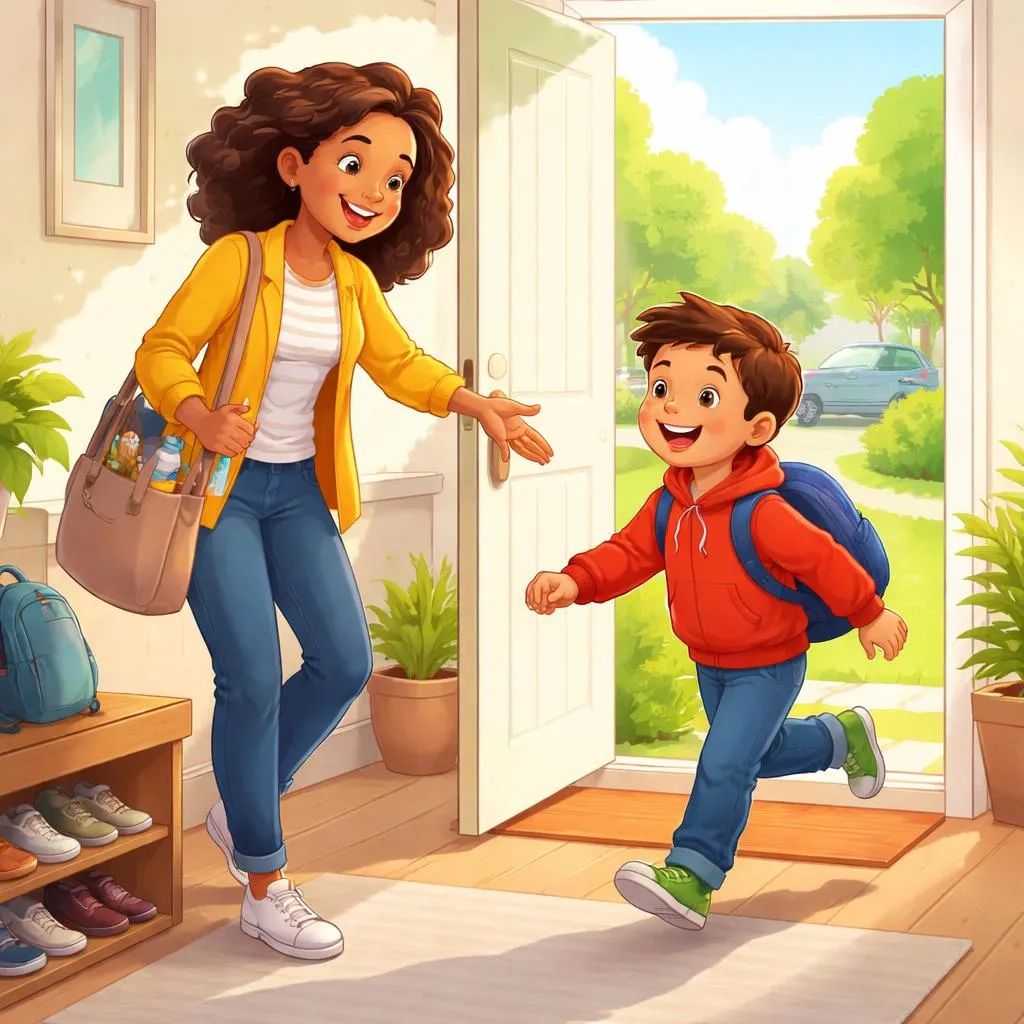
Mistake 4: Forgetting to wait for the child. You say “let’s go” and then walk away. The child feels left behind. Correct: Say “let’s go” and hold out your hand. Wait for them to join you.
Mistake 5: Never explaining the next activity. “Let’s go” to where? Children need to know what comes next. Correct: Say “Let’s go to the car. Then we will get ice cream.”
Easy Memory Tips Here are simple memory tricks.
Memory tip 1: Think of a car and a treadmill. “Let’s go” is a car. It moves you from place to place. “Let’s get moving” is a treadmill. It wakes up your body.
Memory tip 2: Use your body. Point forward for “let’s go.” Do a small jog in place for “let’s get moving.”
Memory tip 3: Think about stillness. If the child is already standing, say “let’s go.” If the child is sitting or lying down, say “let’s get moving.”
Memory tip 4: Draw two arrows. A straight arrow pointing forward = “let’s go.” A wiggly arrow with motion lines = “let’s get moving.”
Memory tip 5: Use the “energy meter.” Low energy child = “let’s get moving.” Normal energy child = “let’s go.”
Practice these tips during daily transitions. Notice which phrase fits each moment.
Quick Practice Time Try these exercises. Parents read aloud. Children answer.
Exercise 1: Choose the best phrase.
Your child is lying on the couch watching TV. You need to leave for the park in five minutes. Do you say: a) Let’s go b) Let’s get moving
You are both standing by the front door. Shoes are on. You are ready to leave. Do you say: a) Let’s go b) Let’s get moving
Your child is dragging their feet about cleaning up toys. They are standing still. Do you say: a) Let’s go b) Let’s get moving
Answers: 1(b), 2(a), 3(b)
Exercise 2: Fill in the blank.
“__________ to the car. We are late.” (quick, direct)
“__________, sleepyhead. Time to wake up and stretch.” (energizing, waking up)
Answers: 1. Let’s go, 2. Let’s get moving
Bonus: Play the “Transition Game.” Set a timer for one minute. When the timer goes off, say either “let’s go” or “let’s get moving” to start the next activity. Switch phrases each time. Talk about which one felt better for each activity.
Wrap-up Say “let’s go” for quick, neutral transitions when everyone is already up. Say “let’s get moving” when a child needs extra energy to shake off stillness. Both invite teamwork. Both say “you and me together.” Choose the one that matches your child’s energy. And always start with a smile.