
Children need water. Every day. All day. Two common phrases encourage drinking. “Drink your water” and “Have a sip.” Both mean “take liquid into your mouth and swallow.” But one is about finishing a whole drink. One is about a small taste. Parents and kids can learn together. Drinking enough water keeps bodies healthy. The right words match the situation. Let us explore these two drinking expressions.
What Do These Expressions Mean? “Drink your water” means “consume all or a significant amount of the water in front of you.” It is about hydration. It often means finish your drink.
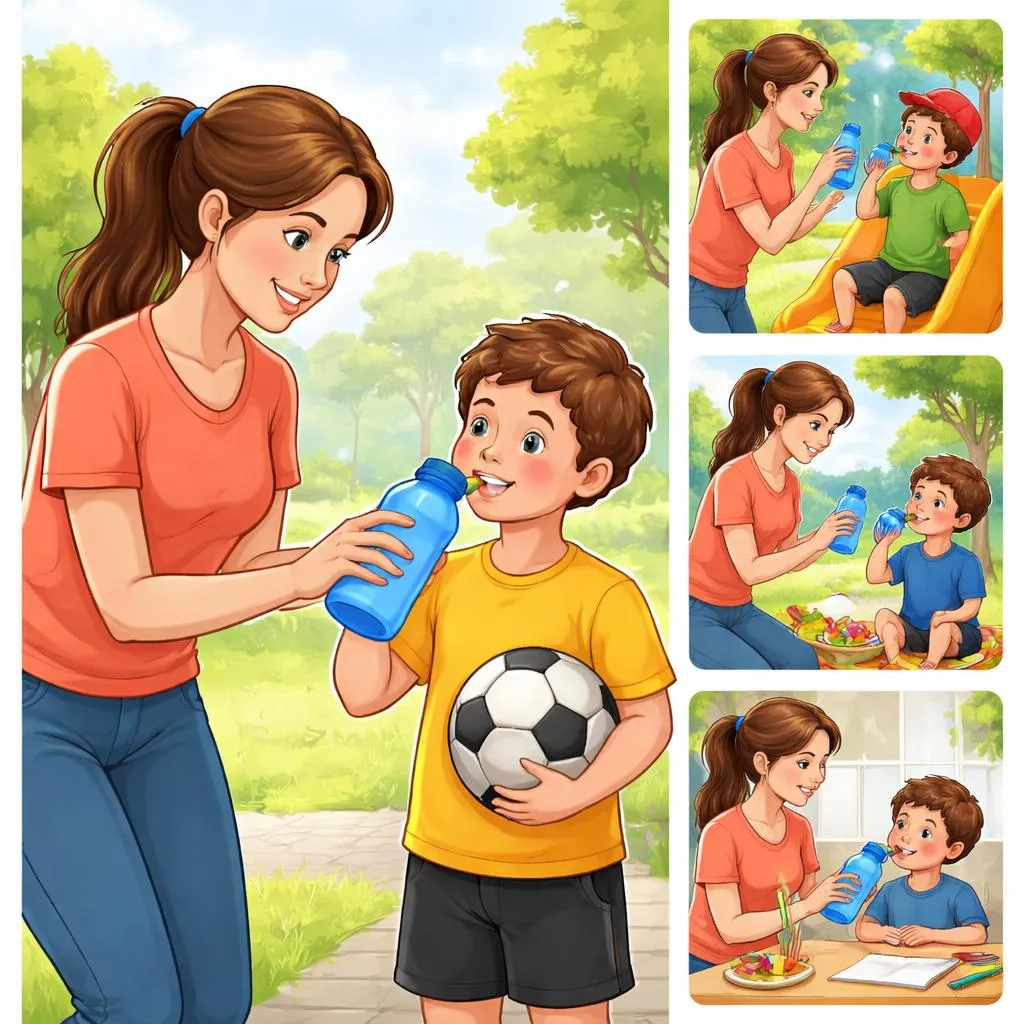
For a child, think of a full water bottle. “Drink your water” says “Take many sips. Finish most of it. Stay hydrated.”
“Have a sip” means “take a very small amount of liquid into your mouth.” A sip is just one small mouthful. It is not about finishing. It is about a taste or a little hydration.
For a child, think of tasting a hot soup. “Have a sip” says “Just a little. To test it or to wet your mouth.” Both phrases are about drinking. Both say “take liquid.” They seem similar because people use both when someone needs to drink. Yet one is about a full drink. One is about a tiny taste.
What’s the Difference? The main difference is amount. “Drink your water” means a full drink or at least several sips. The goal is hydration. “Have a sip” means one tiny mouthful. The goal is a small taste or a little moisture.
Another difference is urgency. “Drink your water” is often a reminder for health. You need water to live. “Have a sip” is casual. “Try this juice. Have a sip.”
One more difference is the vessel. “Drink your water” usually comes from a cup or bottle. “Have a sip” can be from anyone’s cup. You can have a sip of someone else’s drink.
Also, “have a sip” is polite for trying something. “Would you like a sip of my lemonade?” “Drink your water” is not offered that way.
Teach children that both are about drinking. One is for hydration. One is for tasting.
When Do We Use Each One? Use “Drink your water” for health reminders. “It is hot outside. Drink your water.” “Drink your water before it gets warm.”
Use “Drink your water” when a child has their own cup. “Finish your lunch and drink your water.”
Use “Drink your water” for staying healthy. “Drink your water every day.”
Use “Have a sip” for tasting. “Have a sip of my smoothie. Tell me if you like it.”
Use “Have a sip” for a small drink when not very thirsty. “Are you thirsty? Have a sip of water.”
Use “Have a sip” to be polite when sharing. “You can have a sip of my drink.”
Parents can model both. Say “drink your water” for full hydration. Say “have a sip” for small tastes or sharing.
Example Sentences for Kids Here are simple sentences children can say.
Drink your water:
Please drink your water. It is good for you.
Drink your water so you do not get a headache.
I drink my water every morning.
Drink your water before you go out to play.
She drank all her water at lunch.
Have a sip:
Have a sip of my juice. It is yummy.
I just want to have a sip, not the whole cup.
Have a sip of water to clear your throat.
Can I have a sip of your soda?
He took a sip and made a funny face.
Read these aloud. Notice how “drink your water” is about a full drink. Notice how “have a sip” is about a tiny taste.
Common Mistakes to Avoid Children make mistakes with these phrases. Here are common errors.
Mistake 1: Using “have a sip” when a child is very thirsty. “Have a sip” when they need a full glass of water is not enough. They will still be thirsty. Correct: Say “Drink your water” for real thirst.
Mistake 2: Using “drink your water” for a tiny taste. “Drink your water” from someone else’s cup is not right. You cannot drink someone’s whole water. Correct: Say “Have a sip of my water.”
Mistake 3: Forgetting “a” before “sip.” “Have sip” is wrong. Correct: Say “have A sip.”
Mistake 4: Using “sip” as a verb alone. “Sip your water” is fine. “Have a sip” is also fine. Both work. No mistake. Correct: You can say “Sip your water” or “Have a sip.”
Mistake 5: Not having your own water. “Drink your water” only works if the child has their own cup. If not, say “Have a sip of mine.” Correct: Always know whose cup it is.
Easy Memory Tips Here are simple memory tricks.
Memory tip 1: Think of a whole bottle and a tiny straw. “Drink your water” is a whole bottle. “Have a sip” is a tiny straw. One small mouthful.
Memory tip 2: Use your hands. Pretend to tip a whole cup to your mouth for “drink your water.” Pretend to take one tiny sip from a cup for “have a sip.”
Memory tip 3: Ask “how much?” A lot = “drink your water.” A tiny bit = “have a sip.”
Memory tip 4: Draw two pictures. A child drinking from a big cup = “drink your water.” A child sipping from a small straw = “have a sip.”
Memory tip 5: Use the “thirst test.” If very thirsty, say “drink your water.” If just curious, say “have a sip.”
Practice these tips during meals and snacks. Notice the difference in amount.
Quick Practice Time Try these exercises. Parents read aloud. Children answer.
Exercise 1: Choose the best phrase.
Your child has been running outside in the heat. They are very thirsty. Do you say: a) Drink your water b) Have a sip
You want your child to try your new juice. Just a small taste. Do you say: a) Drink your water b) Have a sip
Your child is at the dinner table with a full cup of water. You want them to drink. Do you say: a) Drink your water b) Have a sip
Answers: 1(a), 2(b), 3(a)
Exercise 2: Fill in the blank.
“Please __________. You need to stay hydrated.” (full drink)
“__________ of my milk to see if you like it.” (small taste)
Answers: 1. drink your water, 2. Have a sip
Bonus: Play the “Sip or Drink” game. Act out being very thirsty (wipe forehead, pant). The child says “drink your water.” Act out being curious about a drink. The child says “have a sip.” Then switch roles. Practice the difference.
Wrap-up Use “drink your water” when a child needs a full drink for hydration and health. Use “have a sip” for a small taste or when sharing a drink. Both are about taking liquid. One is a full drink. One is a tiny taste. Teach children that water keeps bodies strong. Sips can test new flavors. Drink when thirsty. Sip when curious. Water is life. Sip by sip, drink by drink, stay healthy every day. Cheers to good habits.