
Bedtime comes every night. Pajamas on. Teeth brushed. Lights out. Two common phrases describe the journey to sleep. “Go to sleep” and “Fall asleep.” Both mean “enter the state of rest.” But one is about the effort to sleep. One is about the moment it happens. Parents and kids can learn together. Sleep is important for growing bodies. The right words describe the process. Let us explore these two sleep expressions.
What Do These Expressions Mean? “Go to sleep” means “begin the process of sleeping.” It is an action you choose to do. You get in bed, close your eyes, and try to sleep. It is a command or instruction.
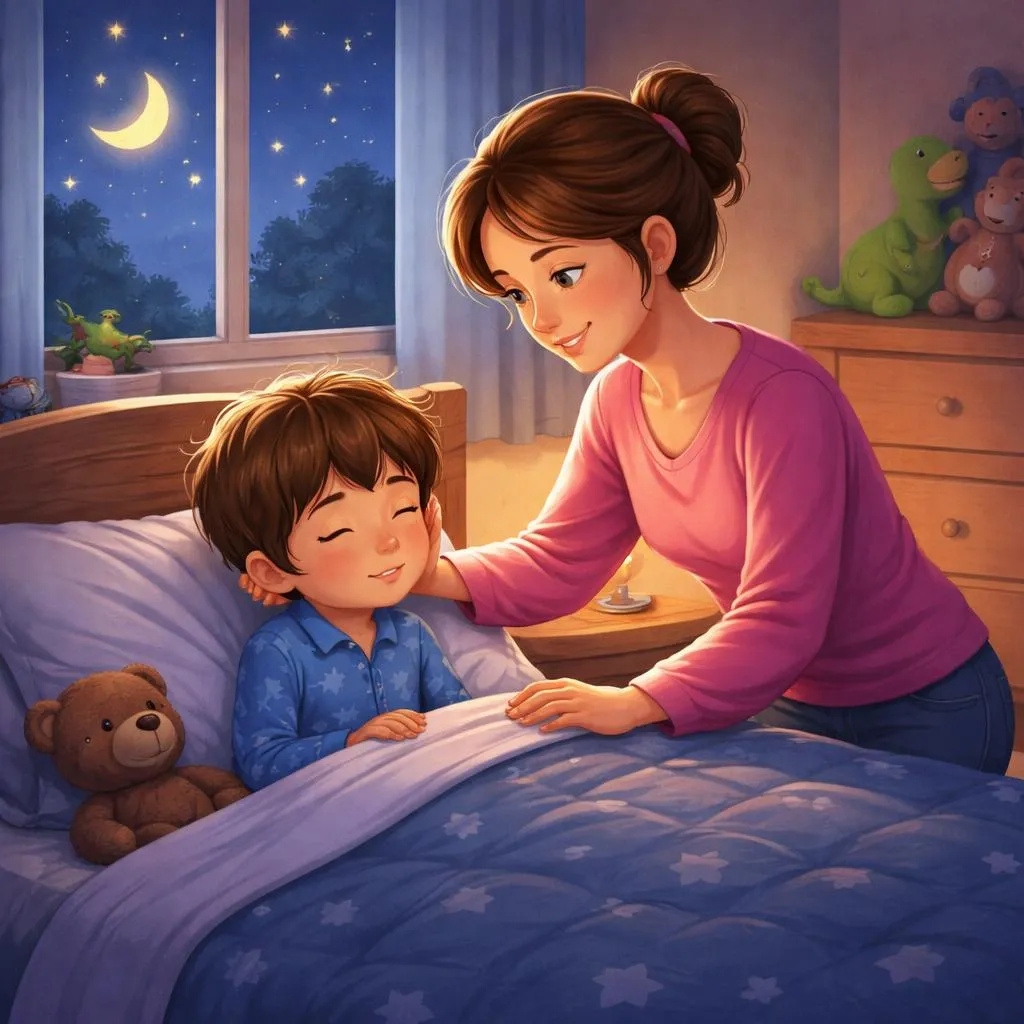
For a child, think of a parent saying “Go to sleep now.” “Go to sleep” says “It is time to stop playing and start resting.”
“Fall asleep” means “the moment when sleep actually comes.” It is not a choice. It happens naturally. You cannot command someone to fall asleep. It just occurs.
For a child, think of lying in bed and slowly drifting off. “Fall asleep” says “The sleep happens to you. Your eyes get heavy. Then you are sleeping.” Both phrases are about sleeping. Both mean “end the waking day.” They seem similar because people use both at bedtime. Yet one is about the effort to sleep. One is about the natural moment of sleep.
What’s the Difference? The main difference is control. “Go to sleep” is something you can try to do. It is an action. You can tell someone to go to sleep. “Fall asleep” is something that happens to you. You cannot command it. It is an event.
Another difference is grammar. “Go to sleep” is an active verb phrase. “Fall asleep” is a passive event. You fall into sleep.
One more difference is timing. “Go to sleep” starts the process. “Fall asleep” is the finish. First you go to sleep, then you fall asleep.
Also, “fall asleep” can happen unintentionally. “He fell asleep during the movie.” “Go to sleep” is always intentional.
Teach children that both are about sleep. One is the effort. One is the result.
When Do We Use Each One? Use “Go to sleep” as an instruction. “It is 9 p.m. Time to go to sleep.” “Go to sleep, sweetheart.” “I need to go to sleep early tonight.”
Use “Go to sleep” for bedtime routines. “Brush your teeth, then go to sleep.” “Go to sleep so you can grow.”
Use “Go to sleep” when you mean “try to sleep.” It is a kind command.
Use “Fall asleep” to describe what happened. “I fell asleep as soon as my head hit the pillow.” “She fell asleep during the story.”
Use “Fall asleep” for accidents. “He fell asleep on the couch watching TV.” “The baby fell asleep in the car.”
Use “Fall asleep” to talk about the moment. “I was reading, and then I fell asleep.”
Parents can model both. Say “go to sleep” as an instruction. Say “fall asleep” to describe the natural event.
Example Sentences for Kids Here are simple sentences children can say.
Go to sleep:
Go to sleep. It is late.
I try to go to sleep at the same time every night.
The parent told the child to go to sleep.
Close your eyes and go to sleep.
We need to go to sleep early before the trip.
Fall asleep:
I fell asleep during the movie.
She falls asleep quickly at night.
The baby fell asleep in her mother’s arms.
He was so tired that he fell asleep standing up.
I read a book until I fell asleep.
Read these aloud. Notice how “go to sleep” is something you try to do. Notice how “fall asleep” is something that happens.
Common Mistakes to Avoid Children make mistakes with these phrases. Here are common errors.
Mistake 1: Telling someone to “fall asleep.” “Fall asleep now!” is strange. You cannot command someone to fall asleep. Correct: Say “Go to sleep now.”
Mistake 2: Saying “I tried to fall asleep” when you mean try to go to sleep. “I tried to fall asleep but I could not” is fine. But “I tried to go to sleep” is also fine. Both work. No big mistake. Correct: Both are acceptable.
Mistake 3: Forgetting that “fall asleep” is unintentional. “I fell asleep in class” means you did not mean to. “I went to sleep in class” is odd. Correct: Use “fell asleep” for accidents.
Mistake 4: Using “go to sleep” for a natural process. “I went to sleep during the movie” is fine but “I fell asleep” is better. Correct: Use “fell asleep” for unintentional sleep.
Mistake 5: Confusing “go to sleep” with “go to bed.” “Go to bed” means get into bed. You can go to bed and not sleep. “Go to sleep” means actually sleep. Correct: “Go to bed” = get in bed. “Go to sleep” = close eyes and rest.
Easy Memory Tips Here are simple memory tricks.
Memory tip 1: Think of a switch and a falling leaf. “Go to sleep” is a switch you turn off. An action. “Fall asleep” is a falling leaf. It happens naturally.
Memory tip 2: Use your hands. Press an imaginary button for “go to sleep” (action). Let your hands drop slowly for “fall asleep” (natural).
Memory tip 3: Ask “is it a command?” If yes, say “go to sleep.” If describing what happened, say “fell asleep.”
Memory tip 4: Draw two pictures. A child getting into bed with eyes open = “go to sleep.” A child with ZZZs coming from their head = “fall asleep.”
Memory tip 5: Use the “accident test.” If it was an accident, say “fell asleep.” If it was on purpose, say “went to sleep.”
Practice these tips at bedtime. Say “go to sleep” as an instruction. Later say “I fell asleep” to describe.
Quick Practice Time Try these exercises. Parents read aloud. Children answer.
Exercise 1: Choose the best phrase.
You are tucking your child into bed. You want them to rest. Do you say: a) Go to sleep b) Fall asleep
Your child fell asleep on the couch while watching a movie. Do you say: a) He went to sleep b) He fell asleep
You want to describe your bedtime routine. Do you say: a) I try to fall asleep at 9 p.m. b) I try to go to sleep at 9 p.m.
Answers: 1(a), 2(b — accidental), 3(b — “go to sleep” is the effort)
Exercise 2: Fill in the blank.
“It is late. Please __________ now.” (instruction)
“The warm bath made me __________ quickly.” (natural event)
Answers: 1. go to sleep, 2. fall asleep
Bonus: Play the “On Purpose or Accident” game. Name a situation. “A parent tells a child to close their eyes at bedtime.” “A person nods off during a long car ride.” “Someone sets an alarm and gets in bed.” The child says “go to sleep” (on purpose) or “fall asleep” (natural/accidental). Discuss why.
Wrap-up Use “go to sleep” as an instruction or to describe the effort to sleep. Use “fall asleep” to describe the natural moment when sleep actually comes. Both are about the end of the day. One is a command. One is an event. Teach children that sleep is a gift. Going to sleep takes practice. Falling asleep takes peace. Create a calm bedtime. Read a story. Sing a song. Let sleep come gently. Good night. Sleep tight.