
Children place things near each other. A cup near a plate. A toy near a book. A friend near a friend. Two common phrases describe closeness. “Next to” and “Beside.” Both mean “at the side of” or “very near.” Both say “not far.” But one is more common in everyday speech. One sounds slightly more formal. Parents and kids can learn together. Describing where things are helps others find them. The right words paint a clear picture. Let us explore these two nearness expressions.
What Do These Expressions Mean? “Next to” means “immediately at the side of.” There is nothing between the two things. They touch or are very close. The phrase has two words.
For a child, think of two chairs touching. “Next to” says “The chairs share a side. No space between them.”
“Beside” also means “at the side of.” It comes from “by the side.” It means the same thing: very close, side by side.
For a child, think of a dog lying by its owner’s feet. “Beside” says “The dog is at the person’s side. Close and near.” Both phrases mean side-by-side closeness. Both say “not in front or behind.” They seem similar because people use both to say two things are near each other. Yet one is more common in speaking. One is a little more formal.
What’s the Difference? The main difference is commonness. “Next to” is very common in everyday speech. Children hear it all the time. “Beside” is less common. It sounds a little more formal or literary.
Another difference is length. “Next to” has two words and three syllables. “Beside” has one word and two syllables. “Beside” is shorter.
One more difference is usage with “of.” You never say “beside of.” “Next to” never takes “of” either. But “beside” can be confused with “besides,” which means “in addition to.”
Also, “beside” can mean “compared to” in some phrases. “That is nothing beside what I have seen.” “Next to” does not have that meaning.
Teach children that both mean side by side. One is for everyday talk. One is for writing.
When Do We Use Each One? Use “Next to” for everyday speaking. “Sit next to me at dinner.” “The school is next to the library.” “Put your shoes next to the door.”
Use “Next to” when you want to be very clear. Every child understands “next to.”
Use “Next to” for directions. “The store you want is next to the bank.” “Your seat is next to the window.”
Use “Beside” in writing or formal speech. “She stood beside the grave.” “The knight fought beside his king.” It sounds more serious.
Use “Beside” in stories. “The boy sat beside the river.” “Beside the fireplace, the cat slept.”
Use “Beside” in fixed phrases. “Beside yourself” means very upset. “Beside the point” means not relevant. “Next to” does not work here.
Parents can model both. Say “next to” for daily talk. Use “beside” for stories or formal moments.
Example Sentences for Kids Here are simple sentences children can say.
Next to:
I sit next to my best friend at lunch.
The pencil is next to the eraser.
Can you park next to that blue car?
The bathroom is next to the kitchen.
Put the red block next to the blue one.
Beside:
The cat slept beside the warm fireplace.
She walked beside her grandfather.
A small table stood beside the bed.
He sat beside me during the movie.
The dog lay beside its owner.
Read these aloud. Notice how “next to” sounds natural for everyday. Notice how “beside” sounds a little more like a story.
Common Mistakes to Avoid Children make mistakes with these phrases. Here are common errors.
Mistake 1: Using “beside” too much in casual talk. “Come sit beside me” is fine but less common than “next to.” It may sound a little old-fashioned. Correct: Use “next to” for everyday invitations.
Mistake 2: Confusing “beside” with “besides.” “Besides” means “in addition to.” “I want water besides juice.” “Beside” means “next to.” Very different. Correct: Remember: “beside” = side. “besides” = extra.
Mistake 3: Saying “next to of” or “beside of.” “Next to of the house” is wrong. “Beside of me” is wrong. Correct: Just say “next to the house” or “beside me.”
Mistake 4: Using “next to” for abstract comparisons. “Next to your grades, mine are low.” This is correct English but formal. “Beside” works too. Correct: Either works. “Beside” is more literary.
Mistake 5: Forgetting that both mean very close, not just near. “Next to” means touching or almost touching. Not across the room. Correct: For general nearness, say “near” or “close to.”
Easy Memory Tips Here are simple memory tricks.
Memory tip 1: Think of a chair and a storybook. “Next to” is a chair. Everyday, common. “Beside” is a storybook. More formal, poetic.
Memory tip 2: Use your hands. Put your two index fingers side by side touching = “next to” or “beside.” Same meaning.
Memory tip 3: Remember the letter X. “Next” has an X. X marks the spot. Very clear.
Memory tip 4: Draw two pictures. Two apples touching labeled “next to / beside.” Then draw a confused face for “besides” (extra, different).
Memory tip 5: Use the “side” test. “Beside” has the word “side” in it. It means by the side. “Next to” also means side. They are the same.
Practice these tips during daily activities. Place things next to each other. Say both phrases.
Quick Practice Time Try these exercises. Parents read aloud. Children answer.
Exercise 1: Choose the best phrase.
You want your child to put their cup near their plate at the dinner table. Do you say: a) Put your cup next to your plate b) Put your cup beside your plate
You are writing a poem about a tree by a river. Do you write: a) The tree stood next to the river b) The tree stood beside the river
You want to say “in addition to” in a sentence. Do you say: a) Next to b) Besides
Answers: 1(a or b — both fine, “next to” more common), 2(b — “beside” is more poetic), 3(b)
Exercise 2: Fill in the blank.
“The toy store is __________ the shoe store. You cannot miss it.” (everyday, common)
“She walked __________ her mother, holding her hand.” (slightly more literary, fine either way)
Answers: 1. next to, 2. beside (or next to)
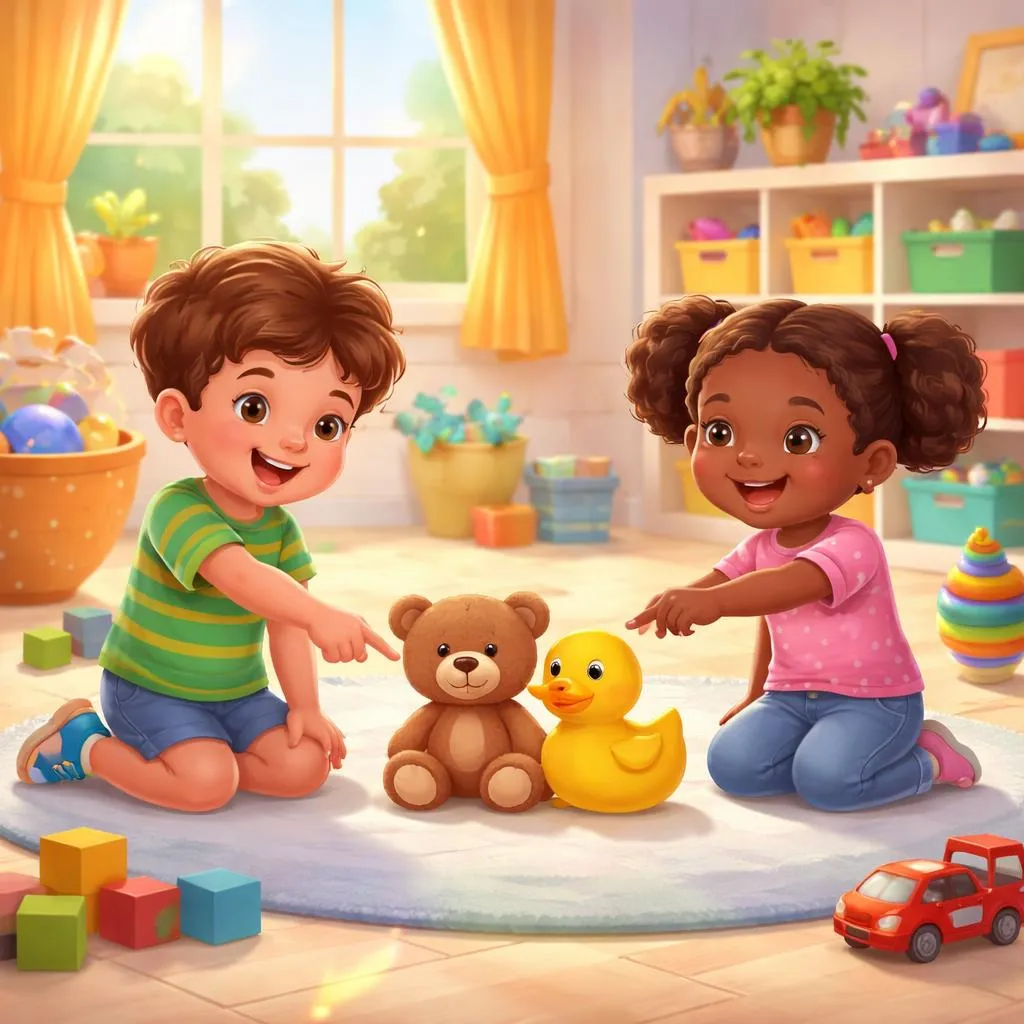
Bonus: Play the “Side by Side” game. Place two toys next to each other. Say “This toy is next to that toy.” Then say “This toy is beside that toy.” Do they mean the same thing? Yes. Then place a third toy far away. Say “This toy is near that toy.” Talk about the difference between “next to” (touching or very close) and “near” (some distance).
Wrap-up Use “next to” for everyday speech when two things are side by side. Use “beside” for writing or more formal moments. Both mean the same thing: at the side of, very close. One is common. One is slightly more literary. Do not confuse “beside” with “besides.” And remember, next to or beside, being close to someone is a good thing.