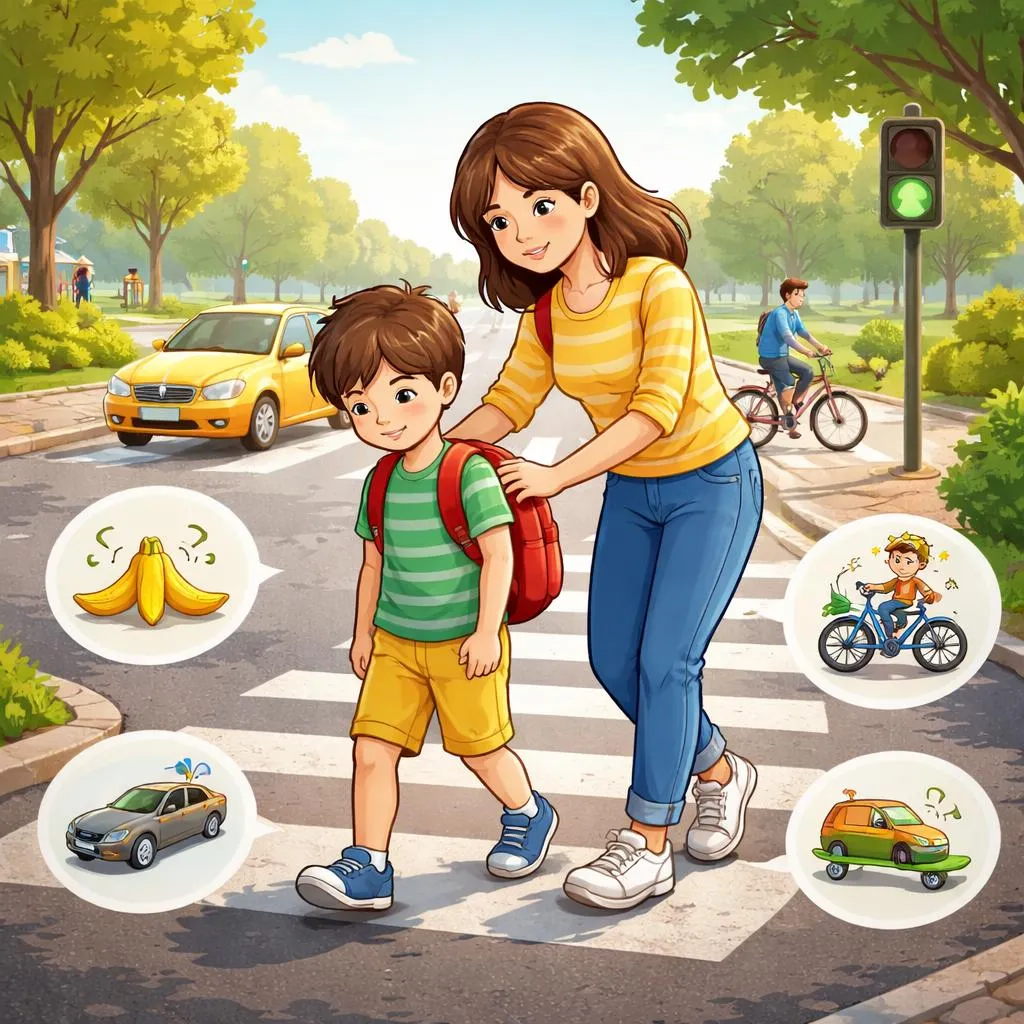

Not everything needs speed. Some things need care. A child walks near a pool. A child carries a glass. A child holds a baby animal. Two common phrases describe slow movement. “Slowly” and “At a slow pace.” Both mean “not fast.” Both say “take your time.” But one is everyday speech. One sounds more formal. Parents and kids can learn together. Going slow keeps us safe. It also helps us notice small wonders. Let us explore these two gentle expressions.
What Do These Expressions Mean? “Slowly” means “at a low speed” or “with little movement over time.” It is the most common way to say “not fast.” One word. Easy to say.
For a child, think of a turtle crossing a path. “Slowly” says “Move like the turtle. Gentle and careful.”
“At a slow pace” also means “not fast.” But “pace” means step or speed. The phrase means “using a slow speed of walking or moving.”
For a child, think of walking next to a grandparent. “At a slow pace” says “Match your steps to theirs. Do not rush ahead.” Both phrases mean slow. Both say “do not go fast.” They seem similar because people use both to ask for careful movement. Yet one is short and common. One is longer and more specific to walking.
What’s the Difference? The main difference is formality. “Slowly” is the everyday word. You say it to a child at home. At the park. In the car. “At a slow pace” sounds more formal. You might see it in a book or hear it from a doctor.
Another difference is usage. “Slowly” can describe any action. Walk slowly. Eat slowly. Speak slowly. Breathe slowly. “At a slow pace” almost always describes walking or moving on foot. You would not say “eat at a slow pace.”
One more difference is length. “Slowly” has two syllables. It is quick to say. “At a slow pace” has four words and many syllables. It takes longer.
Also, “slowly” can go almost anywhere in a sentence. “Slowly, he walked.” “He walked slowly.” “He slowly walked.” “At a slow pace” usually goes at the end. “He walked at a slow pace.”
Teach children that both mean slow. One is for all actions. One is mostly for walking.
When Do We Use Each One? Use “Slowly” for safety instructions. “Walk slowly on the wet floor.” “Eat slowly so you do not choke.” “Slowly, open the door.”
Use “Slowly” for learning new skills. “Write your name slowly.” “Read the words slowly.” Slow helps accuracy.
Use “Slowly” for calming down. “Breathe slowly.” “Speak slowly and tell me what happened.” The word soothes.
Use “At a slow pace” for walking instructions. “The group will walk at a slow pace.” “Please keep at a slow pace so everyone can keep up.”
Use “At a slow pace” for formal or written instructions. “Hikers should proceed at a slow pace.” “The parade moved at a slow pace.”
Use “At a slow pace” when you want to sound thoughtful or gentle. “Let us take this walk at a slow pace and enjoy the flowers.”
Parents can model both. Say “slowly” for everyday slow actions. Use “at a slow pace” for walking or formal moments.
Example Sentences for Kids Here are simple sentences children can say.
Slowly:
Walk slowly on the icy sidewalk.
Slowly, turn the page so it does not tear.
Eat your soup slowly. It is hot.
Slowly, raise your hand to answer.
The turtle moves slowly across the road.
At a slow pace:
The little ducklings walk at a slow pace.
We will hike at a slow pace today.
The elderly dog moves at a slow pace.
Please keep at a slow pace so your brother can keep up.
The kindergarten class walks at a slow pace.
Read these aloud. Notice how “slowly” fits any action. Notice how “at a slow pace” mostly fits walking.
Common Mistakes to Avoid Children make mistakes with these phrases. Here are common errors.
Mistake 1: Using “at a slow pace” for eating or speaking. “Eat at a slow pace” is not wrong, but it sounds strange. “Eat slowly” is natural. Correct: Use “slowly” for most actions. Save “at a slow pace” for walking.
Mistake 2: Forgetting the “a” in “at a slow pace.” “At slow pace” is missing the “a.” This is incorrect. Correct: Say “at A slow pace.”
Mistake 3: Putting “slowly” in the wrong place. “He slowly walked to the store” is fine. “He walked to the store slowly” is also fine. But “He walked slowly to the store” is best. Correct: Put “slowly” after the verb or at the end of the sentence.
Mistake 4: Rushing when you say “slowly.” If you say “quickly slowly,” the child gets mixed messages. Your voice should match the word. Correct: Say “slowly” in a slow, calm voice.
Mistake 5: Forgetting that “slowly” can also describe thinking. “Think slowly before you answer” means take your time. Children need to learn this too. Correct: Teach “slowly” for mental pace as well as physical pace.
Easy Memory Tips Here are simple memory tricks.
Memory tip 1: Think of a snail and a walking group. “Slowly” is a snail. Slow at everything. “At a slow pace” is a walking group matching steps.
Memory tip 2: Use your hands. Move your hand forward very slowly for “slowly.” Tap your fingers like walking steps, slowly, for “at a slow pace.”
Memory tip 3: Ask “what action?” If the action is eating, writing, speaking, breathing = “slowly.” If the action is walking or moving on foot = either works, but “at a slow pace” fits best.
Memory tip 4: Draw two pictures. A turtle labeled “slowly” (any action). A line of people walking labeled “at a slow pace” (walking only).
Memory tip 5: Use the “one word” test. If you can say one word, say “slowly.” If you need more than one word, say “at a slow pace” for walking.
Practice these tips during slow moments. Walk slowly. Eat slowly. Enjoy the pace.
Quick Practice Time Try these exercises. Parents read aloud. Children answer.
Exercise 1: Choose the best phrase.
You are carrying a full cup of water. You need to move carefully. Do you say: a) Walk slowly b) Walk at a slow pace
You are teaching a child to write letters neatly. Do you say: a) Write slowly b) Write at a slow pace
A sign at a zoo says “Please walk past the animal exhibit at _____.” Do you say: a) slowly b) a slow pace
Answers: 1(a or b — both work, but “slowly” is more common), 2(a), 3(b — “at a slow pace” fits signs and formal writing)
Exercise 2: Fill in the blank.
“Please eat your dinner __________. Chew each bite well.” (everyday action)
“The tour group will move __________ so everyone can hear the guide.” (walking, slightly formal)
Answers: 1. slowly, 2. at a slow pace
Bonus: Play the “Slow Motion Game.” Take turns acting out actions in slow motion. Running, eating, brushing teeth. The other person describes it using “slowly.” Then when walking, use “at a slow pace.” Feel the difference.
Wrap-up Use “slowly” for any action that needs care and low speed. Use “at a slow pace” mostly for walking, especially in formal or written instructions. Both keep children safe. One is for all slow actions. One is for walking slowly. Slow is not bad. Slow is careful. Teach children to enjoy the slow pace sometimes. The world needs both fast and slow.