
Life is full of unclear answers. Will it rain? Can we go to the park? Did I pass the test? Two common words express uncertainty. “Maybe” and “Perhaps.” Both mean “it is possible but not certain.” But one sounds everyday. One sounds more thoughtful. Parents and kids can learn together. Being unsure is normal. The right words share possibility without promising anything. Let us explore these two uncertain words.
What Do These Expressions Mean? “Maybe” means “it is possible.” It comes from “may be.” The word is short and casual. It leaves the answer open.
For a child, think of a door that is partly open. “Maybe” says “Yes could happen. No could happen. We will see.”
“Perhaps” also means “it is possible.” It comes from old French. The word has three syllables. It sounds a little more formal.
For a child, think of a gentle maybe with a small bow. “Perhaps” says “There is a chance. I am thinking about it.” Both words express possibility. Both say “I am not sure.” They seem similar because people use both when the answer is not clear. Yet one is quick and casual. The other is slower and more thoughtful.
What’s the Difference? The main difference is formality. “Maybe” is casual and everyday. You say it to friends. To family. At the lunch table. “Perhaps” is more formal. It sounds older. You might see it in books or hear it from a teacher.
Another difference is length. “Maybe” has two syllables. It is quick to say. “Perhaps” has three syllables. It takes a little longer. It feels more considered.
One more difference is commonness. Children say “maybe” all the time. “Perhaps” is less common in daily child talk. Parents use “perhaps” more often than children do.
Also, “maybe” can start a sentence alone. “Maybe.” “Perhaps” rarely stands alone. It usually starts a full sentence.
Teach children that both mean “possible.” One is a quick shrug. One is a slow thoughtful nod.
When Do We Use Each One? Use “Maybe” for everyday uncertainty. “Can we play later?” “Maybe.” “Will you come to my party?” “Maybe.” It is simple and clear.
Use “Maybe” with friends and family. At home. On the playground. In the car. It sounds natural and friendly.
Use “Maybe” when you want to be quick. A child asks many questions. “Maybe” answers without a long discussion.
Use “Perhaps” in more careful speech. A teacher asks a thoughtful question. “Perhaps we could try a different approach.”
Use “Perhaps” in writing. A child writes a story. “Perhaps the dragon will return.” It sounds more literary.
Use “Perhaps” when you want to sound polite or gentle. “Perhaps you could try again tomorrow.” This sounds kinder than “maybe” in some situations.
Parents can model both. Say “maybe” for daily chats. Use “perhaps” when reading stories or having calm conversations.
Example Sentences for Kids Here are simple sentences children can say.
Maybe:
Maybe we can go to the pool tomorrow.
Maybe I left my hat in the car.
Maybe she will say yes.
Maybe it will stop raining soon.
Maybe I can have a cookie later.
Perhaps:
Perhaps we should ask the teacher.
Perhaps the answer is on the last page.
Perhaps it will snow in January.
Perhaps my friend forgot to call.
Perhaps we can find another way.
Read these aloud. Notice how “maybe” sounds quick and friendly. Notice how “perhaps” sounds slower and more thoughtful.
Common Mistakes to Avoid Children make mistakes with these words. Here are common errors.
Mistake 1: Using “perhaps” in everyday talk too much. Example: “Perhaps I want some juice.” This sounds strange. A child sounds like a grown-up in a play. Correct: Say “Maybe I want some juice.”
Mistake 2: Using “maybe” in formal writing. Example: A school report says “Maybe the Civil War started in 1861.” This sounds too casual. Correct: Use “perhaps” or “it is possible that.”
Mistake 3: Saying “maybe” when they mean yes or no. “Maybe” can be a way to avoid answering. This frustrates people. Correct: Say “yes” if you mean yes. Say “no” if you mean no. Save “maybe” for real uncertainty.
Mistake 4: Using both words in one sentence. “Maybe perhaps we will go.” This sounds repetitive. Choose one. Correct: Say “Maybe we will go” or “Perhaps we will go.”
Mistake 5: Forgetting that “maybe” and “perhaps” do not work for commands. “Maybe sit down” is not correct. “Maybe” does not go with commands. Correct: Say “Please sit down” or “Perhaps you could sit down.”
Easy Memory Tips Here are simple memory tricks.
Memory tip 1: Think of a T?shirt and a suit. “Maybe” is a soft T?shirt. Casual and comfortable. “Perhaps” is a suit jacket. Fancier and more formal.
Memory tip 2: Use your hands. One hand shrug = “maybe.” Two hands together like thinking = “perhaps.”
Memory tip 3: Think about the situation. Talking to a friend = “maybe.” Writing a story = “perhaps.”
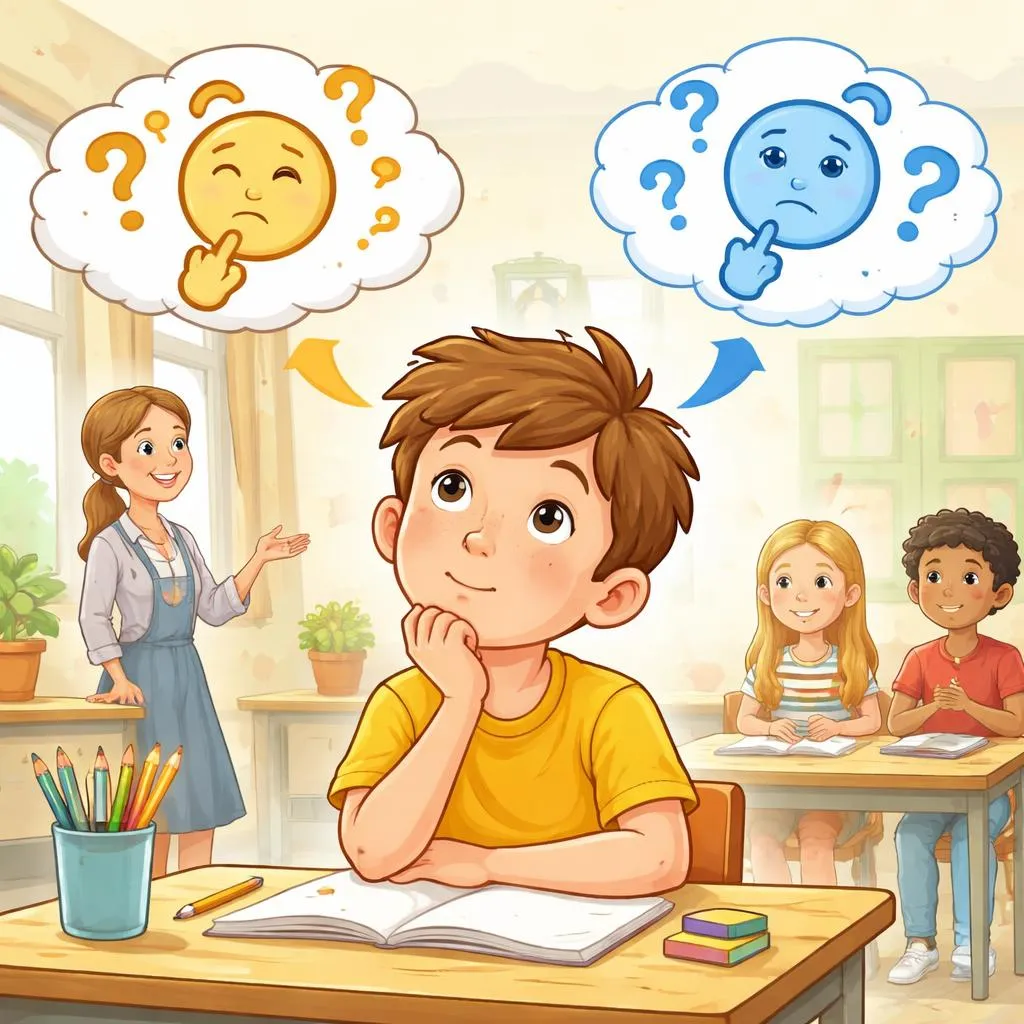
Memory tip 4: Draw two speech bubbles. One bubble has a smiley face and “maybe.” One bubble has a thinking face and “perhaps.”
Memory tip 5: Use the “letter P” trick. “Perhaps” has a P. Think “polite” and “proper.” “Maybe” has no P. Think “my friend” (casual).
Practice these tips during family talks. Answer questions with both words.
Quick Practice Time Try these exercises. Parents read aloud. Children answer.
Exercise 1: Choose the best phrase.
Your friend asks “Want to trade snacks?” You are not sure. Do you say: a) Maybe b) Perhaps
You are writing a poem about the moon. You want to sound thoughtful. Do you write: a) Maybe the moon is made of cheese b) Perhaps the moon is made of cheese
A teacher asks “Why do you think the character felt sad?” You want to sound careful. Do you say: a) Maybe he missed his friend b) Perhaps he missed his friend
Answers: 1(a), 2(b — both work, but “perhaps” sounds more poetic), 3(b — more formal for class discussion)
Exercise 2: Fill in the blank.
“__________ I will see you at the park.” (casual, everyday)
“__________ we should consider another solution.” (thoughtful, slightly formal)
Answers: 1. Maybe, 2. Perhaps
Bonus: Play the “Formal or Casual” game. Take turns saying “maybe” and “perhaps” in sentences. The other person guesses if the sentence is formal or casual. Talk about which word fits each situation.
Wrap-up Use “maybe” for casual, everyday uncertainty with friends and family. Use “perhaps” for more formal or thoughtful moments, especially in writing. Both mean “it is possible.” Both leave room for yes or no. One is a quick shrug. One is a gentle nod. Choose the one that fits your voice and your moment.