
Have you ever pretended to ride a horse, maybe on a playground or in your living room? Imagine riding for days and days under a big sky, with a very important job: moving a huge group of animals from one place to another. Long ago, cowboys in the American West had a special song to help them with this job. It’s a song about the trail, the animals, and the wide-open land. Let’s learn about the cowboy ballad “Git Along, Little Dogies.”
About the Song
Let’s read the rhythmic, trail-worn words of this classic cowboy song.
As I was a-walking one morning for pleasure,
I saw a cowpuncher a-riding along;
His hat was throwed back and his spurs was a-jingling,
And as he approached he was singing this song:
Whoopee ti yi yo, git along, little dogies,
It's your misfortune, and none of my own.
Whoopee ti yi yo, git along, little dogies,
For you know Wyoming will be your new home.
It's early in spring that we round up the dogies,
We mark them and brand them and bob off their tails;
We round up our horses, load up the chuck-wagon,
And then throw the dogies out on the trail.
This song is a traditional American cowboy song from the late 19th century. It is a rhythmic work song used by cowboys during cattle drives. The word “dogies” (pronounced DOH-ghees) refers to motherless or stray calves. The song is sung from the perspective of a cowboy, or “cowpuncher,” who is driving these dogies north from Texas to the grazing lands of Wyoming. The famous chorus, “Whoopee ti yi yo,” is a cheerful cry to keep the cattle moving. The song describes the process of the spring roundup and the long, difficult trail drive. It is a piece of musical history from the era of the open range.
What the Song is About
The song paints a picture of a cowboy’s life on the trail. A person out for a walk sees a cowpuncher riding by. The cowboy’s hat is tipped back, and his spurs jingle as he rides. He is singing a song to the cattle.
The song he sings is the chorus. He tells the “little dogies” to “git along,” or keep moving. He says it’s their “misfortune” to be on this trail, but it’s not his fault—it’s just the job. He tells them that Wyoming will be their new home. The next verse explains the work: in early spring, the cowboys gather the cattle, mark them with a brand, and then set out on the trail with their horses and supplies (the chuck wagon). The song is about the hard, repetitive, and lonely work of moving animals across hundreds of miles, and the way singing made the job a little easier.
Who Made It & Its Story
“Git Along, Little Dogies” is a traditional folk song, so its original author is unknown. It comes from the era of the great cattle drives (roughly 1865-1885) after the American Civil War. Cowboys, who were often African American, Hispanic, and White, sang it to soothe the cattle and keep themselves company during the long, lonely watches. The song was collected by folklorists like John A. Lomax in the early 20th century. It became a standard of Western music, recorded by artists like Roy Rogers and Burl Ives. The song is a vital piece of American folklore, preserving the language and experience of the cowboy.
This cowboy song has remained popular for three enduring reasons. First, its chorus is incredibly catchy and fun to sing, with its yodel-like “Whoopee ti yi yo.” Second, it provides a vivid, authentic glimpse into the daily life and work of a cowboy. Third, it captures the spirit of movement and the vast American landscape, creating a feeling of freedom and adventure that still captures the imagination.
When to Sing It
This song is perfect for active, imaginative play. You can sing it while “riding” a stick horse or rocking horse, pretending to herd cattle. You can chant it on a family hike, using the rhythm to keep your walking pace. You can also sing it as a group around a pretend “campfire,” taking turns yodeling the “Whoopee ti yi yo” part.
What Children Can Learn
This rhythmic slice of history is a wonderful teacher. Let’s saddle up and explore.
Vocabulary
The song teaches us specific Western and cowboy words. “Dogies” are motherless or stray calves. A “cowpuncher” is another word for a cowboy. “Spurs” are metal points worn on a rider’s boots to guide a horse. A “chuck-wagon” is a wagon that carries food and cooking equipment for cowboys on the trail. To “round up” is to gather animals together. To “brand” is to mark an animal with a hot iron to show who owns it. “Wyoming” is a state in the western United States known for cattle ranching.
Let’s use these words! You can say, “The cowboys ate beans from the chuck-wagon.” Or, “The farmer had to round up the sheep.” New word: Drover. This is a person who moves animals over a long distance. The cowpuncher is a drover.
Language Skills
This song is a great lesson in using the past continuous tense to set a scene and the imperative mood for commands. The song starts with the past continuous: “As I was a-walking… I saw a cowpuncher a-riding along.” This describes what was happening at a specific moment in the past.
The chorus uses the imperative to give a direct, though somewhat gentle, command: “Git along, little dogies.” This is how the cowboy talks to the cattle. The song also uses informal, old-fashioned grammar: “his hat was throwed back” (instead of thrown) and “his spurs was a-jingling” (instead of were), which reflects the spoken language of the time.
Sounds & Rhythm Fun
Listen to the slow, plodding, clip-clopping rhythm of the melody. The song mimics the pace of a cattle drive—not too fast, not too slow. The “Whoopee ti yi yo” is a yodel-like cry that carries across the open range. The verses have a clear, storytelling rhyme: “pleasure” and “leisure” (in some versions), “along” and “song,” “tails” and “trail.”
The rhythm is a steady 4/4 time, like walking. Try a slow, even clap: As I was a-WALK-ing one MORN-ing for PLEA-sure. The melody is simple, repetitive, and easy to remember. This slow, repetitive, and hypnotic musical pattern is what helped soothe the cattle and pass the time for the cowboys. You can write your own herding song! Use the same plodding rhythm. Try: “Come along, little duckies, waddle to the pond. It’s time for a swim, so let’s all respond. Quack quack ti yi yo, follow in a line, we’ll get to the water and have a real fine time.”
Culture & Big Ideas
“Git Along, Little Dogies” is a cornerstone of American cowboy and Western folk culture. It comes from the brief era of the cattle drive, a time when beef was in high demand in the East and railroads opened new markets. The song reflects the hard, mobile, and multicultural life of the cowboy. It connects to the history of the open range, the expansion of the United States, and the transformation of the West. The song is a musical artifact of a way of life that was both romantic and brutally difficult, teaching us about the economic forces that shaped a nation.
The song conveys three important ideas. First, it’s about responsibility and gentle persistence. The cowboy’s job is to get the dogies to Wyoming, and he does it not with anger, but with a steady, singing patience. Second, it expresses a sense of fate and duty. The line “It’s your misfortune, and none of my own” acknowledges the hard lot of the animals, but also the cowboy’s role in a larger economic system. Third, it highlights the use of music as a tool for work. The song wasn’t just for fun; it was a practical way to manage animals and morale, showing that music has power in everyday life.
Values & Imagination
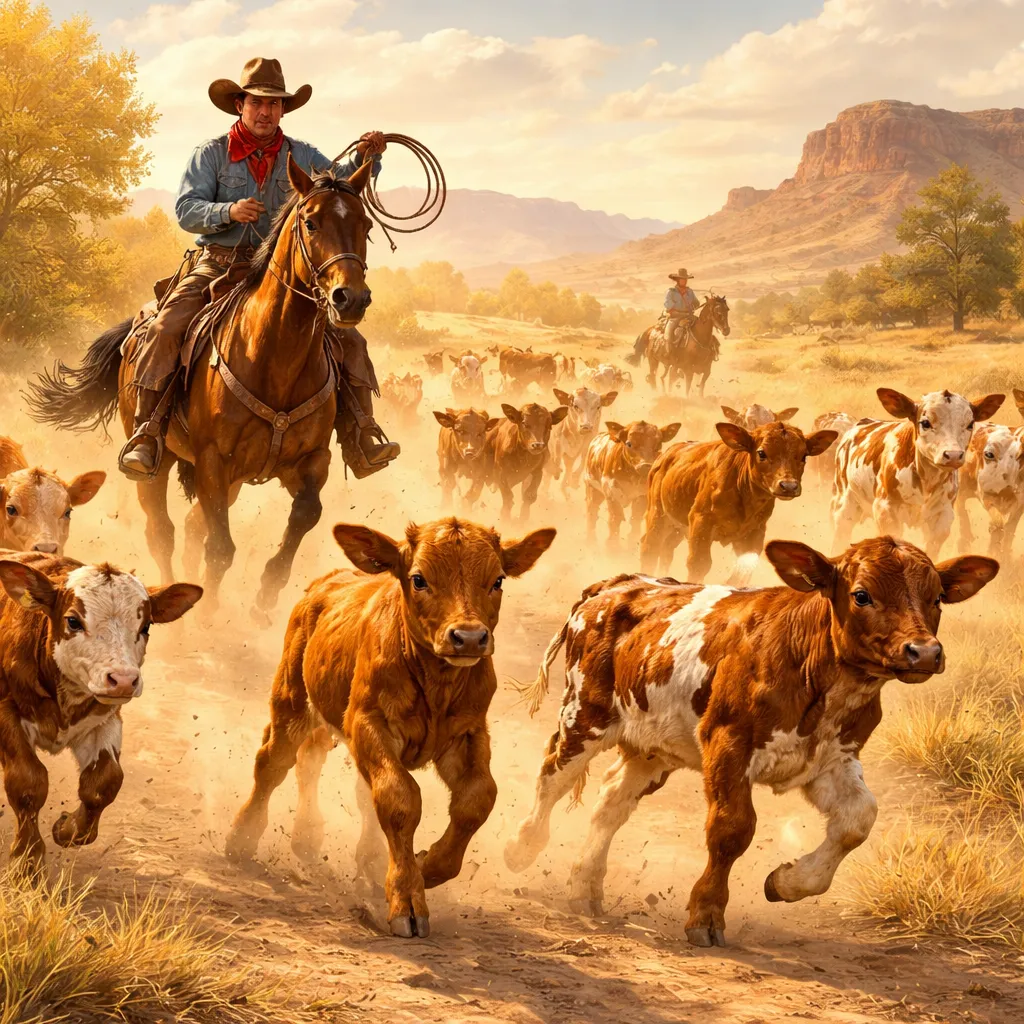
Imagine you are the cowpuncher on your horse. What do you see? A sea of brown and white cattle? A dusty trail stretching to the horizon? How does the saddle feel? Now, imagine you are a little dogie. Why are you on this trail? Are you tired? Do you follow the sound of the cowboy’s song? Draw a picture of the cattle drive. Show the line of dogies, the cowpuncher on his horse singing, and the chuck-wagon in the distance. Draw the big sky and the sun beating down. This shows the scale and the feeling of the song.
The song encourages persistence, care for animals (even when they are livestock), and an appreciation for historical ways of life. A lovely idea is to have a “Trail Drive” pretend play. With your family, use pillows or stuffed animals as dogies. One person is the cowpuncher, gently guiding the “dogies” around the couch (the mountain) and to the kitchen (Wyoming). Sing the song as you go. This active play brings the song’s story to life.
So, as the last “git along” fades into the distance, think about the journey this old cowboy song describes. It is a vocabulary lesson in Western life. It is a grammar lesson in setting scenes and giving gentle commands. It is a music lesson in a slow, plodding rhythm. From the first sight of the cowpuncher to the final destination in Wyoming, it wraps lessons in responsibility, acceptance of duty, and the practical magic of song in a tune that feels as wide and enduring as the prairie. “Git Along, Little Dogies” teaches us that big jobs require patience, that music can be a working tool, and that even the longest trail has an end.
Your Core Takeaways
You are now an expert on the cowboy song “Git Along, Little Dogies.” You know it is a 19th-century work song from the American cattle drives. You’ve learned cowboy words like “dogies,” “cowpuncher,” and “chuck-wagon,” and you’ve practiced the past continuous tense and the imperative mood. You’ve felt its slow, walking rhythm and created your own herding verse. You’ve also discovered the song’s place in Western history and its messages about gentle persistence, duty, and using music to make work easier.
Your Practice Missions
First, stage a “Cattle Drive” with your family. Use stuffed animals or pillows as dogies. Create a trail through your home. One person is the singing cowpuncher, guiding the dogies along the trail while singing the song. See if the singing helps keep the “dogies” moving calmly!
Second, design a “Brand” for your family. In the song, cowboys brand cattle to show ownership. Design a simple symbol that represents your family. Draw it on a piece of paper and explain what it means. Then, use it to “brand” (draw on) a few items around the house, like a notebook or a lunchbox. This connects the song’s practice to your own family identity.