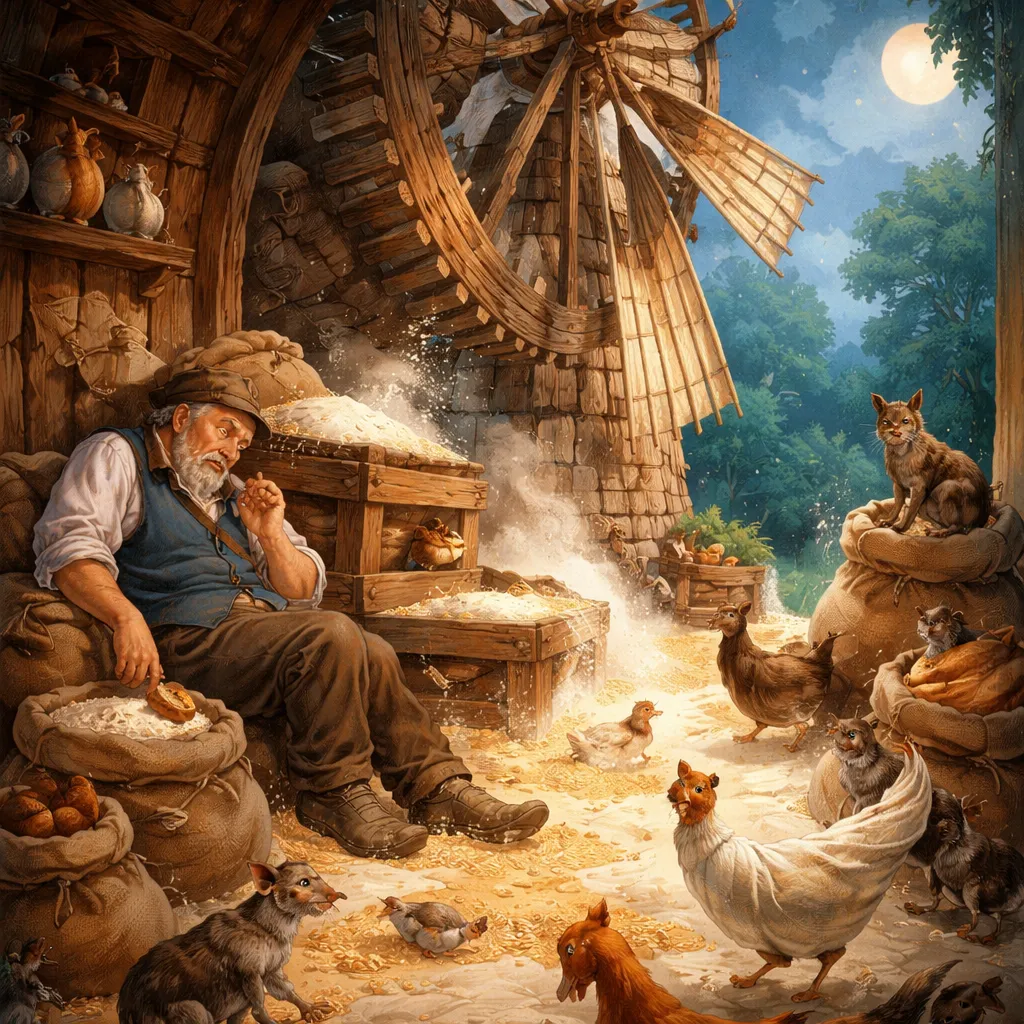

Have you ever been so tired that you couldn’t help but close your eyes, even when you were supposed to be doing something important? There is a gentle, funny old song about a man who did just that. It’s a story about a sleepy worker and a little bit of trouble. Let’s learn the song “Meunier Tu Dors.”
About the Song
This is a traditional French song. Let’s read the original words and their English meaning.
Meunier, tu dors,
Ton moulin va trop vite.
Meunier, tu dors,
Ton moulin va trop fort.
(Miller, you are sleeping,
Your mill is going too fast.
Miller, you are sleeping,
Your mill is going too strongly.)
This song is a classic French folk song and lullaby. It is a short, musical warning. The singer is speaking to a miller, a man who operates a windmill or watermill to grind grain into flour. The singer notices the miller is asleep at his job, and they gently tell him that his mill is running out of control—it’s going too fast and too powerfully. It is a very old song from the countryside of France, a place famous for its beautiful old windmills. The song reflects a time when communities relied on the miller’s careful work for their daily bread, so him falling asleep was a real problem, even if the song makes it sound gently funny.
What the Song is About
The song paints a quiet, then slightly worried, scene. First, we see a miller. He is in his mill. The sound of the grinding stones is loud and steady. The miller sits on a stool. His head nods. His eyes close. He has fallen fast asleep.
The singer sees this. They speak to the sleeping man. “Meunier, tu dors,” they say softly. Then, they point out what’s wrong. They can hear the machinery. The big millstones are turning faster and faster. The whole wooden building is shaking and creaking. “Your mill is going too fast!” they warn. “Your mill is going too strongly!” Without the miller to control it, the mill is working wildly, and the grain might be ground to dust or the machinery could break.
Who Made It & Its Story
“Meunier Tu Dors” is a traditional French folk song, so its composer is unknown. It comes from the rural traditions of France, where windmills and watermills were common and vital parts of village life for centuries. The song was likely sung by mothers as a lullaby, but also known by everyone as a playful reminder of the importance of paying attention to one’s work. The gentle, repetitive melody is perfect for soothing a child to sleep, even as it tells a story about someone else sleeping!
This simple song has remained popular for three charming reasons. First, it is incredibly soothing. The melody is soft, repetitive, and calming, making it a perfect lullaby. Second, it tells a tiny, complete story with a clear problem, which captures a child’s imagination. Third, it is a wonderful, gentle lesson about responsibility and the consequences of not paying attention, taught through a safe, humorous example.
When to Sing It
This song is perfect for calm, quiet moments. You can sing it softly as a lullaby at bedtime, gently patting a child’s back in time with the “too fast, too strong” rhythm. You can sing it playfully to a family member or pet who is taking a nap, pretending they are the sleepy miller. You can also hum it during a quiet activity like drawing, imagining the big sails of a windmill turning in the breeze.
What Children Can Learn
This gentle warning song is a small package full of thoughtful lessons. Let’s explore what it can teach us.
Vocabulary
The song teaches us some lovely French words about work and action. “Meunier” means “miller,” the person who runs a mill. “Tu dors” means “you are sleeping” (“dors” from the verb dormir, to sleep). “Ton moulin” means “your mill.” The word “va” comes from the verb aller, meaning “to go.” “Trop” means “too” or “excessively.” “Vite” means “fast.” “Fort” means “strong” or “loudly.”
Let’s use these words! You can say to a friend, “Tu dors?” if they look sleepy. You might describe a fan: “Le ventilateur va trop vite!” (The fan is going too fast!). New word: Machinery. This is the working parts of a machine. The mill’s machinery was going too fast. New word: Responsibility. This is a duty to deal with or take care of something. It was the miller’s responsibility to watch the mill.
Language Skills
This song is a perfect example of talking to someone directly using the informal “you” (in French: “tu”) and describing an ongoing action with the present tense. In French, “tu dors” uses the present tense of the verb dormir to mean “you are sleeping” or “you sleep.” It describes what is happening right now.
Look at the structure: The singer is addressing the miller directly: “Tu dors.” This is a statement in the present tense about his current state. Then, they describe the mill’s action, also in the present tense: “Ton moulin va trop vite.” (“Your mill is going too fast.”). The whole song is a present-moment observation. It also shows how to give a gentle warning by stating a fact (“you are sleeping”) and then stating its consequence (“your mill is going too fast”). This “if… then…” logic is a foundational thinking skill.
Sounds & Rhythm Fun
Listen to the soft, rocking sound of the melody. The song uses simple, gentle repetition: the line “Meunier, tu dors” is sung twice, and the descriptions “trop vite” and “trop fort” mirror each other. The “or” sound in “dors,” “fort,” and “vite” (which has a similar soft ‘i’ sound) creates a soothing, connected feel.
The rhythm is slow, steady, and rocking, like a lullaby or a gently turning mill wheel. Try swaying slowly side to side: Meu-NIER, tu DORS. The melody is simple, uses only a few notes, and rises and falls gently. This calm, repetitive musical pattern is what makes it so easy to remember and so perfect for helping someone feel sleepy. You can write your own gentle warning song! Use the same soothing rhythm. Try: “Baker, you are dreaming, your oven is too hot. Baker, you are dreaming, your cookies in the pot.”
Culture & Big Ideas
“Meunier Tu Dors” gives us a sweet glimpse into the historical life of rural France. For hundreds of years, the village miller was one of the most important people in a community. He ground the wheat from the farmers’ fields into the flour that made the bread everyone ate. The song reflects the community’s dependence on his skill and attention, making his nap a small drama that everyone could understand.
The song shares three gentle ideas. First, it’s about attention to task. The miller’s job required him to watch the millstones and the wind to grind the flour perfectly. The song teaches that doing a job well means staying focused. Second, it illustrates cause and effect. The cause (the miller sleeping) has a direct effect (the mill running out of control). Third, it touches on gentle correction and care. The singer isn’t shouting angrily; they are pointing out the problem in a calm, almost singing voice, which is a kind way to help someone realize a mistake.
Values & Imagination
Let your imagination visit the old mill. What does it look like? Is it a stone tower with big, cloth sails? What does it sound like inside? The creak of wood, the rumble of the stones, the flutter of flour dust in the sunbeams? What does the sleepy miller look like? Is he old and kind? What dream is he having that is better than watching the mill? Imagine you are the singer. How would you wake him? A soft touch? A slightly louder song? Draw a picture of the mill from the outside, with its sails a blur because they’re going “trop vite,” and the little figure of the miller asleep at the window.
The song can inspire us to be mindful helpers. A simple idea is to play the “Watchful Helper” game. Choose a simple task with a family member, like building a block tower. One person is the “miller” who starts building but then pretends to fall asleep. The other person is the singer, who gently says, “Builder, you are sleeping, your tower is too tall!” Then you both fix it together. This turns the song’s lesson into a game about teamwork and gentle reminders.
This old lullaby, then, is much more than a few sleepy lines. It is a French vocabulary lesson sung in a whisper. It is a logic lesson about cause and effect. It is a music lesson in soothing rhythm. From the first soft “Meunier” to the final worried “trop fort,” it wraps learning in a blanket of calm and care. The song “Meunier Tu Dors” teaches us that even in our sleepiest moments, the world keeps turning, and that a gentle word from a friend can be the kindest way to remind us of our responsibilities. It connects us to a time of windmills and village life, and to the universal feeling of needing—and sometimes missing—a little nap.
Your Core Takeaways
You are now a friend to the song “Meunier Tu Dors.” You know it is a traditional French lullaby about a sleepy miller and his runaway mill. You’ve learned French words like meunier (miller) and moulin (mill), and you’ve seen how the present tense describes what’s happening now. You’ve felt its slow, rocking rhythm and created your own gentle warning tune. You’ve also discovered the song’s connection to French history, and its gentle lessons about focus, consequences, and caring for one another.
Your Practice Missions
First, stage a sleepy scene. Find a cozy chair or cushion to be your “mill.” Sit in it and pretend to be the miller, nodding off to sleep. Ask a family member to tiptoe up to you and sing the song very softly. When they get to “trop fort,” you can wake up with a funny, surprised jump! Then switch roles.
Second, build a “mill in control.” Using recycled materials (a paper cup, cardboard, tape, a pencil), build a simple model of a windmill. Attach paper sails. Blow on it to make it spin. Now, sing the song. When you sing “ton moulin va trop vite,” blow hard to make it spin wildly. When you stop singing, make it slow down. This shows the cause (your breath) and effect (the mill’s speed), just like in the song.