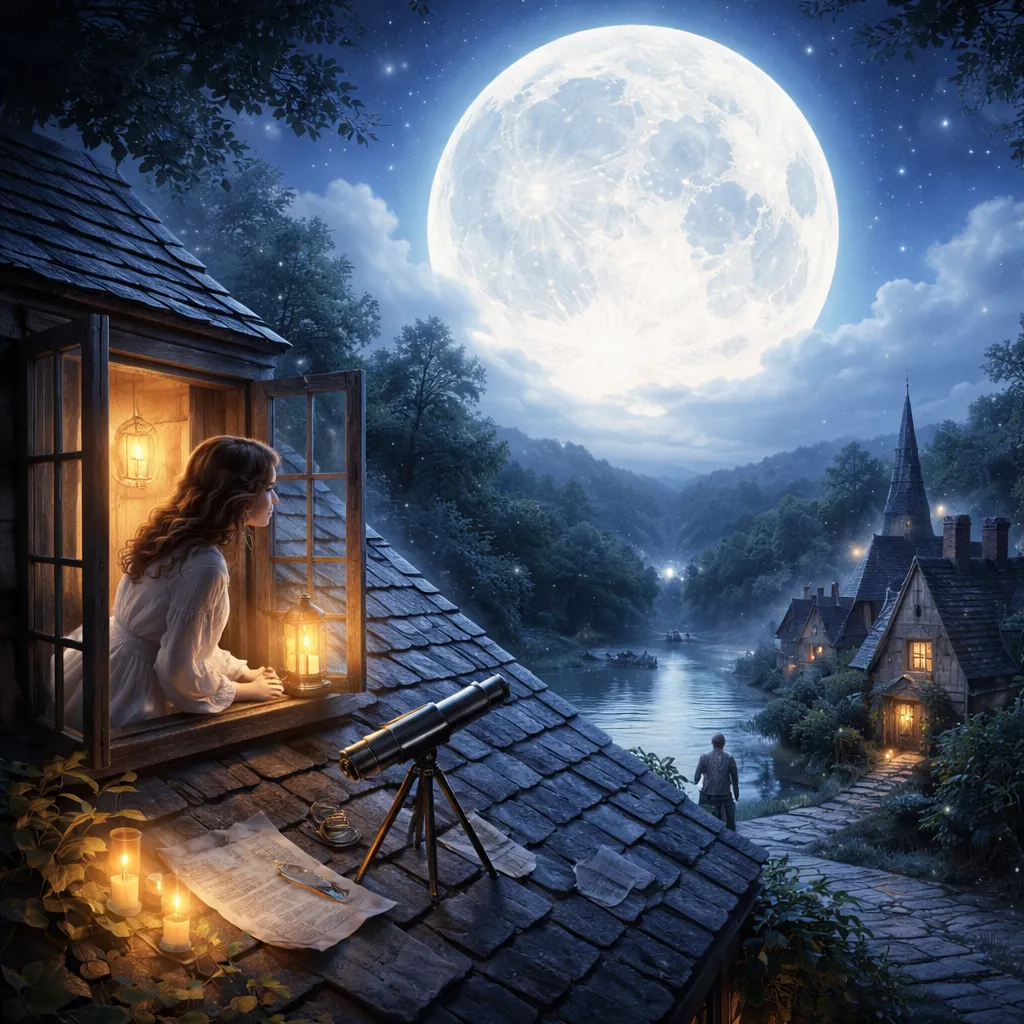

Have you ever been outside on a night when the moon is so bright it almost seems like daytime? In France, a long, long time ago, someone made a beautiful little song about just such a night. It’s a gentle story about asking for a small favor under the silver light. Let’s listen to the song “Au Clair de la Lune.”
About the Song
This song is almost always sung in its original French. Here are the words and what they mean in English.
Au clair de la lune,
Mon ami Pierrot,
Prête-moi ta plume
Pour écrire un mot.
Ma chandelle est morte,
Je n’ai plus de feu.
Ouvre-moi ta porte,
Pour l’amour de Dieu.
Au clair de la lune,
Pierrot répondit :
Je n’ai pas de plume,
Je suis dans mon lit.
Va chez la voisine,
Je crois qu’elle y est,
Car dans sa cuisine
On bat le briquet.
Under the moonlight,
My friend Pierrot,
Lend me your pen
To write a word.
My candle is dead,
I have no more light.
Open your door for me,
For the love of God.
Under the moonlight,
Pierrot replied:
I don’t have a pen,
I am in my bed.
Go to the neighbor,
I think she is there,
For in her kitchen
They are striking a light.
This song is a traditional French folk song and lullaby. It is like a tiny, quiet play that happens in the soft glow of the moon. The singer needs to write something, but their candle has gone out, so they ask a friend for help. The song comes from France and is one of the oldest known French songs, first written down in the 18th century. It paints a picture of life long ago, when people used candles for light and relied on their neighbors, all under the watchful eye of the moon.
What the Song is About
The song shows us a quiet, nighttime scene. A person is walking down a sleepy street. The moon is shining brightly, making soft shadows. This person needs to write a note, but their candle has flickered out. They cannot see. They go to their friend Pierrot’s house. They knock gently on the wooden door.
They call up to the window, “Pierrot, my friend!” They ask if he can lend them a pen. But Pierrot is already tucked in bed. His voice comes from inside, a little sleepy. He says he doesn’t have a pen and that he is already in bed. He is not angry; he is trying to help. He suggests going to the neighbor’s house. He thinks she is awake because he can hear the sound of someone striking a flint to make a light in her kitchen. The song ends with this helpful idea, leaving us to imagine the rest.
Who Made It & Its Story
“Au Clair de la Lune” is a very old traditional French song, so no one knows who first made it up. It was passed from parents to children for generations before it was ever written in a book. The song gives us a peek into life in French villages hundreds of years ago. Nights were dark and quiet, and people often helped each other with small things. The song might have been sung as a gentle lullaby or a way to teach children about being kind and resourceful.
This simple song has been loved for centuries for three beautiful reasons. First, the melody is incredibly soft, sweet, and easy to remember. It feels like a musical hug. Second, it tells a tiny, complete story that every child can understand—needing help, asking a friend, and finding another solution. Third, it is a precious piece of French culture. It uses lovely poetic language and introduces listeners to the sound and rhythm of the French language.
When to Sing It
This song is perfect for peaceful, thoughtful moments. You can sing it very softly as a lullaby at bedtime, while looking at the moon from your window. You can sing it during a quiet family evening, perhaps while sitting together in a dimly lit room. You can also hum it on a calm walk outside when the moon is full, letting the tune match your slow, quiet steps.
What Children Can Learn
This gentle moonlit song is full of wonderful things to discover. Let’s explore all the learning hidden in its quiet verses.
Vocabulary
The song teaches us some lovely French words. “Au clair de la lune” means “in the light of the moon.” “Lune” is the word for moon. “Ami” means friend. “Prête-moi” means “lend me.” “Plume” is a pen or a feather. “Chandelle” is a candle. “Porte” is a door. “Voisine” is a neighbor (female). “Cuisine” is kitchen.
Let’s use these words! You can point to the sky and say, “Regarde la lune!” (Look at the moon!). You can ask a sibling, “Mon ami, prête-moi ton crayon?” (My friend, lend me your crayon?). New word: Resourcefulness. This is the ability to find quick and clever ways to solve a problem. The singer showed resourcefulness by asking Pierrot and then being directed to the neighbor.
Language Skills
This song is a wonderful lesson in making polite requests using the imperative mood in French. The imperative is used to give commands or make requests. The singer says, “Prête-moi ta plume” (Lend me your pen) and “Ouvre-moi ta porte” (Open your door for me). These are direct but polite requests.
The song also uses the present tense to describe the current situation. “Ma chandelle est morte” (My candle is dead). “Je suis dans mon lit” (I am in my bed). This tense tells us what is happening right now in the story. In English, we learn similar structures for asking and telling: “Can you lend me…?” and “I am sleeping.” The back-and-forth between the two characters is also a great example of a simple conversation.
Sounds & Rhythm Fun
Listen to the soft, flowing music of the song. The French lines have a gentle rhyme: “lune” and “brune” (in some versions), “plume” and “mot,” “porte” and “Dieu.” The words sound musical and peaceful.
The rhythm is a slow, gentle waltz. It has a three-beat pattern that feels like a calm sway. Try rocking side to side: Au CLAIR de la LUNE. The melody uses only a few notes and moves up and down smoothly, like a quiet sigh. This soothing, repetitive rhythm makes the song easy to remember and very calming to sing. You can write your own nighttime request song! Use the same waltzing rhythm. Try: “Under the starlight, my friend so dear, can I borrow your book while you’re near? My nightlight is out, it’s hard to see, please share a story with me.”
Culture & Big Ideas
“Au Clair de la Lune” is a precious piece of French cultural history. It comes from a time before electric lights, when daily life slowed down at night, and the moon was an important source of light. The song reflects the close-knit community of old French villages, where everyone knew their neighbors and helped each other. The moon in French poetry often symbolizes beauty, dreams, and quiet mystery.
The song teaches three important ideas. First, it’s about friendship and helpfulness. Even though Pierrot is in bed, he tries to help by suggesting the neighbor. This shows that friends care, even in small ways. Second, it demonstrates problem-solving. When one path is blocked (Pierrot has no pen), the song finds another path (the neighbor’s house). This is a great lesson in not giving up. Third, it celebrates the magic of ordinary moments. A simple request for a pen becomes a beautiful, moonlit poem, teaching us to see the wonder in everyday life.
Values & Imagination
Let your imagination fly to that moonlit street in old France. What do the houses look like? Are they made of stone with wooden shutters? What does the air smell like? Fresh night air, maybe bread from the bakery? What is the important word the singer needs to write? A love letter? A secret plan? A poem about the moon itself? Imagine you are Pierrot. What do you hear from your bed? The knock, the whisper, the distant sound from the neighbor’s kitchen? Draw a picture of the scene. Show the moon, the dark street, the two houses, and the little details like the dead candle.
The song encourages us to be kind and to appreciate the people around us. A lovely idea is to have a “Moonlight Kindness” ritual with your family. Once a week, when you see the moon, think of one small, kind thing you can do for a neighbor or friend, just like Pierrot tried to help. It could be sharing a toy or drawing a picture for them. This turns the song’s message into action.
As we come to the end of our time with this old song, think about how much it has shared. It shared French words that sound like music. It shared a rhythm that rocks you to sleep. It shared a story about friendship that feels as true today as it was hundreds of years ago. “Au Clair de la Lune” is not just a song; it is a window. A window into the past, into another language, and into the quiet, kind parts of our own hearts. From the first whisper of “Au clair de la lune” to the final hopeful suggestion, it wraps its lessons in moonlight and melody, making them impossible to forget.
Your Core Takeaways
You are now a friend to the song “Au Clair de la Lune.” You know it is a traditional French lullaby about a moonlit request for help. You’ve learned French words like lune (moon) and ami (friend), and you’ve practiced making polite requests. You’ve felt its gentle waltzing rhythm and created your own nighttime tune. You’ve also discovered the song’s celebration of kindness, clever problem-solving, and the simple beauty of a moonlit night.
Your Practice Missions
First, host a moonlit concert. On an evening when the moon is visible, gather your family in a room with the lights dimmed. Use a flashlight or a toy as your “candle.” Sing the song together softly. Then, act it out. One person can be the singer, one can be Pierrot in bed (under a blanket!), and one can be the neighbor in the “kitchen” (another room). This brings the story to life.
Second, create a “Moonlight Message.” The singer in the song needed to write a word. What would you write? Take a piece of paper and a pen. Sit by a window if you can see the moon, or just imagine it. Write a short, kind note or draw a picture for someone in your family—a “mot” (word) just like in the song. Fold it and deliver it quietly, as a surprise, to spread a little moonlight kindness of your own.