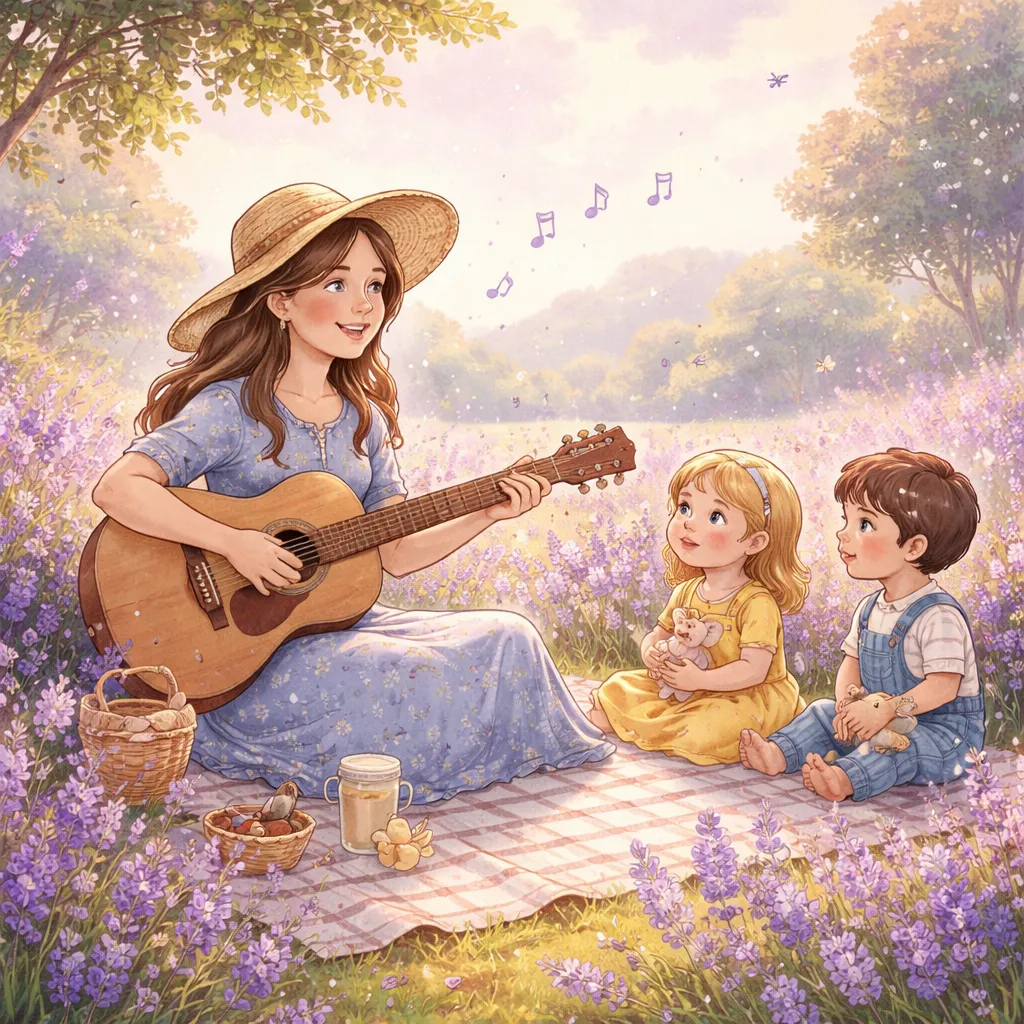

Some songs feel like soft blankets on peaceful afternoons. The English song: Lavender's Blue (Dilly Dilly) does exactly that. This old English folk song has soothed children for hundreds of years. It speaks of lavender fields, royal dreams, and simple joys. For families learning English together, this song offers a beautiful way to explore nature words, colors, and gentle rhythms. Let us discover what makes this traditional song so special for young learners.
What Is the Story Behind This Famous Song?
The English song: Lavender's Blue (Dilly Dilly) is a traditional English folk song dating back to the 17th century. It first appeared in print around 1672 under the title "Diddle Diddle" or "Lavender Blue". The song has changed many times over the centuries, with different verses added by different singers.
The "dilly dilly" part is a playful nonsense refrain. These sounds have no real meaning. They simply make the song more fun to sing. Children love saying them because they feel light and happy.
The song became widely known when Disney used it in the 1949 film "So Dear to My Heart". A newer version with additional verses by Larry Morey and Eliot Daniel became a hit. Since then, it has remained a beloved nursery rhyme.
The lyrics tell of lavender fields and a love so deep that the singer would make their beloved a king or queen. It speaks of simple gifts like a pair of shoes and a wedding day. The gentle melody carries these sweet words like a lullaby.
Understanding this背景 helps families appreciate the song's place in English folk tradition. It connects children to centuries of singers who passed this tune from generation to generation.
The Complete Lyrics of the Song
Reading the words helps us understand the song's gentle beauty. Here are the lyrics to the English song: Lavender's Blue (Dilly Dilly). Let us look at them in sections.
Lavender's blue, dilly dilly, lavender's green
When I am king, dilly dilly, you shall be queen
Who told you so, dilly dilly, who told you so?
'Twas my own heart, dilly dilly, that told me so
Call up your men, dilly dilly, set them to work
Some to the plow, dilly dilly, some to the cart
Some to make hay, dilly dilly, some to cut corn
While you and I, dilly dilly, keep ourselves warm
Lavender's blue, dilly dilly, lavender's green
When I am king, dilly dilly, you shall be queen
Who told you so, dilly dilly, who told you so?
'Twas my own heart, dilly dilly, that told me so
Some to make hay, dilly dilly, some to cut corn
While you and I, dilly dilly, keep ourselves warm
Lavender's blue, dilly dilly, lavender's green
When I am king, dilly dilly, you shall be queen
Learning New Words from the Song
The English song: Lavender's Blue (Dilly Dilly) introduces many lovely words. Let us explore them together.
First, "lavender" is a beautiful purple flower with a sweet smell. People use it in soaps, perfumes, and sachets. The word teaches both a color and a plant. Lavender is blue? Actually lavender flowers are purple. The song plays with colors in a poetic way.
The song mentions colors. "Blue" and "green" are basic color words. Children learning English need these words early. The song gives them a beautiful context.
"King" and "queen" are royal titles. These words appear in many fairy tales and stories. Children love pretending to be royalty. The song lets them dream of being king and queen.
The phrase "who told you so" is a common English question. We ask this when we want to know where someone got information. For example, "Who told you it was raining?" or "Who told you I was sad".
"'Twas" is an old contraction of "it was". Children might not use this in speaking today, but they hear it in songs and stories. Understanding it helps with reading older texts.
The song mentions farm work. "Plow" breaks ground for planting. "Cart" carries things. "Make hay" means cut and dry grass for animal food. "Cut corn" means harvest corn. These words teach children about traditional farming life.
"Keep ourselves warm" is a cozy phrase. It means staying comfortable when weather is cold. This connects to feelings of safety and comfort.
Exploring Pronunciation and Rhythm
The English song: Lavender's Blue (Dilly Dilly) offers gentle practice with English rhythm. The lilting melody rocks back and forth like a gentle swing.
Listen to the opening "Lavender's blue, dilly dilly, lavender's green". The rhythm goes LAV-en-der's BLUE, DIL-ly DIL-ly, LAV-en-der's GREEN. The strongest beats fall on "lav", "blue", "dil", and "green". Clapping along helps children feel this pattern.
The "dilly dilly" refrain repeats throughout. This playful sound has no meaning, but it teaches the rhythm of English syllables. DIL-ly DIL-ly. Two beats, twice. Children love saying it.
The line "When I am king, dilly dilly, you shall be queen" flows smoothly. WHEN I am KING, dilly dilly, YOU shall be QUEEN. Practicing this line builds natural stress patterns.
Finding Grammar Patterns in the Lyrics
The English song: Lavender's Blue (Dilly Dilly) offers useful grammar examples. One pattern appears in the conditional statement. "When I am king, you shall be queen" uses "when" to show a future possibility. We use this structure for things we hope will happen. For example, "When I grow up, I will be a teacher" or "When we get home, we will eat dinner".
The song uses "shall" which is similar to "will". In modern English, we usually say "will". But "shall" appears in songs and formal contexts. Children learn to recognize it even if they don't use it often.
Another pattern appears with the question "Who told you so?" This uses past tense. "Told" is the past of "tell". We ask about past events when we want information. For example, "Who gave you that book?" or "Who made this cake?"
The answer "'Twas my own heart" uses the past tense too. This teaches children that we use past tense for things that already happened. The heart already told the singer.
The song uses possessive "'s" in "Lavender's blue". This means "lavender is blue". The apostrophe s shows a contraction of "is". Later in the line, it's a different use. Same spelling, different meaning. This teaches children to notice context.
The commands "call up your men" and "set them to work" use the imperative form. These give instructions. Even in this gentle song, children learn this important verb form.
Fun Learning Activities for the Whole Family
Listening to the English song: Lavender's Blue (Dilly Dilly) can inspire many family activities. Here are some ideas to try together.
First, plant some lavender together. Buy a small plant or seeds. Read the instructions in English. "Dig a small hole" or "Water it every day". Watch it grow and talk about its color and smell. "The lavender is getting bigger" or "It smells so sweet". This connects the song to real gardening experience.
Second, have a royal dress-up day. Use costumes or regular clothes to pretend you are kings and queens. Use English for your royal commands. "I decree that we eat ice cream" or "Let all subjects dance". This builds imaginative play and language skills.
Third, create a farm play scene. Use toys or drawings to show plowing, carting, making hay, and cutting corn. Describe each activity in English. "The horse pulls the plow" or "The cart carries hay". This builds vocabulary about traditional work.
Creating Printable Materials at Home
Families can make simple learning tools based on the English song: Lavender's Blue (Dilly Dilly). These activities help reinforce new ideas.
Create color flashcards with lavender as inspiration. On one side, paint or draw a lavender flower. Write "lavender" and "purple". On other cards, draw things that are blue and green. "Sky - blue", "Grass - green". Review these cards together during the week.
Make a royal family chart. Draw pictures of a king, queen, prince, and princess. Write the words under each. Talk about who is in your family. "Mom is the queen" or "Dad is the king" in a playful way. This builds family vocabulary.
Create a fill-in-the-blank page using song lyrics. Remove key words like "lavender", "blue", "green", "king", "queen", "heart", "plow", "cart", "hay", and "corn". Leave blanks where those words belong. Listen to the song together and fill in the missing words. This builds listening and spelling skills.
Connecting the Song to Daily Life
The English song: Lavender's Blue (Dilly Dilly) connects to daily life through nature and family. Lavender grows in gardens. Colors appear everywhere. Dreams of being king or queen live in children's imaginations.
Talk with your children about the colors they see each day. Point to things and name their colors in English. "Look at that blue car" or "The grass is so green today". This builds color vocabulary naturally.
The song also speaks of promises. The singer promises to make the beloved a queen. In family life, we make promises too. "I promise to read you a story" or "I promise we'll go to the park". Use English to talk about keeping promises.
Parents can model the gentle love in this song. Say things like "You are my queen" or "My heart told me you are special". Children learn to express love through these simple phrases.
Educational Games to Play Together
Games make learning with the English song: Lavender's Blue (Dilly Dilly) exciting. Here are some simple games to try.
Play the color hunt game. One person names a color from the song like "blue" or "green". Everyone finds something of that color in the room. Hold it up and say "I found something blue" or "This is green". This builds color recognition and vocabulary.
Try the royal command game. One person is the king or queen and gives commands. "Dance, dilly dilly" or "Sing, dilly dilly". Others obey and repeat the command. "We are dancing, dilly dilly" or "We are singing, dilly dilly". This builds verb vocabulary and following directions.
Play the heart whisper game. One person whispers a secret in another's ear like the heart telling secrets. The receiver says what they heard. "My heart told me you are kind" or "My heart said we should play". This builds listening and speaking skills.
Why This Song Helps English Learning
The English song: Lavender's Blue (Dilly Dilly) helps learners in special ways. The gentle tempo makes words easy to hear. Each syllable is clear. This helps children catch new vocabulary without feeling rushed.
The repetition of "dilly dilly" creates a playful rhythm. Children love saying these nonsense syllables. They practice English sounds without pressure to be correct.
The song introduces basic color words and nature words. These appear in daily conversations. Learning them through song makes them easy to recall later.
The royal theme captures imagination. Children dream of being kings and queens. When they care about a song's theme, they want to learn the words.
Making Music Part of Your Routine
Families can make songs a regular part of English time. Choose one song each week to explore together. Listen during quiet moments before bed.
The English song: Lavender's Blue (Dilly Dilly) works perfectly for winding down. Its gentle lullaby quality calms and soothes. Play it at naptime or bedtime. Let the music carry your family into peaceful dreams.
Remember that language learning thrives in gentle moments. When children associate English with lavender fields and royal dreams, they feel safe and happy. They learn that English is not just lessons. It is the language of lullabies and love.
Keep singing, keep dreaming, and keep sharing the gentle beauty of language together. In the garden of English learning, every new word blooms like lavender, sweet and soft and meant to be enjoyed.