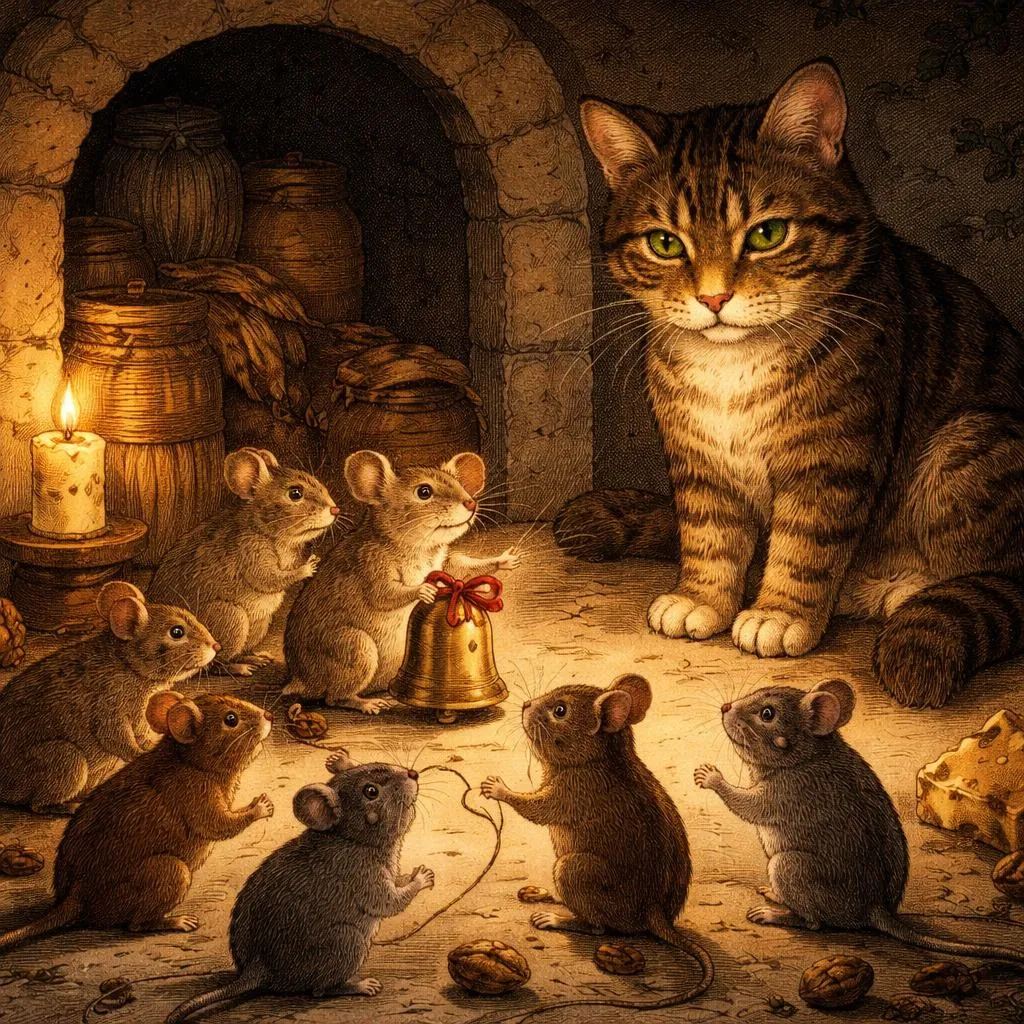

Long ago, the mice had a general council to consider what measures they could take to outwit their common enemy, the Cat. Some said this, and some said that; but at last a young mouse got up and said he had a proposal to make, which he thought would meet the case. “You will all agree,” said he, “that our chief danger consists in the sly and treacherous manner in which the enemy approaches us. Now, if we could receive some signal of her approach, we could easily escape from her. I venture, therefore, to propose that a small bell be procured, and attached by a ribbon round the neck of the Cat. By this means we should always know when she was about, and could easily retire while she was in the neighbourhood.”
This proposal met with general applause, until an old mouse got up and said: “That is all very well, but who is to bell the Cat?” The mice looked at one another and nobody spoke. Then the old mouse said:
“It is easy to propose impossible remedie.”
Background and Author Introduction
This story is a famous fable known as "Belling the Cat," attributed to Aesop, a storyteller believed to have lived in ancient Greece around the 6th century BCE. Aesop’s fables are short tales that use animals as characters to teach moral lessons. These stories have been passed down through generations and remain popular worldwide due to their simple yet profound messages.
Detailed Interpretation and Meaning
The fable "Belling the Cat" presents a meeting of mice who devise a plan to protect themselves from a cat, their predator. The young mouse suggests putting a bell on the cat so they can hear it coming and avoid danger. While the idea seems clever and gains approval, the old mouse points out the real difficulty: who will actually put the bell on the cat? This question highlights the difference between proposing an idea and taking the risk or action needed to carry it out.
The story teaches us that some ideas, although attractive in theory, may be impossible or very difficult to implement. It warns against making plans without considering the practical challenges involved. It also emphasizes courage and responsibility—it's easy to suggest solutions, but much harder to act on them, especially when danger or difficulty is involved.
Lessons and Insights for Students
-
Critical Thinking and Practicality: Students learn to think critically about ideas and plans. It’s important not only to come up with solutions but also to evaluate their feasibility and the risks involved.
-
Courage and Responsibility: The story encourages young readers to be brave and responsible. Good ideas require action, and sometimes that action involves personal risk or sacrifice.
-
Teamwork and Leadership: The mice’s council shows the value of discussing problems together and listening to different viewpoints. Leadership is not just about proposing ideas but also about inspiring others to act.
-
Problem-Solving Skills: Students can reflect on how to approach problems realistically, considering both the benefits and the obstacles.
Application in Daily Life
-
In School: When working on group projects or solving problems, students should think beyond just ideas and focus on how to implement them effectively. They should be prepared to take responsibility for their roles.
-
In Social Situations: The story encourages honesty about difficulties and the importance of courage when facing challenges, such as standing up for friends or making tough decisions.
-
In Personal Growth: Students learn that while dreaming and planning are important, real growth comes from action and facing fears.
Cultivating Positive Traits from the Story
-
Bravery: Encourage students to step out of their comfort zones and take on challenges, even when they seem daunting.
-
Practical Wisdom: Teach students to balance creativity with realism, ensuring that ideas can be translated into action.
-
Accountability: Help students understand that proposing solutions means being ready to contribute to their execution.
Reflection and Appreciation
"Belling the Cat" is a timeless fable that combines wit and wisdom. It invites readers to think deeply about the difference between ideas and actions, and the courage required to make a difference. By reflecting on this story, students can develop a more thoughtful and responsible approach to their own challenges, both in learning and in life.
