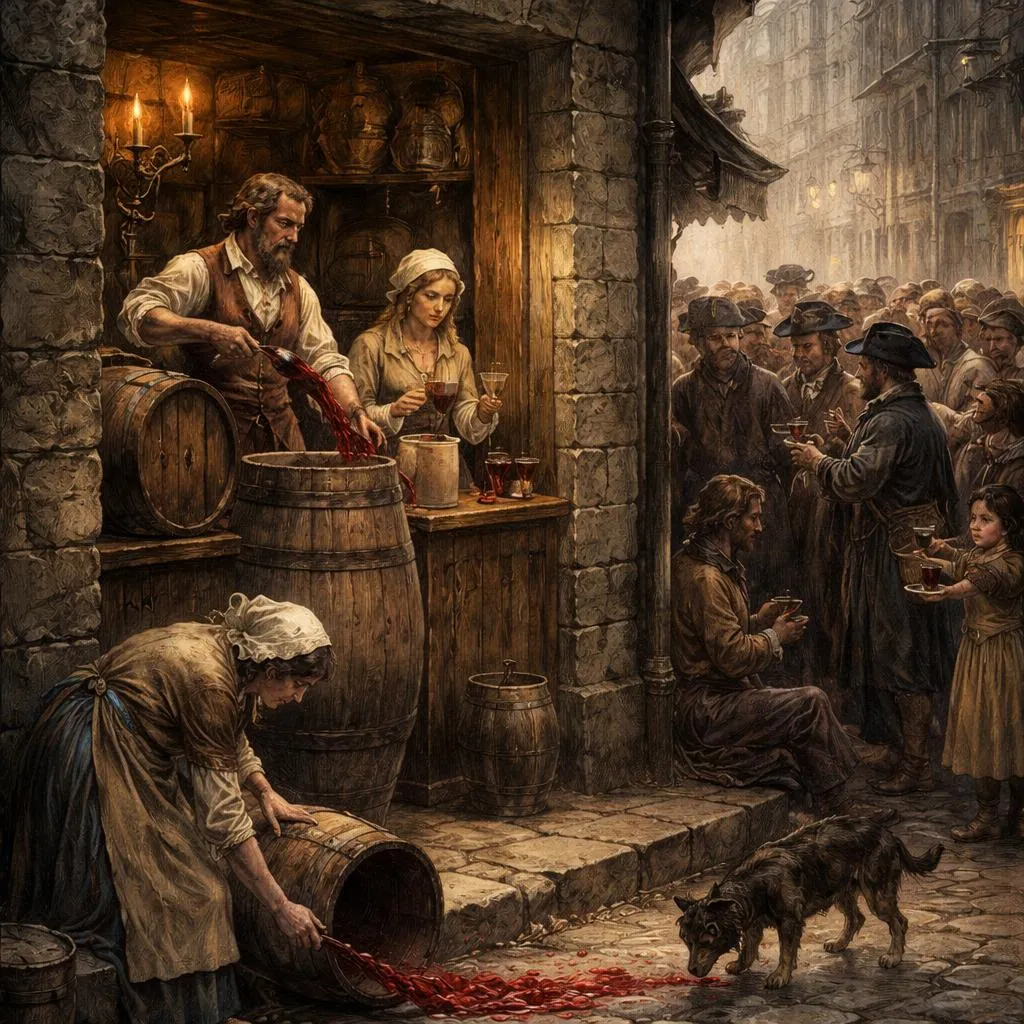

A large barrel of wine had accidentally fallen and broken in the street. It had rolled off a cart, its hoops bursting, and lay shattered on the cobblestones outside a wine shop. People nearby stopped whatever they were doing to rush over and drink the spilled wine. The uneven stones formed small pools where the wine gathered, and groups of men, women, and children eagerly scooped it up with their hands, mugs, or even cloths. Some tried to dam the wine with mud, while others licked the soaked fragments of the broken barrel. Laughter and cheerful voices filled the street as the community shared this unexpected treat, creating moments of joy and companionship despite their harsh surroundings.
The wine was red and stained the street, the hands and faces of those who drank it, and even the wooden shoes of the people. Among them was a tall joker who smeared the word "BLOOD" on a wall with his finger dipped in the muddy wine lees. This was a grim foreshadowing of future violence. The neighborhood was Saint Antoine in Paris, a poor suburb filled with hunger, sickness, and despair. The people were worn down by poverty and hardship, their faces old beyond their years, their lives marked by suffering. The streets were dirty and foul, the shops offered only meager food and drink, and the air was thick with misery.
In the midst of this bleakness stood a wine shop owned by Monsieur Defarge, a strong, determined man, and his wife, Madame Defarge, a watchful and composed woman. They observed the scene with a mixture of detachment and purpose. When two strangers, Mr. Jarvis Lorry and Miss Manette, arrived, Monsieur Defarge showed them to a small, locked room at the top of a grim staircase. Inside was a white-haired man, busy making shoes—a prisoner of his own mind and circumstances. The story hints at deep secrets and the harsh realities of life in revolutionary France.
Background and Author Introduction
This passage is from A Tale of Two Cities, a historical novel written by Charles Dickens, first published in 1859. Dickens was a renowned English author known for his vivid storytelling and deep concern for social justice. He often highlighted the struggles of the poor and the injustices of society. A Tale of Two Cities is set during the turbulent times of the French Revolution, contrasting the cities of London and Paris and exploring themes of sacrifice, resurrection, and the fight for justice.
Dickens wrote this novel to show the impact of political upheaval on ordinary people and to warn against the dangers of social inequality and vengeance. His detailed descriptions of poverty and suffering aim to evoke empathy and inspire change.
Detailed Interpretation and Significance
The spilled wine is a powerful symbol in the story. It represents both the fleeting joys and the deep suffering of the people in Saint Antoine. The wine’s red stain foreshadows the bloodshed that will come with the revolution. The communal drinking from the street pools shows how hardship can bring people together, creating moments of unity and shared humanity despite their dire circumstances.
Monsieur and Madame Defarge are important characters who embody the revolutionary spirit. Madame Defarge’s knitting is a symbol of fate and justice, as she records the names of those who will face punishment. The locked room and the imprisoned shoemaker represent the hidden suffering and the long-lasting effects of oppression.
Lessons and Insights for Students
-
Empathy and Social Awareness: The story encourages readers to understand and empathize with those who suffer from poverty and injustice. It reminds us to look beyond surface appearances and recognize the humanity in everyone.
-
The Power of Community: Even in hardship, people find ways to come together and support each other. This teaches the value of solidarity and kindness in difficult times.
-
The Consequences of Inequality: The novel warns about the dangers of ignoring social problems. It shows how injustice can lead to anger, violence, and upheaval, urging readers to advocate for fairness and compassion.
-
Resilience and Hope: Despite the grim setting, characters like the shoemaker show quiet strength and resilience. This inspires readers to face their own challenges with courage and patience.
Application in Daily Life
-
In School: Students can learn to be more compassionate classmates, understanding that everyone faces struggles. They can support each other and work together to create a positive environment.
-
In Social Settings: The story highlights the importance of community and cooperation. Young people can practice empathy and kindness, helping those in need and standing against bullying or exclusion.
-
In Personal Growth: The themes of resilience and hope encourage students to persevere through difficulties, whether academic or personal, and to seek constructive solutions rather than giving in to despair.
Cultivating Positive Values from the Story
-
Justice and Fairness: Encourage discussions about fairness and how to stand up for what is right in everyday situations.
-
Empathy: Use the story to develop emotional intelligence by imagining the feelings of the characters and relating them to real-life experiences.
-
Courage: Highlight the bravery of characters who face adversity, inspiring students to be brave in their own lives.
-
Community Spirit: Promote teamwork and mutual support as essential values for a healthy society.
By studying this passage and the novel as a whole, students gain not only literary knowledge but also important life lessons. They learn to appreciate history, understand human nature, and develop virtues that will help them grow into thoughtful, responsible individuals. A Tale of Two Cities remains a timeless work that challenges readers to reflect on justice, sacrifice, and the power of hope amidst suffering.
