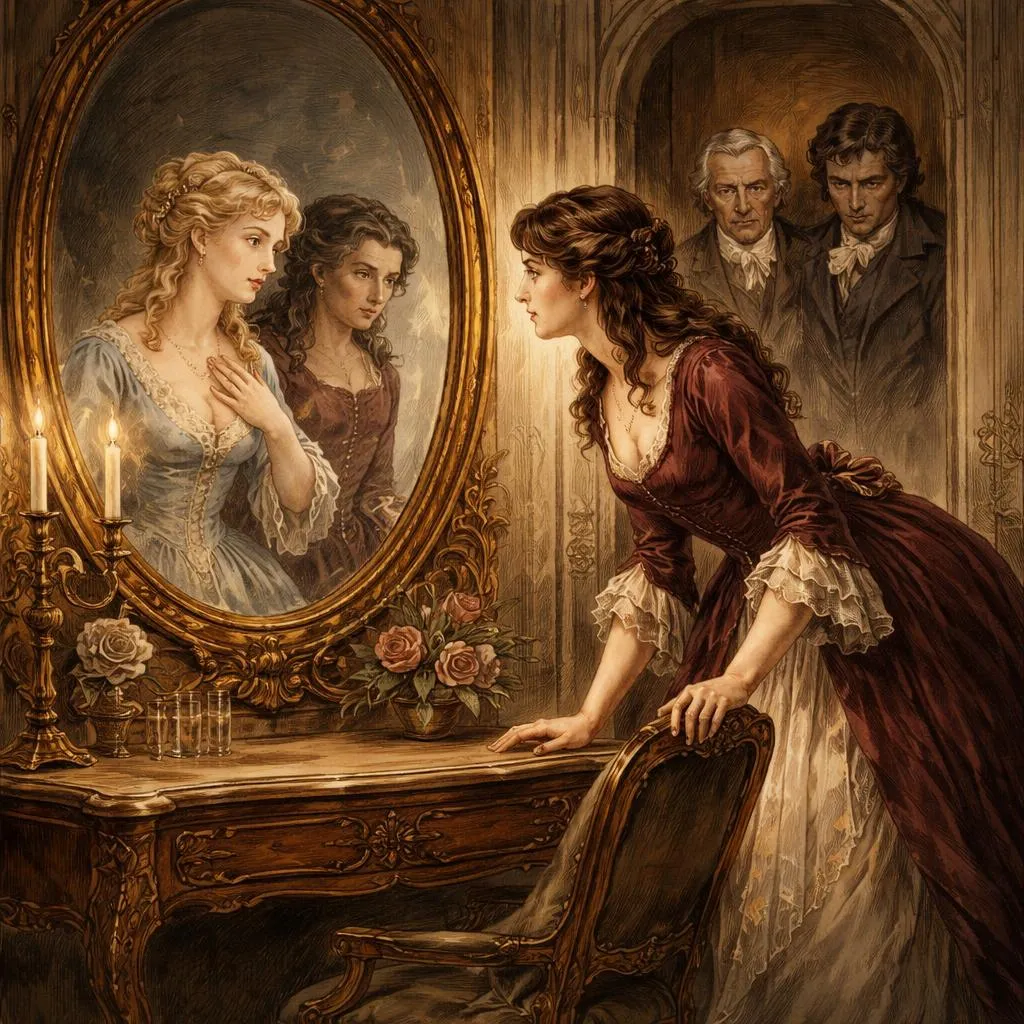

“Sydney,” said Mr. Stryver, on that self-same night, or morning, to his jackal; “mix another bowl of punch; I have something to say to you.”
Sydney had been working double tides that night, and the night before, and the night before that, and a good many nights in succession, making a grand clearance among Mr. Stryver’s papers before the setting in of the long vacation. The clearance was effected at last; the Stryver arrears were handsomely fetched up; everything was got rid of until November should come with its fogs atmospheric, and fogs legal, and bring grist to the mill again.
Sydney was none the livelier and none the soberer for so much application. It had taken a deal of extra wet-towelling to pull him through the night; a correspondingly extra quantity of wine had preceded the towelling; and he was in a very damaged condition, as he now pulled his turban off and threw it into the basin in which he had steeped it at intervals for the last six hours.
“Are you mixing that other bowl of punch?” said Stryver the portly, with his hands in his waistband, glancing round from the sofa where he lay on his back.
“I am.”
“Now, look here! I am going to tell you something that will rather surprise you, and that perhaps will make you think me not quite as shrewd as you usually do think me. I intend to marry.”
“DO you?”
“Yes. And not for money. What do you say now?”
“I don’t feel disposed to say much. Who is she?”
“Guess.”
“Do I know her?”
“Guess.”
“I am not going to guess, at five o’clock in the morning, with my brains frying and sputtering in my head. if you want me to guess, you must ask me to dinner.”
“Well then, I’ll tell you, said Stryver, coming slowly into a sitting posture. “Sydney, I rather despair of making myself intelligible to you, because you are such an insensible dog.
“And you,” returned Sydney, busy concocting the punch, “are such a sensitive and poetical spirit—”
“Come!” rejoined Stryver, laughing boastfully, “though I don’t prefer any claim to being the soul of Romance (for I hope I know better), still I am a tenderer sort of fellow than YOU.”
“You are a luckier, if you mean that.”
“I don’t mean that. I mean I am a man of more—more—”
“Say gallantry, while you are about it,” suggested Carton.
“Well! I’ll say gallantry. My meaning is that I am a man,” said Stryver, inflating himself at his friend as he made the punch, “who cares more to be agreeable, who takes more pains to be agreeable, who knows better how to be agreeable, in a woman’s society, than you do.”
“Go on,” said Sydney Carton.
“No; but before I go on,” said Stryver, shaking his head in his bullying way, I’ll have this out with you. You’ve been at Doctor Manette’s house as much as I have, or more than I have. Why, I have been ashamed of your moroseness there! Your manners have been of that silent and sullen and hangdog kind, that, upon my life and soul, I have been ashamed of you, Sydney!”
“It should be very beneficial to a man in your practice at the bar, to be ashamed of anything,” returned Sydney; “you ought to be much obliged to me.”
“You shall not get off in that way,” rejoined Stryver, shouldering the rejoinder at him; “no, Sydney, it’s my duty to tell you—and I tell you to your face to do you good—that you are a devilish ill-conditioned fellow in that sort of society. You are a disagreeable fellow.”
Sydney drank a bumper of the punch he had made, and laughed.
“Look at me!” said Stryver, squaring himself; “I have less need to make myself agreeable than you have, being more independent in circumstances. Why do I do it?”
“I never saw you do it yet,” muttered Carton.
“I do it because it’s politic; I do it on principle. And look at me! I get on.”
“You don’t get on with your account of your matrimonial intentions,” answered Carton, with a careless air; “I wish you would keep to that. As to me—will you never understand that I am incorrigible?”
He asked the question with some appearance of scorn.
“You have no business to be incorrigible,” was his friend’s answer, delivered in no very soothing tone.
“I have no business to be, at all, that I know of,” said Sydney Carton. “Who is the lady?”
“Now, don’t let my announcement of the name make you uncomfortable, Sydney,” said Mr. Stryver, preparing him with ostentatious friendliness for the disclosure he was about to make, “because I know you don’t mean half you say; and if you meant it all, it would be of no importance. I make this little preface, because you once mentioned the young lady to me in slighting terms.”
“I did?”
“Certainly; and in these chambers.”
Sydney Carton looked at his punch and looked at his complacent friend; drank his punch and looked at his complacent friend.
“You made mention of the young lady as a golden-haired doll. The young lady is Miss Manette. If you had been a fellow of any sensitiveness or delicacy of feeling in that kind of way, Sydney, I might have been a little resentful of your employing such a designation; but you are not. You want that sense altogether; therefore I am no more annoyed when I think of the expression, than I should be annoyed by a man’s opinion of a picture of mine, who had no eye for pictures: or of a piece of music of mine, who had no ear for music.”
Sydney Carton drank the punch at a great rate; drank it by bumpers, looking at his friend.
“Now you know all about it, Syd,” said Mr. Stryver. “I don’t care about fortune: she is a charming creature, and I have made up my mind to please myself: on the whole, I think I can afford to please myself. She will have in me a man already pretty well off, and a rapidly rising man, and a man of some distinction: it is a piece of good fortune for her, but she is worthy of good fortune. Are you astonished?”
Carton, still drinking the punch, rejoined, “Why should I be astonished?”
“You approve?”
Carton, still drinking the punch, rejoined, “Why should I not approve?”
“Well!” said his friend Stryver, “you take it more easily than I fancied you would, and are less mercenary on my behalf than I thought you would be; though, to be sure, you know well enough by this time that your ancient chum is a man of a pretty strong will. Yes, Sydney, I have had enough of this style of life, with no other as a change from it; I feel that it is a pleasant thing for a man to have a home when he feels inclined to go to it (when he doesn’t, he can stay away), and I feel that Miss Manette will tell well in any station, and will always do me credit. So I have made up my mind. And now, Sydney, old boy, I want to say a word to YOU about YOUR prospects. You are in a bad way, you know; you really are in a bad way. You don’t know the value of money, you Eve hard, you’ll knock up one of these days, and be ill and poor; you really ought to think about a nurse.”
The prosperous patronage with which he said it, made him look twice as big as he was, and four times as offensive.
“Now, let me recommend you,” pursued Stryver, “to look it in the face. I have looked it in the face, in my different way; look it in the face, you, in your different way. Marry. Provide somebody to take care of you. Never mind your having no enjoyment of women’s society, nor understanding of it, nor tact for it. Find out somebody. Find out some respectable woman with a little property—somebody in the landlady way, or lodging-letting way—and marry her, against a rainy day. That’s the kind of thing for YOU. Now think of it, Sydney.”
“I’ll think of it,” said Sydney.
Background and Author Introduction
This passage is from A Tale of Two Cities, a famous novel written by Charles Dickens, one of the greatest English novelists of the 19th century. Published in 1859, this novel is set during the turbulent times of the French Revolution. Dickens is known for his vivid characters and deep social commentary, often highlighting the struggles of the poor and the injustices of society.
The story contrasts life in London and Paris, exploring themes of sacrifice, resurrection, and the possibility of redemption. The characters in the novel face moral dilemmas and personal transformations amid political chaos.
Detailed Interpretation of the Passage
In this scene, Mr. Stryver, a confident and somewhat boastful lawyer, reveals to Sydney Carton, his friend and colleague, that he intends to marry Miss Manette. Sydney, who has a complex and somewhat self-deprecating personality, reacts with a mixture of sarcasm and indifference.
The dialogue reveals key character traits: Stryver’s ambition and desire for social advancement through marriage, and Carton’s cynicism and emotional detachment. The mention of Miss Manette connects to the larger story, as she is a central figure whose fate deeply affects the protagonists.
Stryver’s advice to Carton about marriage is practical but also patronizing, reflecting the social attitudes of the time. Carton’s response shows his inner conflict and foreshadows his eventual heroic actions later in the novel.
Lessons and Insights for Students
-
Understanding Character Complexity: This passage helps students appreciate that people are often complicated, with strengths and weaknesses. Sydney Carton’s mix of humor, sadness, and insight makes him a memorable character who grows throughout the story.
-
Social and Personal Responsibility: Stryver’s focus on marriage as a means of security and status reflects societal pressures. Students can learn to think critically about how social expectations influence personal choices.
-
Friendship and Honesty: Despite their differences, Stryver and Carton share a candid relationship. This shows the value of honest communication between friends, even when opinions differ.
-
Self-Reflection: Carton’s sarcastic remarks and eventual willingness to “think of it” suggest the importance of self-awareness and openness to change.
Applying These Lessons in Life and Learning
-
In School: Students can learn to analyze characters deeply, understanding motivations and conflicts, which enhances critical thinking and empathy.
-
In Social Situations: Recognizing that people have different personalities and struggles can help students develop patience and kindness in friendships.
-
In Personal Growth: Like Sydney Carton, students may face moments of doubt or cynicism. Reflecting on their attitudes and being open to new perspectives can lead to personal improvement.
-
In Decision-Making: Understanding societal influences, as shown by Stryver’s pragmatic approach, can help students make informed choices about their futures, balancing personal desires with practical considerations.
Cultivating Positive Qualities from the Story
-
Empathy: By seeing the world through the eyes of characters like Carton and Manette, students can develop a deeper understanding of others’ feelings.
-
Courage and Sacrifice: The novel as a whole teaches about bravery and putting others before oneself, inspiring students to act with integrity.
-
Resilience: Characters face hardships but continue to strive for better lives, encouraging students to persevere through challenges.
Conclusion
This excerpt from A Tale of Two Cities offers rich material for students to explore human nature, social dynamics, and moral choices. By engaging with the story, young readers can gain insights that help them navigate their own lives with greater wisdom and compassion.
