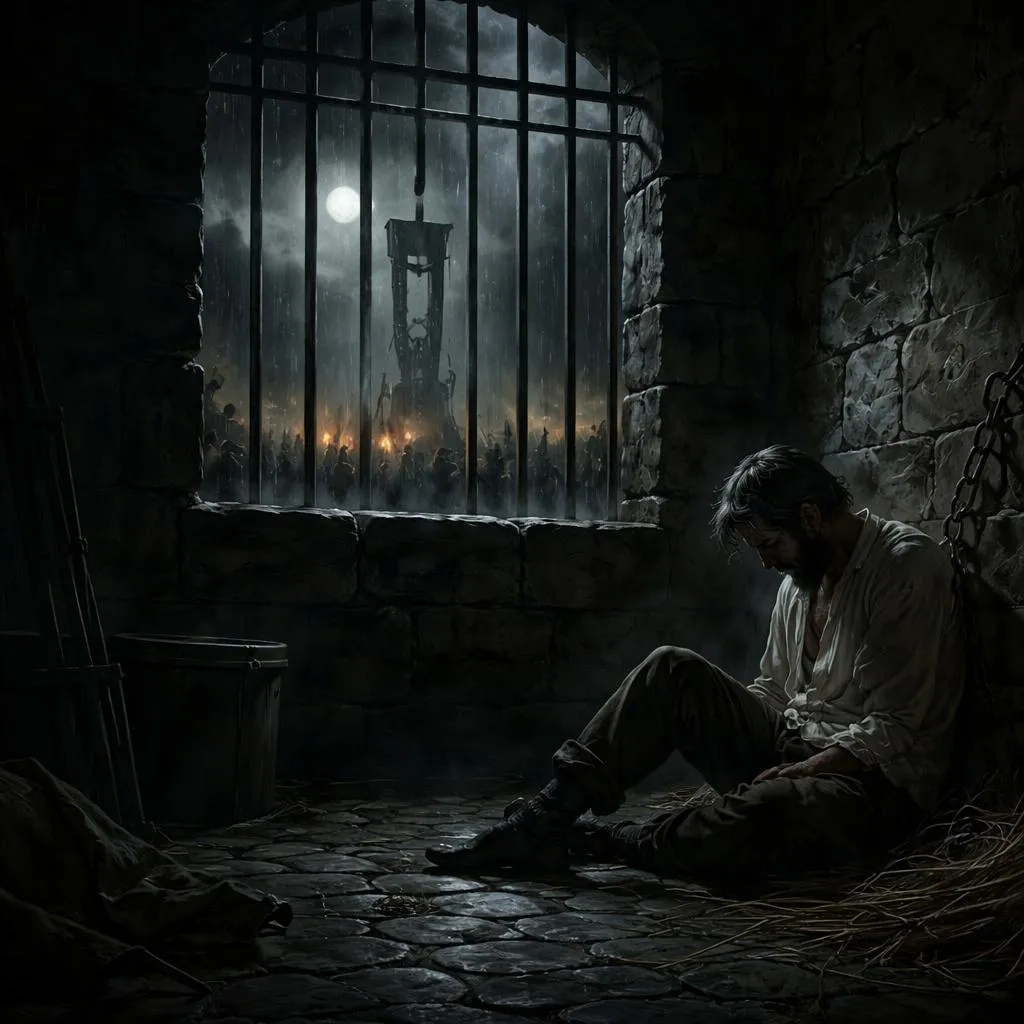

Sydney Carton stood on the dimly lit street, uncertain of where to go next. “At Tellson’s bank at nine,” he murmured thoughtfully. “Should I make myself known in the meantime? Yes, it’s best they know I’m here; it’s a wise precaution and might be necessary.” He paused, careful to consider the consequences of his actions. Finally, he decided to head toward Saint Antoine.
Defarge, the wine-shop keeper in Saint Antoine, had been described earlier. Carton found the shop easily, dined nearby, and for the first time in years, avoided strong drink, taking only light wine. After resting, he refreshed himself and approached Defarge’s shop. Inside, only Jacques Three and the Defarges were present. Carton ordered wine, and Madame Defarge eyed him suspiciously but served him nonetheless.
Their conversation turned to revolutionary matters. Madame Defarge expressed her fierce hatred for the Evremonde family, revealing her personal vendetta linked to her own family’s suffering. Defarge showed some hesitation, but Madame Defarge was relentless in her desire for extermination. The group’s grim resolve painted a picture of the dangerous political climate.
After paying and leaving, Carton returned to Mr. Lorry’s room, where they awaited Doctor Manette. But the doctor did not return; when he finally appeared, he was broken, searching desperately for his shoemaking tools, a sign of his mental collapse. Carton and Mr. Lorry comforted him, but the doctor was lost in his trauma.
Carton then revealed a crucial secret: papers allowing safe passage out of the city for Doctor Manette and his family. He warned of the danger they faced from Madame Defarge’s relentless pursuit and urged Mr. Lorry to prepare for a swift escape. The plan depended on precise timing and unwavering commitment.
As Carton escorted the doctor back to Lucie, he looked up at the light in her window and silently blessed her before departing, ready to play his part in the coming events.
Background and Author Introduction
This passage is from A Tale of Two Cities, a historical novel by Charles Dickens, first published in 1859. Dickens is one of the most famous English novelists, known for his vivid characters and social commentary. The novel is set during the turbulent times of the French Revolution, contrasting life in London and Paris. It explores themes of sacrifice, redemption, and resurrection.
Dickens wrote this novel to highlight the harsh realities of social injustice and the human cost of political upheaval. The story’s famous opening line, “It was the best of times, it was the worst of times,” captures the contradictions of the era. Through characters like Sydney Carton and Doctor Manette, Dickens delves into personal transformation amid chaos.
Detailed Interpretation and Significance
This excerpt reveals Sydney Carton’s complex character. Once a dissipated and cynical man, Carton begins to show signs of purpose and self-sacrifice. His visit to Defarge’s wine-shop places him in the heart of revolutionary Paris, where danger lurks. Madame Defarge’s cold vengeance illustrates the brutal side of the revolution, driven by personal pain and political fury.
Doctor Manette’s mental breakdown symbolizes the trauma inflicted by oppression and imprisonment. His shoemaking tools represent a link to his past suffering and a fragile grasp on sanity. Carton’s discovery of safe passage papers introduces hope amid despair but also underscores the urgency and peril the family faces.
The dialogue and atmosphere build tension, showing the clash between mercy and vengeance, hope and despair. Carton’s quiet determination and willingness to help others mark the beginning of his redemptive journey, a central theme in the novel.
Lessons and Insights for Students
-
The Power of Sacrifice: Sydney Carton’s character teaches us about selflessness. Though flawed, he chooses to act for the good of others, showing that personal redemption is possible through sacrifice.
-
Understanding Social Justice: The story highlights the consequences of inequality and injustice. Students can learn about the importance of fairness and empathy in society.
-
Resilience in Adversity: Doctor Manette’s struggle with trauma reminds us of the impact of hardship and the need for compassion and support for those suffering mental health challenges.
-
The Danger of Hatred: Madame Defarge’s vengeful spirit warns against allowing anger and bitterness to consume us. Forgiveness and understanding are healthier paths.
-
The Importance of Hope and Courage: Despite the grim circumstances, characters hold onto hope and courage, inspiring readers to face their own challenges bravely.
Applying These Lessons in Life
-
In School: Students can practice empathy by supporting classmates who face difficulties, much like Carton supports Doctor Manette’s family. Learning about history through stories like this helps develop critical thinking about justice and society.
-
In Social Settings: Understanding the dangers of hatred encourages kindness and forgiveness in friendships and conflicts. Recognizing the value of sacrifice can inspire helping others without expecting rewards.
-
In Personal Growth: Carton’s transformation shows that it’s never too late to change for the better. Students can reflect on their own actions and strive to be more responsible and caring individuals.
-
Mental Health Awareness: Doctor Manette’s condition highlights the importance of mental health care. Students should be encouraged to seek help when needed and support peers who may be struggling.
Cultivating Positive Values from the Story
-
Selflessness: Encourage acts of kindness and putting others’ needs before one’s own.
-
Courage: Teach students to face difficulties with bravery, just as Carton does.
-
Forgiveness: Promote letting go of grudges, inspired by the destructive nature of Madame Defarge’s hatred.
-
Hope: Instill optimism even in challenging times, as characters do despite their trials.
-
Justice: Foster a sense of fairness and standing against oppression in any form.
Conclusion
A Tale of Two Cities offers rich lessons wrapped in a gripping narrative of love, sacrifice, and revolution. Through characters like Sydney Carton and Doctor Manette, students learn about the complexities of human nature and society. The story encourages readers to develop empathy, courage, and a commitment to justice—qualities that are valuable in every aspect of life. By reflecting on these themes, young readers can grow not only academically but also morally and socially, preparing them to contribute positively to the world around them.
