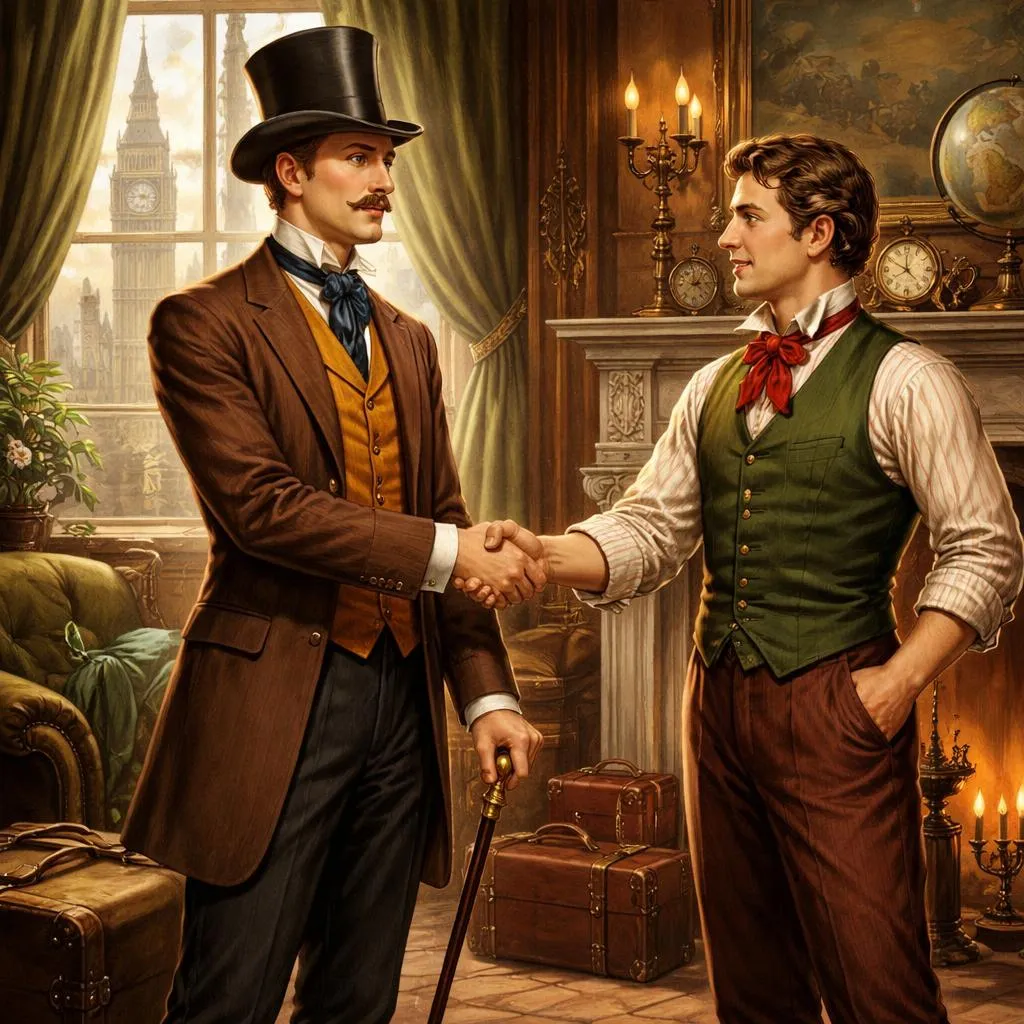

Mr. Phileas Fogg was a mysterious and intriguing gentleman living in London in the year 1872. He resided at No. 7 Saville Row, a house with a rich history, being the same place where the famous playwright Sheridan had died in 1814. Fogg was a member of the exclusive Reform Club, a prestigious social club, but he was a man who preferred to keep to himself and avoid attracting attention. People often compared his appearance to the poet Byron, but unlike Byron’s fiery nature, Fogg was calm, composed, and seemed almost timeless.
Despite being an Englishman, it was unclear if Fogg was truly a Londoner. He was never seen in the usual places where businessmen and bankers gathered, and he had no known profession or public role. He was not involved in manufacturing, farming, or commerce, and he did not participate in any scientific or learned societies. His only known affiliation was with the Reform Club, which he joined through the recommendation of the wealthy Barings family.
Phileas Fogg was undoubtedly wealthy, but how he made his fortune was a mystery even to those closest to him. He was neither extravagant nor miserly; he donated money quietly to worthy causes, sometimes anonymously. His habits were extremely regular and predictable, which made him even more puzzling to those who observed him. He was well-traveled in spirit if not in body, knowledgeable about distant and obscure places, and often corrected others’ guesses about travelers and geography.
Fogg lived a solitary life, with no family or close friends known to the public. He had one servant, and his daily routine was precise: he ate at the club at fixed times, never mingled much, and returned home at midnight to sleep. His home was comfortable but not lavish, and he demanded punctuality and perfection from his servant. On the day this story begins, Fogg had just dismissed his previous servant for a minor fault and was about to hire a new one named Jean Passepartout, a Frenchman with a colorful past.
Background and Author Introduction
This story is from the classic novel Around the World in Eighty Days by Jules Verne, a French author famous for his adventure and science fiction novels. Written in 1873, this novel captures the spirit of exploration and the excitement of new technologies during the 19th century. Verne’s works are known for their detailed descriptions of geography, science, and the human spirit of adventure.
Jules Verne was a pioneer of the adventure genre, inspiring generations of readers to dream about distant lands and the possibilities of human ingenuity. His stories often combine thrilling plots with educational content, making them beloved by both young readers and adults.
Detailed Interpretation and Significance
Around the World in Eighty Days is more than just a travel adventure. It explores themes of determination, punctuality, cultural diversity, and the power of human will. Phileas Fogg’s character embodies discipline, calmness, and precision. His journey around the world is a test of these qualities against unpredictable challenges.
The novel also highlights the importance of friendship and trust, as Fogg’s servant Passepartout plays a crucial role in the adventure. Their relationship shows how understanding and cooperation between people from different backgrounds can lead to success.
Moreover, the story reflects the excitement and challenges of the industrial age, with new transportation methods like steamships and railways shrinking the world and making global travel possible.
Lessons and Inspirations for Students
-
Discipline and Time Management: Phileas Fogg’s strict adherence to his schedule teaches the value of punctuality and planning. Students can learn to manage their time effectively to achieve their goals.
-
Curiosity and Learning: Fogg’s knowledge of the world encourages readers to be curious and learn about different cultures and places. This broadens one’s perspective and fosters open-mindedness.
-
Adaptability and Problem-Solving: Throughout the journey, unexpected obstacles arise. Fogg’s calm and logical approach shows how staying composed and thinking critically can help overcome difficulties.
-
Respect and Cooperation: The partnership between Fogg and Passepartout demonstrates the importance of respect and teamwork, essential skills in social and academic settings.
-
Generosity and Humility: Despite his wealth, Fogg is modest and generous, often helping others quietly. This teaches the value of kindness and using one’s resources for good.
Applying the Story’s Spirit in Daily Life
-
In Learning: Like Fogg, students should be curious and disciplined. Setting clear goals and following a schedule can improve study habits and academic performance.
-
In Social Skills: Emulating Fogg’s respect for others and Passepartout’s loyalty can help build strong friendships and effective teamwork.
-
In Facing Challenges: When encountering difficulties, staying calm and thinking carefully, as Fogg does, can lead to better solutions.
-
In Personal Growth: Being generous and humble, even in small ways, enriches one’s character and relationships.
Cultivating Positive Traits from the Story
To develop the positive qualities shown by Phileas Fogg and his companion, students can:
- Practice punctuality by setting alarms and planning their day.
- Explore new subjects and cultures through reading and travel.
- Work on problem-solving skills by tackling puzzles and challenges.
- Show kindness and help classmates or family members.
- Reflect on their actions and strive to be calm and thoughtful.
This timeless story invites young readers to embark on their own journeys of discovery, both in the world and within themselves. It inspires courage, curiosity, and kindness—qualities that are valuable not only in adventures but in everyday life.
