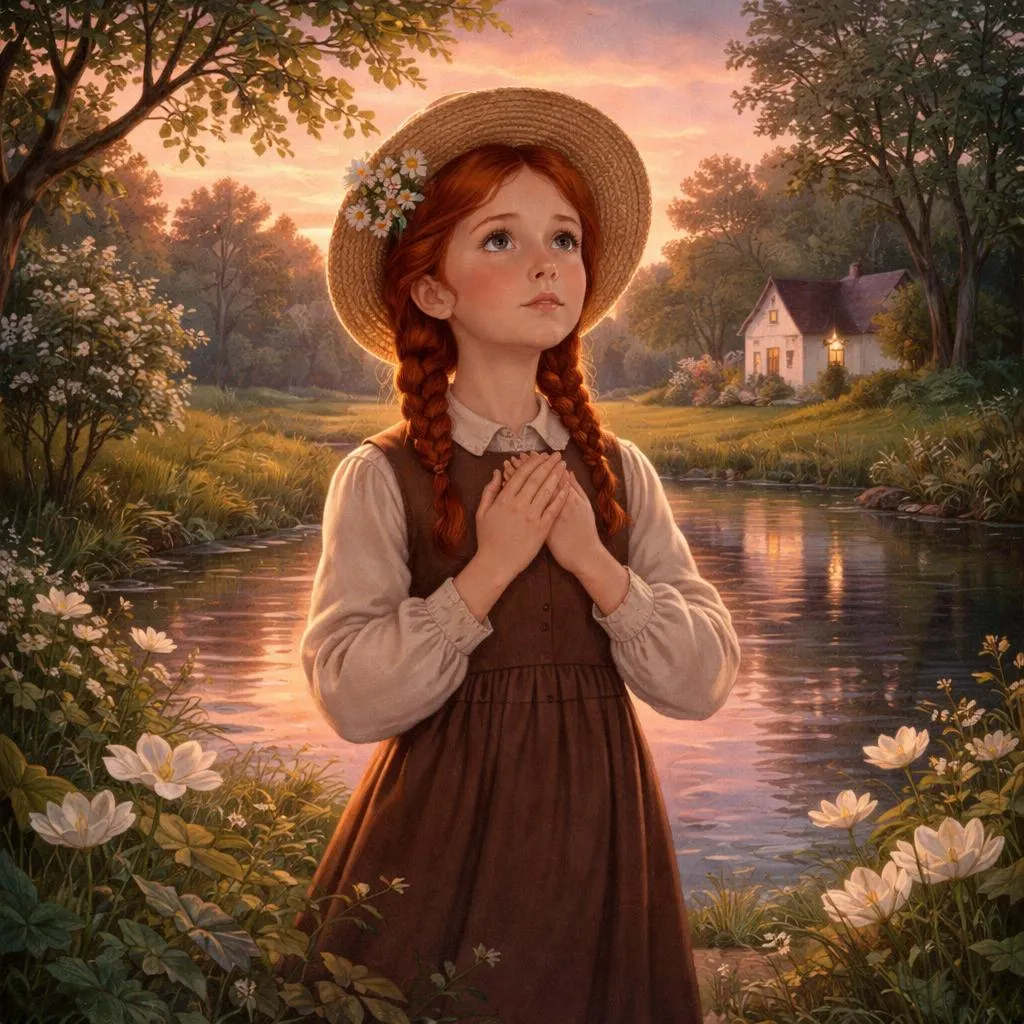

The excerpt you have just read is from the beloved classic "Anne of Green Gables," written by Canadian author Lucy Maud Montgomery. This timeless novel, first published in 1908, tells the story of Anne Shirley, an imaginative and spirited orphan girl who is mistakenly sent to live with Marilla and Matthew Cuthbert, a brother and sister who had intended to adopt a boy to help them on their farm in the fictional village of Avonlea on Prince Edward Island.
Background and Author Introduction
Lucy Maud Montgomery was born in 1874 in Prince Edward Island, Canada. She grew up surrounded by the natural beauty of the island, which deeply influenced her writing. Montgomery's vivid descriptions of the landscape and her ability to create memorable, relatable characters have made "Anne of Green Gables" a cherished work for over a century. The novel has been translated into many languages and adapted into numerous films, television series, and stage productions.
Detailed Interpretation and Significance of the Story
This particular passage captures a pivotal moment in Anne's early life at Green Gables. It reveals her innocence, creativity, and the challenges she faces in adapting to her new environment. Anne’s choice to decorate her hat with roses and buttercups, despite Marilla’s disapproval, highlights Anne’s imaginative nature and her desire to express herself, even if it leads to misunderstandings. The scene where Anne meets Diana Barry, her soon-to-be best friend, marks the beginning of a deep and meaningful friendship that becomes central to the story.
The story explores themes such as belonging, friendship, individuality, and the importance of kindness and understanding. Anne’s struggles and triumphs resonate with readers because they reflect universal experiences of growing up—finding one’s place in the world, making friends, and learning from mistakes.
Lessons and Insights for Students and Young Readers
-
Embracing Individuality: Anne’s character teaches young readers the value of being true to themselves. Even when others do not understand or approve of her actions, Anne remains authentic and imaginative. This encourages students to embrace their unique qualities and talents.
-
The Power of Friendship: The bond between Anne and Diana shows how friendships can provide support, joy, and a sense of belonging. Students learn the importance of kindness, loyalty, and making friends who accept them for who they are.
-
Handling Criticism and Mistakes: Marilla’s reprimand and Anne’s emotional response illustrate how to deal with criticism and learn from it without losing confidence. It’s a reminder that mistakes are part of growing up and can lead to personal growth.
-
Respect and Politeness: Marilla’s advice about behaving politely and not making "startling speeches" teaches social skills that are important in school and community life. Respecting others’ feelings and communicating thoughtfully are key takeaways.
-
Appreciation of Nature: The vivid descriptions of the Barry garden and the natural surroundings encourage readers to appreciate the beauty of nature, fostering a sense of wonder and environmental awareness.
Applying These Lessons in Daily Life
-
In School: Students can apply Anne’s curiosity and enthusiasm for learning by exploring subjects they love and expressing their ideas confidently. They can also practice good manners and respect in interactions with teachers and classmates.
-
In Friendships: Like Anne and Diana, students should seek friends who support and encourage them. They can also be good friends by listening, sharing, and showing empathy.
-
In Family Life: Anne’s relationship with Marilla and Matthew highlights the importance of patience, understanding, and forgiveness within families. Students can strive to communicate openly and appreciate their family members.
-
In Personal Growth: Embracing mistakes as learning opportunities helps students develop resilience and self-confidence. Anne’s imaginative spirit encourages creative problem-solving and positive thinking.
Cultivating Positive Traits from the Story
-
Imagination and Creativity: Encourage journaling, drawing, or storytelling to nurture creativity, just as Anne expresses herself through her vivid imagination.
-
Kindness and Empathy: Practice acts of kindness and try to understand others’ perspectives, following Anne’s example of heartfelt friendship.
-
Courage and Optimism: Face challenges with a positive attitude and courage, remembering Anne’s hopeful outlook despite difficulties.
Conclusion
"Anne of Green Gables" is more than just a story about an orphan girl; it is a celebration of youth, imagination, and the human spirit. By reading and reflecting on Anne’s adventures and experiences, students can gain valuable insights into friendship, self-expression, and personal growth. The novel encourages young readers to be themselves, cherish their friendships, and approach life with kindness and courage—lessons that are as relevant today as they were over a hundred years ago.