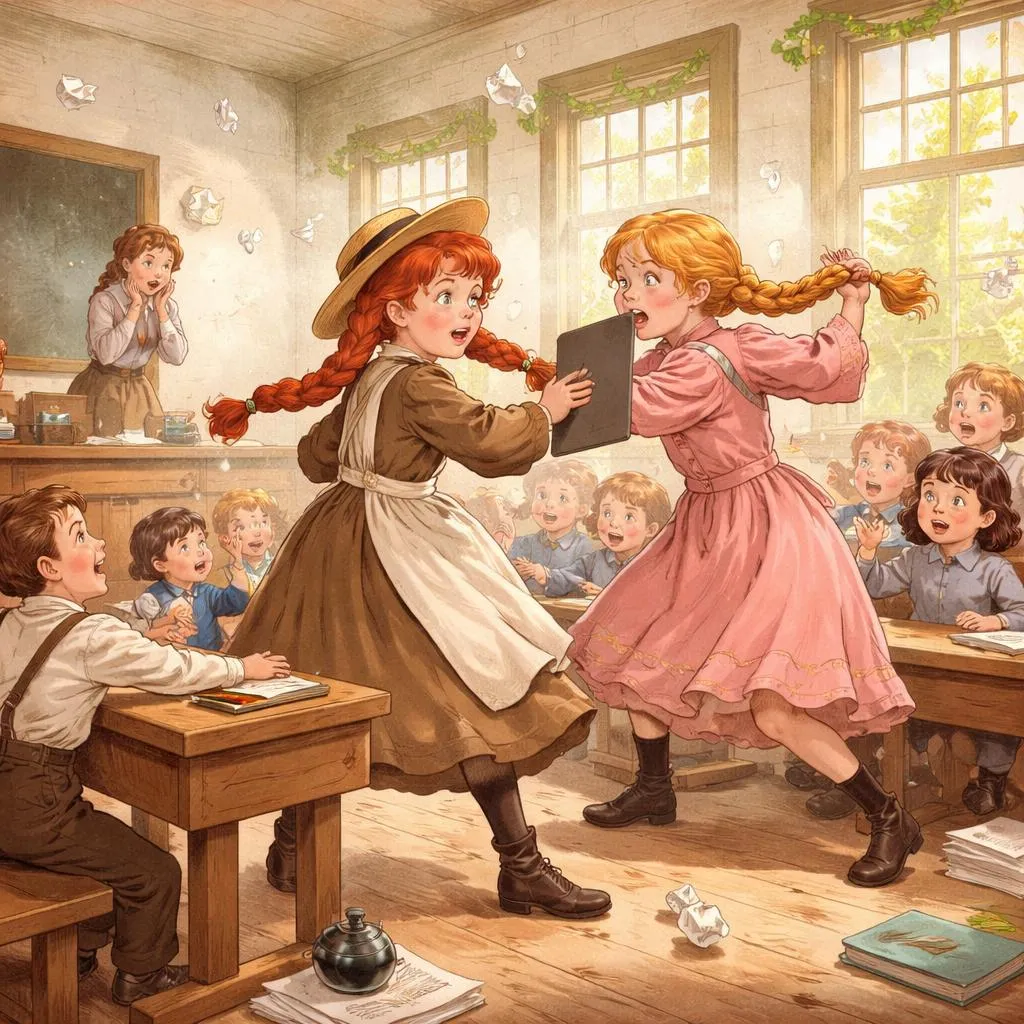

The passage above is an excerpt from Anne of Green Gables, a beloved classic novel written by Canadian author Lucy Maud Montgomery. It tells the story of Anne Shirley, an imaginative and spirited orphan girl who comes to live with Marilla and Matthew Cuthbert at Green Gables in the fictional village of Avonlea. This particular excerpt captures Anne’s first days at school, her interactions with classmates, and the challenges she faces, including a memorable incident with Gilbert Blythe.
Background and Author Introduction
Lucy Maud Montgomery (1874–1942) was a Canadian author best known for her Anne of Green Gables series. Published in 1908, Anne of Green Gables quickly became a classic of children’s literature and remains popular worldwide. Montgomery’s vivid descriptions of Prince Edward Island’s landscapes, her rich characterizations, and her exploration of themes such as belonging, imagination, and resilience have made her work timeless.
The story is set in early 20th-century rural Canada, a time when community life, schooling, and social expectations were quite different from today. Anne’s experiences reflect both the innocence and the struggles of childhood, highlighting universal themes that resonate across generations.
Detailed Interpretation and Significance of the Story
This excerpt illustrates several key aspects of Anne’s character and the novel’s themes:
-
Imagination and Romance in Everyday Life: Anne’s imaginative naming of paths like Lover’s Lane and Violet Vale shows her creative spirit and desire to find beauty and meaning in the world around her. This romantic view of life is a hallmark of her character and invites readers to appreciate the magic in ordinary places.
-
Friendship and Social Dynamics: The close friendship between Anne and Diana Barry is central to the story. Their shared lunches and adventures demonstrate the importance of companionship and loyalty in childhood. The social rules about sharing food and the teasing from classmates like Gilbert Blythe also reveal the complexities of school life and peer relationships.
-
Challenges and Growth: Anne’s fiery temper and sensitivity lead to conflict with Gilbert Blythe and her teacher, Mr. Phillips. Her reaction to being teased and punished shows her vulnerability but also her strong sense of self-respect. The story captures the struggles children face in learning to control emotions, stand up for themselves, and navigate social hierarchies.
-
Themes of Identity and Belonging: Anne’s concern about being accepted, her embarrassment over her red hair, and her feelings of isolation highlight the universal quest for identity and acceptance. Her determination to stay true to herself despite difficulties is inspiring.
Lessons and Insights for Students
Students reading this story can learn many valuable lessons:
-
The Power of Imagination: Anne’s creativity enriches her life and helps her cope with hardships. Students can be encouraged to cultivate their own imaginations as a source of joy and problem-solving.
-
Importance of Friendship and Kindness: The story shows how friendships support us and how kindness can overcome misunderstandings. Sharing and caring for others are essential social skills.
-
Managing Emotions: Anne’s temper and subsequent remorse teach the importance of emotional regulation and forgiveness. Students can reflect on how to handle conflicts constructively.
-
Courage and Resilience: Anne’s ability to face challenges, even when feeling hurt or misunderstood, demonstrates resilience. This encourages young readers to persevere in the face of difficulties.
-
Respect and Empathy: Understanding others’ feelings, like Anne’s hurt from teasing, helps develop empathy. Students can learn to be more considerate and supportive peers.
Applying These Lessons in Daily Life
-
In School: Students can use Anne’s example to embrace learning with enthusiasm and creativity, even when facing setbacks. They can practice patience and kindness with classmates and teachers.
-
In Friendships: Like Anne and Diana, students should value loyalty and sharing. They can work on resolving conflicts peacefully and appreciating differences.
-
In Personal Growth: Anne’s story encourages self-acceptance and confidence. Students can learn to appreciate their unique qualities and handle criticism or teasing with grace.
-
In Family and Community: Anne’s relationship with Marilla and Matthew shows the importance of support systems. Students can recognize the value of family and community in nurturing their development.
Cultivating Positive Traits from the Story
-
Imagination: Encourage journaling, creative writing, or art to express ideas and emotions.
-
Empathy: Engage in discussions about feelings and perspectives to build understanding.
-
Resilience: Set personal goals and reflect on overcoming challenges.
-
Friendship: Practice sharing and cooperative play or study groups.
-
Self-Respect: Learn to communicate feelings assertively and seek help when needed.
Conclusion
Anne of Green Gables offers rich material for young readers to explore imagination, friendship, and personal growth. Through Anne’s adventures and challenges, students can gain insights into their own lives and relationships. The novel’s enduring appeal lies in its warm portrayal of childhood’s joys and trials, inspiring readers to embrace life with courage, kindness, and creativity.
