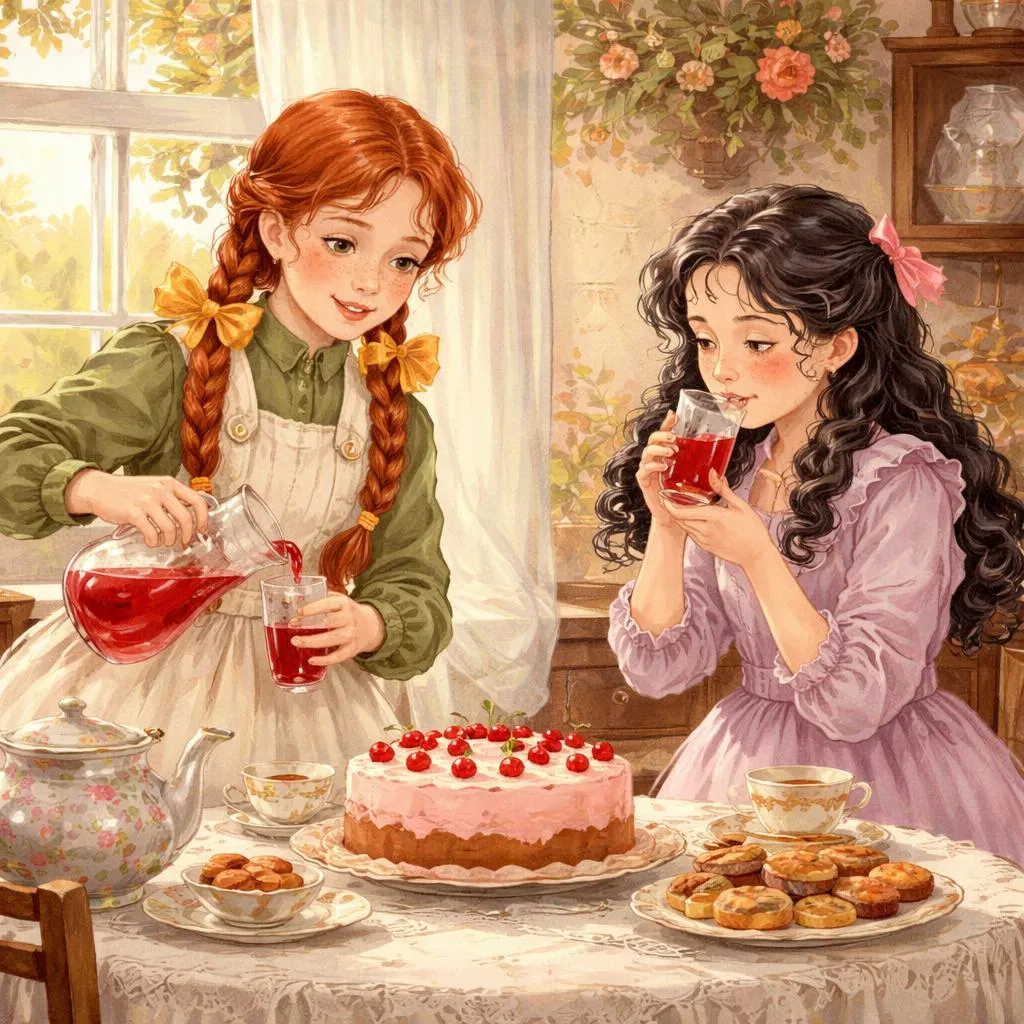

October at Green Gables was a magical time, filled with the vibrant colors of autumn. Anne, a lively and imaginative girl, delighted in the beauty around her, gathering colorful branches to decorate her room. Her conversation with Marilla reveals Anne’s spirited nature and her love for dreams and stories. When Anne invites her friend Diana for tea, the afternoon is filled with joy, friendship, and the simple pleasures of life. However, a misunderstanding involving raspberry cordial and currant wine leads to trouble, testing Anne’s resilience and the strength of her friendships.
Background and Author Introduction
This excerpt is from Anne of Green Gables, a classic novel written by Canadian author Lucy Maud Montgomery in 1908. The story follows Anne Shirley, an imaginative and talkative orphan girl who is mistakenly sent to live with Marilla and Matthew Cuthbert, siblings who had intended to adopt a boy to help on their farm in Avonlea, Prince Edward Island. Montgomery’s vivid descriptions of the natural world and her portrayal of Anne’s spirited personality have made the book beloved by readers worldwide for over a century.
Montgomery’s own experiences growing up in rural Canada inspired much of the setting and atmosphere of the novel. Her writing highlights themes of belonging, identity, and the power of imagination, which resonate deeply with young readers and adults alike.
Detailed Interpretation and Significance
The passage captures the essence of Anne’s character: her love for nature, her vivid imagination, and her earnest desire for friendship and acceptance. The colorful imagery of October at Green Gables symbolizes change and growth, paralleling Anne’s own journey from loneliness to belonging.
Anne’s excitement about hosting Diana for tea shows her longing for companionship and normalcy. The tea party is a rite of passage, a moment where Anne feels grown-up and included. However, the mix-up with the currant wine instead of raspberry cordial introduces conflict, illustrating how innocence and good intentions can sometimes lead to misunderstandings.
The story explores themes of friendship, forgiveness, and the challenges of growing up. Anne’s heartfelt apology to Mrs. Barry and her distress over the broken friendship with Diana highlight the importance of honesty, responsibility, and empathy in relationships.
Lessons and Insights for Students and Young Readers
-
Imagination and Creativity: Anne’s ability to find joy and beauty in the world around her encourages students to nurture their creativity. Imagination is a powerful tool for problem-solving and emotional expression.
-
Responsibility and Consequences: The story teaches that actions have consequences, even when unintentional. Anne’s mistake with the drinks shows the importance of being careful and attentive, especially when hosting or caring for others.
-
Friendship and Forgiveness: The conflict with Diana and her mother underscores the value of forgiveness and understanding. Friendships may face challenges, but open communication and sincere apologies can help mend relationships.
-
Empathy and Compassion: Anne’s plea to Mrs. Barry reveals her empathy and desire to be understood. Students learn the importance of seeing situations from others’ perspectives and expressing feelings honestly.
-
Resilience and Growth: Despite setbacks, Anne remains hopeful and determined. This resilience is vital for young people facing difficulties in school, social life, or personal growth.
Applying the Story’s Values in Daily Life
-
In School: Students can apply Anne’s curiosity and enthusiasm by engaging actively in learning and embracing new experiences with an open mind. They can also learn from Anne’s mistakes by being responsible and attentive in their tasks.
-
In Social Situations: The story encourages kindness, patience, and forgiveness in friendships. When misunderstandings occur, communicating openly and sincerely can help resolve conflicts.
-
In Personal Development: Embracing change, like the changing seasons at Green Gables, helps young people adapt and grow. Cultivating resilience and a positive outlook, as Anne does, supports emotional well-being.
Cultivating Positive Traits from the Story
-
Encourage Imaginative Play and Storytelling: Like Anne, students should be encouraged to express themselves creatively, which fosters confidence and emotional intelligence.
-
Teach Accountability: Discussing the consequences of Anne’s mix-up can help children understand the importance of responsibility in their actions.
-
Promote Empathy through Role-Playing: Activities that allow students to see different perspectives can deepen their understanding of others’ feelings, just as Anne tries to understand Mrs. Barry’s concerns.
-
Build Resilience: Sharing stories of characters like Anne who overcome difficulties can inspire students to face their own challenges bravely.
Conclusion
Anne of Green Gables is more than a charming tale of a spirited girl; it is a rich source of life lessons and moral guidance. Through Anne’s adventures and misadventures, students learn about creativity, responsibility, friendship, empathy, and resilience. These values are essential for their growth as thoughtful, kind, and confident individuals. By reflecting on Anne’s story and applying its lessons, young readers can navigate their own journeys with courage and hope.
