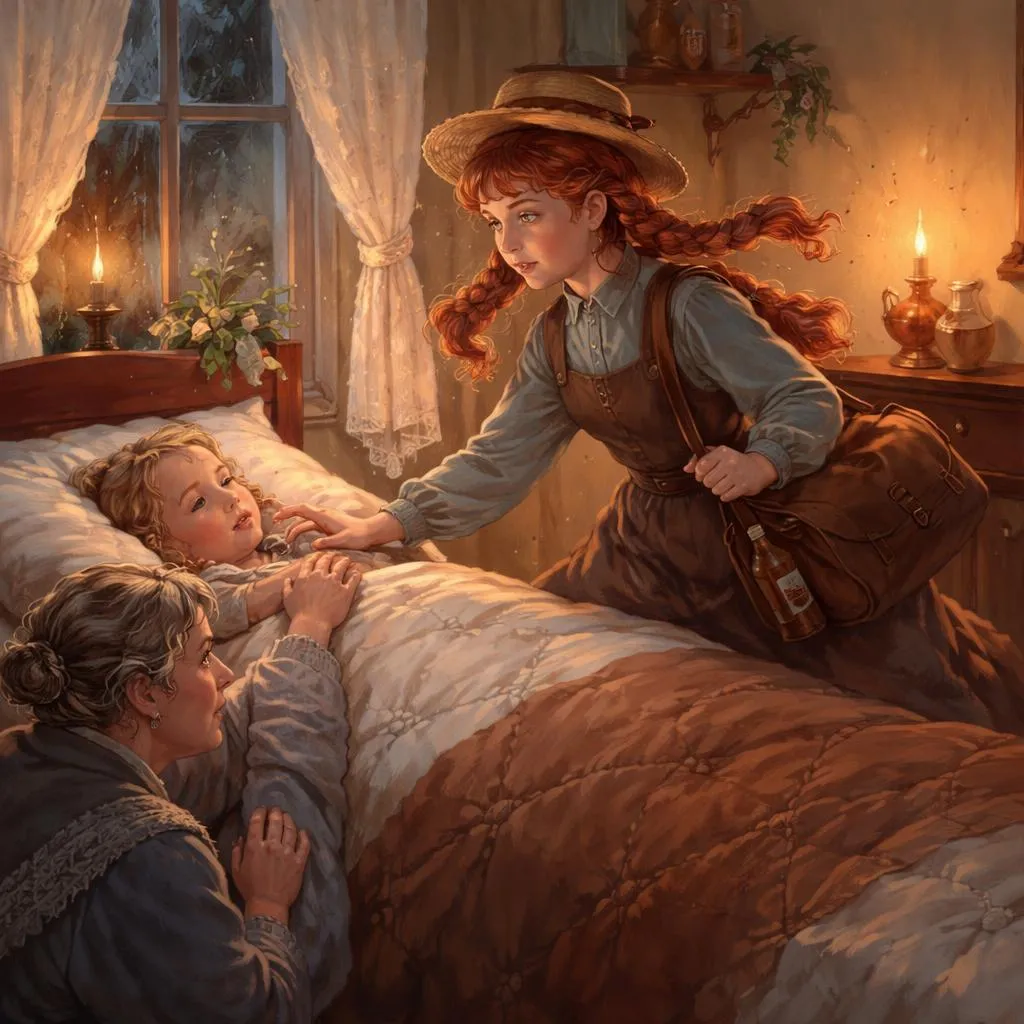

The excerpt you have just read is from the beloved classic Anne of Green Gables, written by Canadian author Lucy Maud Montgomery. This story, first published in 1908, has enchanted readers around the world for over a century with its vivid portrayal of life on Prince Edward Island and the adventures of its spirited heroine, Anne Shirley.
Background and Author Introduction
Lucy Maud Montgomery was born in 1874 in Prince Edward Island, Canada. Drawing inspiration from her own childhood and the beautiful landscapes surrounding her, Montgomery created Anne Shirley, an imaginative and talkative orphan girl who is mistakenly sent to live with Marilla and Matthew Cuthbert, a brother and sister who had intended to adopt a boy to help them on their farm. The novel is set in the early 20th century and vividly captures rural Canadian life, with its customs, politics, and social dynamics.
Montgomery’s writing is celebrated for its rich descriptions, warm humor, and deep empathy for her characters. Anne of Green Gables is not just a children’s story; it is a tale about belonging, identity, friendship, and personal growth. Anne’s vivid imagination, her struggles with fitting in, and her triumphs resonate with readers of all ages.
Detailed Interpretation and Significance of the Story
This particular passage highlights several important themes of the novel. It shows Anne’s determination and intelligence as she studies her lessons despite distractions and challenges. It also introduces the political backdrop of the time, illustrating how even small communities are affected by larger events. The story emphasizes Anne’s kindness and quick thinking when she helps save Minnie May from croup, demonstrating her courage and maturity beyond her years.
The narrative also explores friendship and forgiveness, as seen in the reconciliation between Anne and Diana Barry after a misunderstanding involving currant wine. Their renewed friendship is celebrated with a tea party, symbolizing harmony and social grace.
Lessons and Insights for Students and Young Readers
-
The Power of Imagination and Determination: Anne’s vivid imagination is both her greatest strength and her source of challenges. Students can learn from Anne’s example to embrace creativity while also cultivating discipline and focus, especially in their studies.
-
Courage and Responsibility: Anne’s calm and capable handling of Minnie May’s illness teaches the importance of staying composed and taking responsibility in emergencies. This encourages young readers to develop problem-solving skills and empathy.
-
Friendship and Forgiveness: The story shows that misunderstandings can happen, but forgiveness and open communication can restore and strengthen friendships. This is a valuable lesson for social interactions in school and everyday life.
-
Appreciation of Nature and Community: The vivid descriptions of the winter landscape and village life foster an appreciation for the natural world and the value of community support.
How to Apply These Lessons in Daily Life
-
In Learning: Students can adopt Anne’s persistence and curiosity in their studies. When facing difficult subjects, like Anne’s struggles with geometry, it’s important to keep trying and seek help when needed.
-
In Social Situations: Emulating Anne’s kindness and willingness to forgive can help build stronger friendships. Being open-hearted and understanding towards others’ mistakes nurtures a positive social environment.
-
In Personal Growth: Anne’s story encourages young people to be true to themselves, to value their unique qualities, and to approach life with enthusiasm and hope.
Cultivating Positive Traits from the Story
-
Imagination: Encourage creative writing, drawing, or storytelling to develop imagination like Anne’s.
-
Empathy and Helpfulness: Volunteer for community service or help classmates who are struggling, following Anne’s example of caring for Minnie May.
-
Resilience: Practice facing challenges with a positive attitude, learning from setbacks rather than giving up.
Reflection and Appreciation
Reading Anne of Green Gables invites readers to reflect on their own lives and relationships. Anne’s journey from an orphaned girl to a beloved member of the Avonlea community shows the transformative power of kindness, courage, and imagination. Her story reminds us that even when life seems difficult, hope and friendship can light the way.
This timeless novel continues to inspire readers to dream big, be compassionate, and embrace the beauty in everyday moments. As students and young readers explore Anne’s world, they not only enjoy a captivating story but also gain valuable life lessons that will serve them well in school, friendships, and beyond.
