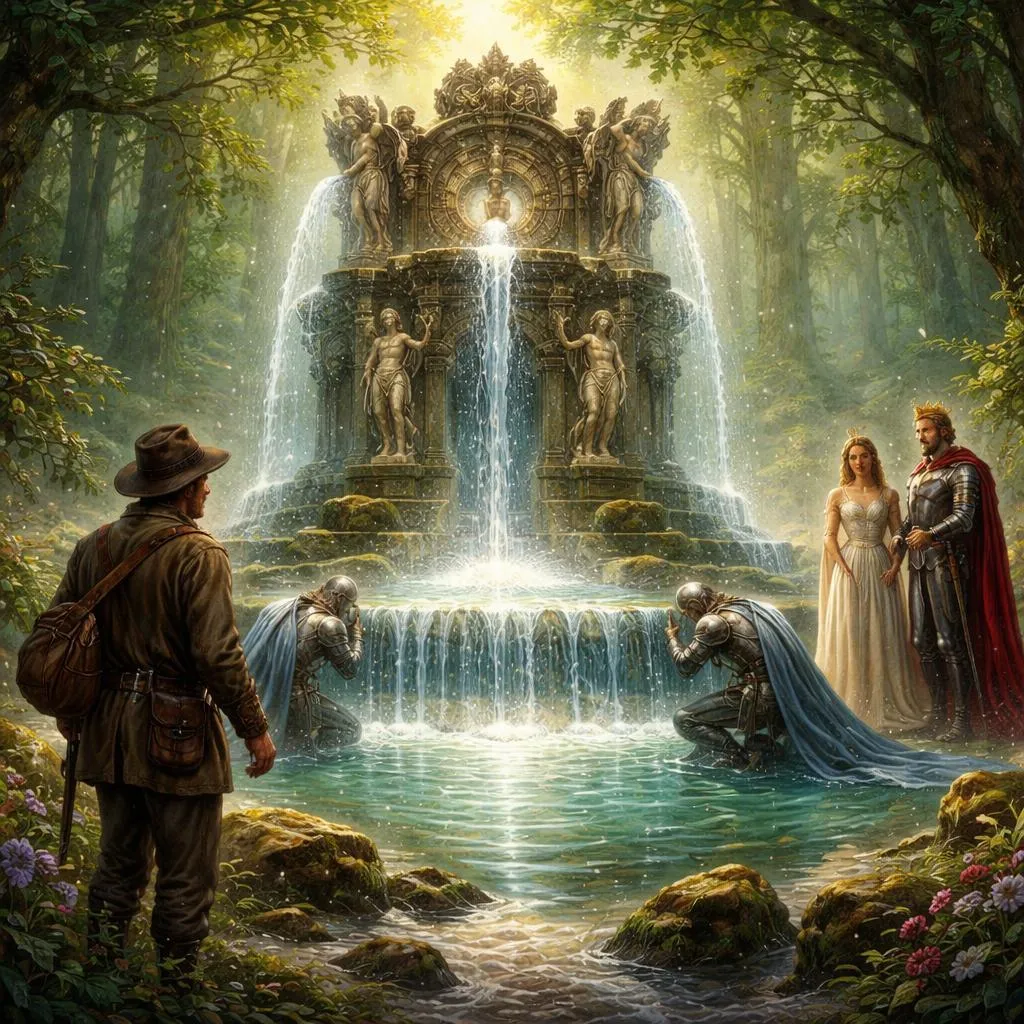

The pilgrims in this story are very much like us—human beings with hopes, fears, and a deep desire to find meaning in their journey. They had traveled a long, challenging path, only to discover that the miraculous fountain they sought no longer existed. Instead of turning back or giving up, their curiosity and determination grew even stronger. This tells us something important about human nature: we are drawn not only to success but also to understanding loss and change.
As the pilgrims arrive at the Valley of Holiness, the scene is quiet and somber. The large buildings, once full of life, now seem like small toys in a vast, empty desert. The tolling bells add a haunting sound, reminding us of the passage of time and the presence of sorrow. The monks and nuns, dressed in black robes, move silently like ghosts, reflecting the deep despair that has settled over this once vibrant place.
The old abbot welcomes the narrator with tears, expressing his hope that the water can be brought back to the well and save the community. The narrator promises to help, but there is tension with Merlin, the local magician, who is also trying to restore the fountain through his own magic. The story explores themes of faith, superstition, and the conflict between old and new ways of thinking.
The narrator investigates the well and discovers that it is not magical but simply broken. This discovery challenges the pilgrims’ beliefs and shows how sometimes miracles are not about magic but about understanding and practical action. The story also humorously describes the hermits living in strange conditions and the saint who prays by bowing his body thousands of times, highlighting human devotion and the sometimes absurd lengths people go to in the name of faith.
Background and Author Introduction
This story is part of a larger work by Mark Twain, a famous American author known for his wit, humor, and sharp observations of human nature. Twain often used satire to critique society and explore deep moral questions. His stories, while entertaining, also encourage readers to think critically about tradition, belief, and progress.
The setting of this story is a fictional medieval world, inspired by legends and religious history. Twain uses this backdrop to explore timeless human themes, such as hope, despair, faith, and the search for truth. The characters, from pilgrims to monks to magicians, represent different attitudes toward life and belief.
Detailed Interpretation and Significance
At its core, this story challenges the idea that miracles are simply magical events. Instead, it suggests that miracles can be acts of understanding, courage, and perseverance. The narrator’s practical approach to fixing the well contrasts with Merlin’s reliance on magic, symbolizing the tension between reason and superstition.
The pilgrims’ journey represents the human quest for meaning and the struggle to maintain faith in difficult times. Their reaction to the dry well shows how people cope with disappointment and change. The story also highlights the importance of community, as the pilgrims and monks support each other despite their fears.
The humorous descriptions of the hermits and the saint remind us that faith can take many forms, some more practical than others. Twain’s satire encourages readers to question blind devotion and to seek a balance between faith and reason.
Lessons and Insights for Students
-
Curiosity and Perseverance: The pilgrims’ determination to continue their journey despite setbacks teaches us the value of persistence. In life and learning, challenges are inevitable, but curiosity and effort can lead to new discoveries and growth.
-
Critical Thinking: The narrator’s investigation of the well shows the importance of questioning assumptions and seeking evidence. Students can learn to approach problems with a critical mind, balancing respect for tradition with openness to new ideas.
-
Faith and Reason: The story encourages a thoughtful approach to belief. Faith can inspire and comfort, but it should not prevent us from using reason and practical skills to solve problems.
-
Community Support: The pilgrims and monks find strength in each other during hard times. This teaches the importance of empathy, cooperation, and supporting friends and family.
-
Humor and Perspective: Twain’s use of humor helps us see the lighter side of human struggles. Maintaining a sense of humor can help students cope with stress and view challenges from a positive angle.
Applying These Lessons in Daily Life
-
In Learning: When faced with difficult subjects or failures, students can remember the pilgrims’ perseverance and the narrator’s problem-solving approach. Asking questions, researching, and trying different methods can lead to success.
-
In Social Situations: Supporting friends who are struggling and sharing hope can strengthen relationships. Understanding different beliefs and respecting others’ faith while encouraging critical thinking fosters a healthy community.
-
In Personal Growth: Balancing faith in oneself and in greater values with practical action helps build resilience. Students can practice patience, curiosity, and humor to navigate life’s ups and downs.
Cultivating Positive Values from the Story
-
Curiosity: Encourage asking questions and exploring new ideas beyond what is immediately visible or accepted.
-
Perseverance: Develop the habit of continuing efforts even when results are not immediate or when facing setbacks.
-
Critical Thinking: Practice analyzing information carefully and making decisions based on evidence and reason.
-
Empathy: Learn to understand and support others, recognizing that everyone faces their own challenges.
-
Humor: Use laughter and lightheartedness as tools to relieve stress and build connections.
By reflecting on this story, students can gain valuable insights into human nature and learn how to apply these lessons in their studies, relationships, and personal development. The tale reminds us that while miracles may not always be magical, the real magic lies in our courage, wisdom, and kindness.
