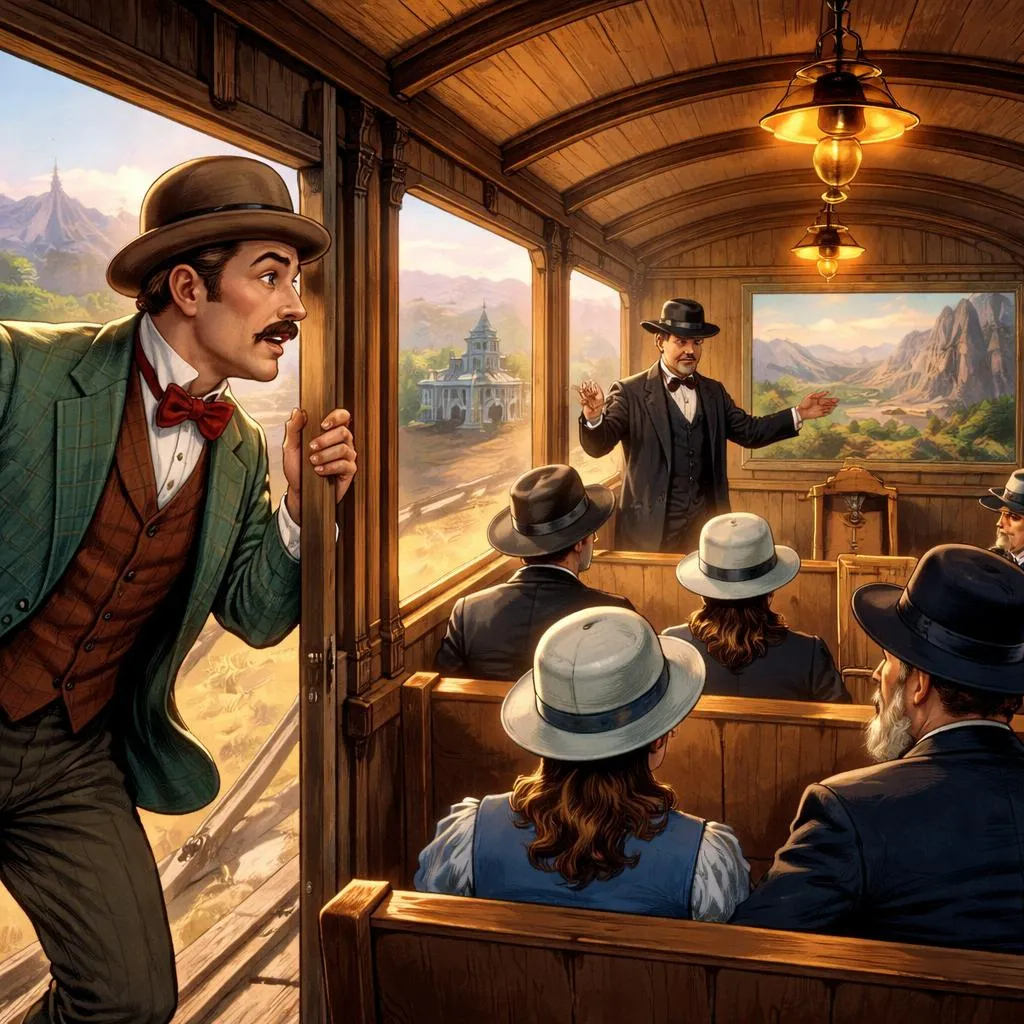

During the night of December 5th, the train journeyed southeast for about fifty miles before turning northeast toward the Great Salt Lake. Passepartout, stepping out around nine o’clock to enjoy the cold, misty air, noticed a peculiar man boarding the train at Elko. This man, dressed entirely in black and resembling a clergyman, went through the train posting notices inviting passengers to a lecture on Mormonism.
Curious, Passepartout decided to attend the lecture held in car No. 117. Elder William Hitch, the Mormon missionary, passionately spoke about the history and beliefs of the Mormon faith. He described the origins of Mormonism, starting from ancient Israel, through Joseph Smith’s revelations in the 19th century, to the establishment of Mormon communities in America. The lecture covered the persecution faced by Mormons, the practice of polygamy, and the migration to Utah under Brigham Young’s leadership.
As the train neared the Great Salt Lake, passengers observed the vast, salt-encrusted waters surrounded by rugged cliffs. The train stopped at Ogden, giving Mr. Fogg and his companions a chance to visit Salt Lake City. The city, laid out in a grid pattern, was marked by its unique architecture and the presence of many women, reflecting the Mormon practice of polygamy. Passepartout felt uneasy witnessing groups of women associated with a single man, sympathizing with the challenges such a lifestyle might bring.
When the train was about to depart, a breathless Mormon man hurried aboard, explaining he had fled a troubling domestic incident. Passepartout asked how many wives he had, expecting a large number, but the man replied simply, “One, and that was enough!”
Background and Author Introduction
This passage is from Jules Verne’s classic novel Around the World in Eighty Days, first published in 1873. Verne, a French author, is often called the "father of science fiction" for his imaginative and adventurous stories that blend scientific knowledge with thrilling narratives. The novel follows the journey of Phileas Fogg, a meticulous English gentleman who bets he can circle the globe in eighty days. Passepartout, his loyal French valet, provides much of the story’s humor and humanity.
Verne’s works often explore themes of exploration, technology, and cultural encounters, reflecting the spirit of the 19th century when the world was becoming more connected through railways, steamships, and telegraphs. This particular episode introduces readers to the Mormon faith and the American West, highlighting the diversity and complexity of cultures encountered during global travel.
Detailed Interpretation and Significance
This segment serves several purposes. It educates readers about Mormonism, a relatively little-known religion at the time, and portrays the challenges faced by its followers, including persecution and forced migration. The lecture by Elder Hitch is both informative and a narrative device to immerse readers in the historical context of the American frontier.
The Great Salt Lake and Salt Lake City symbolize the frontier’s harsh but hopeful environment, where religious communities sought freedom and prosperity despite opposition. The depiction of polygamy, a controversial aspect of Mormonism, is presented with nuance—showing both the societal tensions it caused and the personal difficulties it entailed.
Passepartout’s reactions provide a lens for readers, especially young ones, to critically reflect on cultural differences and moral questions. His empathy for the Mormon wives and his skepticism about polygamy invite readers to think about the human side of historical and religious practices.
What Students Can Learn
-
Cultural Awareness and Respect: The story introduces students to a unique religious community and encourages open-mindedness. Understanding different beliefs and customs fosters tolerance and global awareness.
-
Historical Context: Students learn about 19th-century America, including the westward expansion, religious movements, and the role of railroads in connecting distant places.
-
Critical Thinking: Passepartout’s mixed feelings about polygamy prompt readers to analyze complex social issues and form their own opinions based on empathy and reason.
-
Geography and Science: The description of the Great Salt Lake offers insights into natural phenomena like salt lakes, geography, and environmental science.
Life Applications and Positive Values
-
Empathy and Compassion: Passepartout’s concern for the Mormon wives teaches the importance of caring about others’ well-being, especially those in difficult situations.
-
Curiosity and Learning: The eagerness to attend the lecture and learn about a new religion models intellectual curiosity and openness to new knowledge.
-
Respect for Diversity: Encountering different cultures respectfully is a vital social skill in today’s interconnected world.
-
Resilience and Perseverance: The Mormons’ perseverance despite persecution exemplifies courage and determination, inspiring students to face challenges bravely.
How to Cultivate These Qualities
-
Engage in Discussions: Encourage students to discuss cultural differences and historical events to deepen understanding and empathy.
-
Explore Diverse Perspectives: Assign readings about various religions and cultures to broaden horizons.
-
Reflect on Moral Questions: Use stories like this to prompt reflection on ethical issues and personal values.
-
Connect to Current Events: Relate historical persecution and migration to modern examples, fostering relevance and awareness.
Conclusion
This passage from Around the World in Eighty Days is a rich educational resource. It combines adventure with cultural education, historical insight, and moral reflection. Students can gain knowledge about American history, religious diversity, and geography, while also developing empathy, critical thinking, and social awareness. By engaging with such stories, young readers learn not only about the world but also about the values that help build understanding and kindness in their own lives.
