
Marilla walked home one late April evening from an Aid meeting, feeling the thrill of spring’s arrival. The winter was finally over, and with it came the fresh, vibrant energy that spring brings to everyone, from the oldest and saddest to the youngest and happiest. Marilla wasn’t one to analyze her feelings deeply. She probably thought about the Aid society and the new carpet for the vestry room, but beneath these thoughts was a quiet awareness of the red fields turning into pale purple mist in the sunset, the long shadows of fir trees stretching over the meadow, the crimson maple buds around a still pond, and the world waking up beneath the gray earth. Spring was everywhere, and Marilla’s usually steady steps felt lighter and quicker because of the deep joy she felt inside.
Her eyes lingered fondly on Green Gables, peeking through the trees and shining in the sunlight. As she walked along the damp lane, she was happy to know she was going home to a warm fire and a nicely set table for tea, instead of the cold evenings before Anne had come to Green Gables.
But when Marilla entered the kitchen, she found the fire out and no sign of Anne. She was disappointed and annoyed. She had told Anne to have tea ready at five o’clock, but now she had to prepare the meal herself before Matthew returned from plowing.
“I’ll have to settle Miss Anne when she gets home,” Marilla said grimly as she prepared kindling. Matthew was patiently waiting for his tea. Marilla complained about Anne’s habit of wandering off with Diana, writing stories or practicing plays, forgetting her duties. She felt Anne needed to be corrected sharply. Though Mrs. Allan praised Anne as bright and sweet, Marilla saw her head full of nonsense and unpredictable behavior. She was worried because Anne was disobedient and untrustworthy for the first time.
Matthew, patient and wise, suggested that Marilla might be too quick to judge and that Anne was good at explaining things. But Marilla was firm: Anne was not home when she was supposed to be, and that was unacceptable.
It was dark when supper was ready, and still no Anne. Marilla washed the dishes and went upstairs to get a candle. When she turned, she found Anne lying face down on the bed, refusing to look at her.
“Anne, have you been asleep?” Marilla asked.
“No,” Anne replied softly.
“Are you sick?” Marilla asked, concerned.
Anne hid deeper in the pillows, saying she was in despair and didn’t care about school or choir anymore. She felt her future was ruined.
Marilla demanded to know what was wrong. Anne reluctantly showed her hair, which was now a strange green color. She had dyed it, hoping to get rid of her red hair, but it turned out horribly.
Anne explained she bought the dye from a peddler, who promised it would turn her hair raven black. She had only fifty cents left, but the peddler kindly sold it to her for that price. She applied it eagerly but was devastated by the result.
Marilla scolded Anne for trusting the peddler and warned her about Italians and strangers. Anne insisted she was trying to be good in other ways to make up for this mistake.
Anne washed her hair repeatedly, but the dye wouldn’t come out. She was heartbroken, fearing people would never forget her mistake and would think she was not respectable. She dreaded facing Josie Pye, who would surely laugh at her.
For a week, Anne stayed home, shampooing her hair daily. Diana was the only one who knew the secret and promised never to tell.
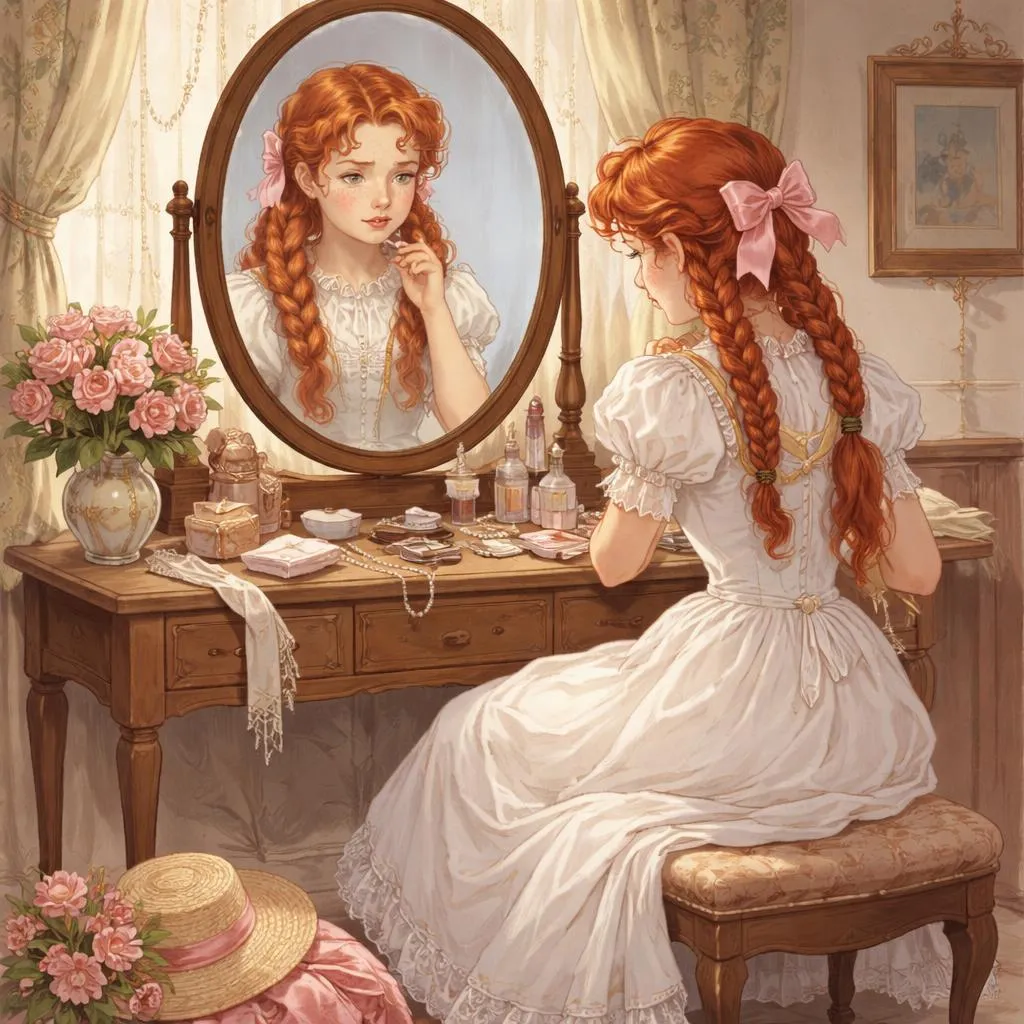
Finally, Marilla said the only solution was to cut Anne’s hair. Anne was deeply upset but agreed. Marilla cut it as short as possible, and Anne was so unhappy with her appearance that she didn’t want to look in the mirror.
At school, Anne’s short hair caused a sensation. Josie Pye called her a scarecrow, but Anne bore it patiently, feeling virtuous for forgiving Josie.
Anne promised to devote herself to being good and never to try to be beautiful again. Diana suggested tying a black velvet ribbon around her head when her hair grew back, which Anne liked.
Marilla, despite her headaches, enjoyed Anne’s chatter, showing how much she cared.
Background and Author Introduction
This story is an excerpt from Anne of Green Gables, a beloved novel written by Canadian author Lucy Maud Montgomery and first published in 1908. The novel follows the adventures of Anne Shirley, an imaginative and spirited orphan girl who is mistakenly sent to live with Marilla and Matthew Cuthbert, siblings who had intended to adopt a boy to help them on their farm in Avonlea, Prince Edward Island.
Lucy Maud Montgomery drew inspiration from her own childhood experiences and the beautiful landscapes of Prince Edward Island. Her writing captures the charm of rural life, the innocence of childhood, and the struggles and joys of growing up.
Detailed Analysis and Significance
This passage highlights several important themes: the arrival of spring symbolizing new beginnings, the challenges of growing up, and the consequences of impulsive decisions. Anne’s green hair incident is a classic example of her youthful enthusiasm and imaginative spirit leading to a mistake, but also her resilience and determination to face the consequences.
Marilla represents order, responsibility, and practicality, while Anne embodies creativity, emotion, and growth. Their relationship evolves throughout the novel, showing the balance between discipline and freedom.
The story teaches readers about the importance of honesty, responsibility, and forgiveness. Anne’s willingness to accept her mistake and Marilla’s stern but caring response show how growth often comes from facing difficulties.
Lessons and Insights for Students
-
Embrace Mistakes as Learning Opportunities
Anne’s green hair disaster reminds us that everyone makes mistakes. What matters is how we respond—by taking responsibility, learning from the experience, and moving forward. -
Balance Imagination with Practicality
Anne’s vivid imagination is a gift, but it needs to be balanced with practical judgment. Students can learn to nurture creativity while also thinking through the consequences of their actions. -
Value Forgiveness and Compassion
Marilla’s eventual understanding and Diana’s loyalty teach the importance of forgiving others and supporting friends when they falter. -
Develop Resilience
Anne’s courage to face school despite embarrassment shows resilience. Students can apply this by not being discouraged by setbacks or criticism. -
Respect Rules and Responsibilities
Marilla’s concern about Anne neglecting her duties reminds young readers of the importance of respecting rules and commitments.
Applying These Lessons in Daily Life
-
In School: When facing challenges or failures, remember Anne’s example—accept responsibility, ask for help if needed, and keep trying. Use creativity in projects but plan carefully.
-
In Social Situations: Practice forgiveness like Anne and Diana. Support friends who make mistakes and avoid harsh judgment.
-
In Family Life: Understand the balance between freedom and responsibility. Like Marilla, parents and guardians can set boundaries with love and patience.
-
In Personal Growth: Cultivate resilience by facing difficulties bravely and learning from them. Celebrate your unique qualities, even if others don’t always understand them.
Cultivating Positive Traits from the Story
-
Imagination and Creativity: Encourage creative writing, storytelling, or art, inspired by Anne’s love of stories and plays.
-
Responsibility: Set personal goals and follow through, just as Anne learns to respect her duties.
-
Empathy and Kindness: Practice understanding others’ feelings and offering support, as Diana does for Anne.
-
Self-Acceptance: Learn to accept yourself, including your imperfections, and grow from your experiences.
Anne of Green Gables remains a timeless story that inspires readers to embrace life’s challenges with courage, kindness, and creativity. Through Anne’s adventures and growth, students can find valuable lessons that apply to their own journeys of learning and self-discovery.