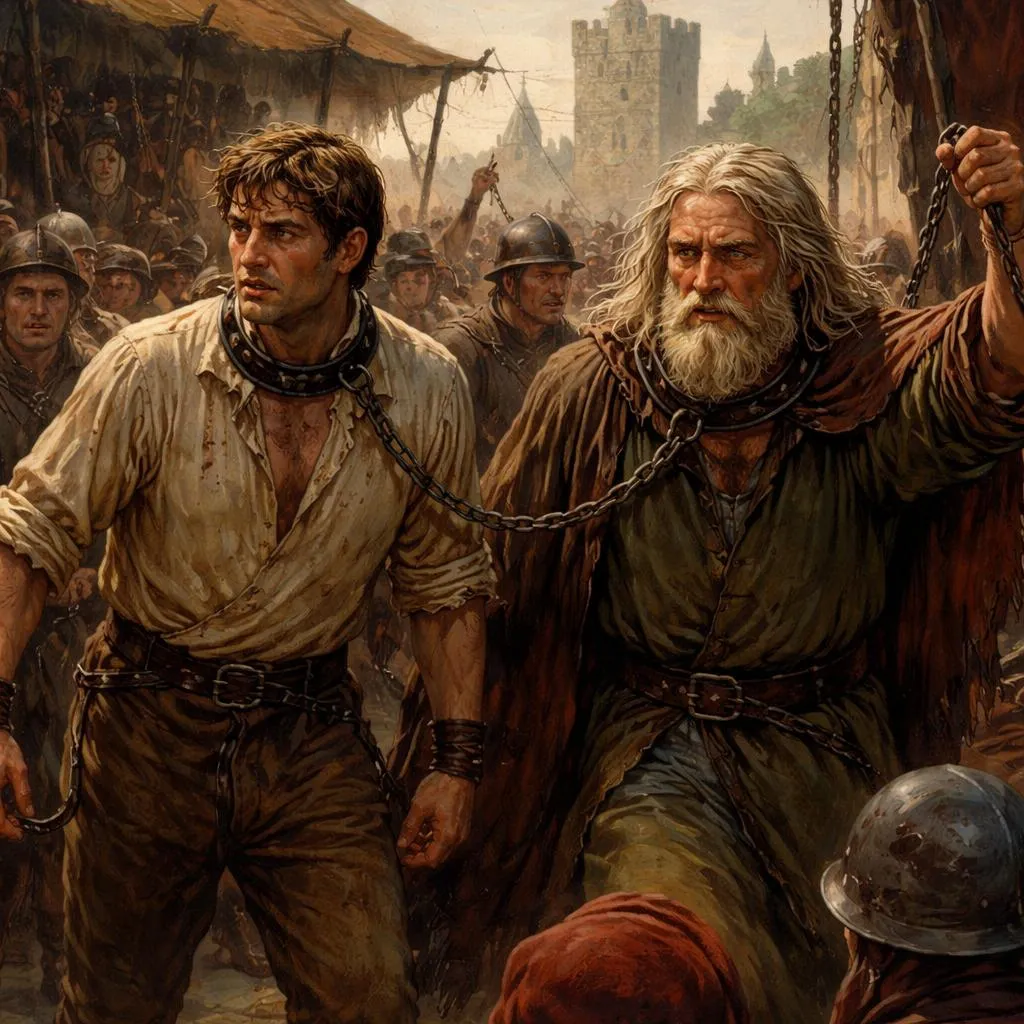

This passage is an excerpt from a story that combines elements of fantasy, adventure, and social commentary. It presents a vivid narrative involving a king and his companions who face danger, misunderstandings, and ultimately enslavement, all set in a richly imagined world with unique customs and technologies.
Background and Author Introduction
The story is reminiscent of the style of classic adventure and fantasy literature, where ordinary objects—like the "miller-gun"—take on symbolic significance, and characters navigate challenges that test their courage, wit, and morality. Although the author of this specific passage is not named here, the narrative style suggests a 19th or early 20th-century origin, with a focus on social critique and imaginative storytelling.
Detailed Interpretation and Significance
At its core, the story explores themes of misunderstanding, injustice, and resilience. The "miller-gun" symbolizes innovation and the clash between new ideas and traditional ways. The king’s attempt to discuss agriculture amid a crisis highlights how leaders may sometimes be out of touch with urgent realities. The violent reaction of the peasants and the subsequent rescue by a nobleman illustrate social tensions and the precariousness of status and freedom.
The climax, where the king and his minister are sold into slavery despite their royal status, serves as a powerful commentary on the fragility of freedom and the arbitrary nature of power. It challenges the reader to consider how laws and social systems can oppress even those who seem most protected by them.
Lessons and Insights for Students and Young Readers
-
Understanding Social Justice and Empathy
The story encourages readers to think critically about justice and fairness. It shows how easily misunderstandings and prejudice can lead to conflict and suffering. Students can learn to empathize with others, especially those who are marginalized or misunderstood. -
The Importance of Courage and Resilience
Despite their dire circumstances, the characters demonstrate bravery and determination. This teaches young readers the value of standing firm in the face of adversity and maintaining hope even when situations seem bleak. -
Critical Thinking about Leadership and Authority
The king’s behavior reminds students that leaders are human and can make mistakes. It encourages young people to think independently about authority figures and to recognize when leadership is effective or flawed. -
Innovation and Adaptability
The "miller-gun" represents creativity and new ways of thinking. Students can be inspired to embrace innovation and to adapt to changing circumstances with resourcefulness.
Applying These Lessons in Daily Life
- In School: Students can apply critical thinking skills by questioning information, analyzing different perspectives, and engaging in discussions about fairness and leadership.
- In Social Settings: The story promotes empathy and understanding, encouraging young people to listen to others and resolve conflicts peacefully.
- In Personal Growth: The resilience shown by the characters can inspire students to persevere through challenges and maintain a positive attitude.
Cultivating Positive Traits from the Story
- Empathy: Practice putting yourself in others’ shoes to better understand their feelings and viewpoints.
- Courage: Face difficulties bravely, whether in standing up for what is right or overcoming personal fears.
- Creativity: Look for new solutions to problems and be open to learning new skills.
- Respect for Justice: Advocate for fairness in your community and stand against injustice when you see it.
Conclusion
This story, rich in adventure and moral complexity, offers valuable lessons for young readers. It invites them to explore important social themes while enjoying a compelling narrative. By reflecting on the characters’ experiences and choices, students can develop a deeper understanding of justice, leadership, and personal strength—qualities that will serve them well throughout their lives.
