
Nearing four in the afternoon. The scene was just outside the walls of London. A cool, comfortable, superb day, with a brilliant sun; the kind of day to make one want to live, not die. The multitude was prodigious and far-reaching; and yet we fifteen poor devils hadn’t a friend in it. There was something painful in that thought, look at it how you might. There we sat, on our tall scaffold, the butt of the hate and mockery of all those enemies. We were being made a holiday spectacle. They had built a sort of grand stand for the nobility and gentry, and these were there in full force, with their ladies. We recognized a good many of them.
The crowd got a brief and unexpected dash of diversion out of the king. The moment we were freed of our bonds he sprang up, in his fantastic rags, with face bruised out of all recognition, and proclaimed himself Arthur, King of Britain, and denounced the awful penalties of treason upon every soul there present if hair of his sacred head were touched. It startled and surprised him to hear them break into a vast roar of laughter. It wounded his dignity, and he locked himself up in silence. Then, although the crowd begged him to go on, and tried to provoke him to it by catcalls, jeers, and shouts of:
“Let him speak! The king! The king! his humble subjects hunger and thirst for words of wisdom out of the mouth of their master his Serene and Sacred Raggedness!”
But it went for nothing. He put on all his majesty and sat under this rain of contempt and insult unmoved. He certainly was great in his way. Absently, I had taken off my white bandage and wound it about my right arm. When the crowd noticed this, they began upon me. They said:
“Doubtless this sailor-man is his minister—observe his costly badge of office!”
I let them go on until they got tired, and then I said:
“Yes, I am his minister, The Boss; and to-morrow you will hear that from Camelot which—”
I got no further. They drowned me out with joyous derision. But presently there was silence; for the sheriffs of London, in their official robes, with their subordinates, began to make a stir which indicated that business was about to begin. In the hush which followed, our crime was recited, the death warrant read, then everybody uncovered while a priest uttered a prayer.
Then a slave was blindfolded; the hangman unslung his rope. There lay the smooth road below us, we upon one side of it, the banked multitude wailing its other side—a good clear road, and kept free by the police—how good it would be to see my five hundred horsemen come tearing down it! But no, it was out of the possibilities. I followed its receding thread out into the distance—not a horseman on it, or sign of one.
There was a jerk, and the slave hung dangling; dangling and hideously squirming, for his limbs were not tied.
A second rope was unslung, in a moment another slave was dangling.
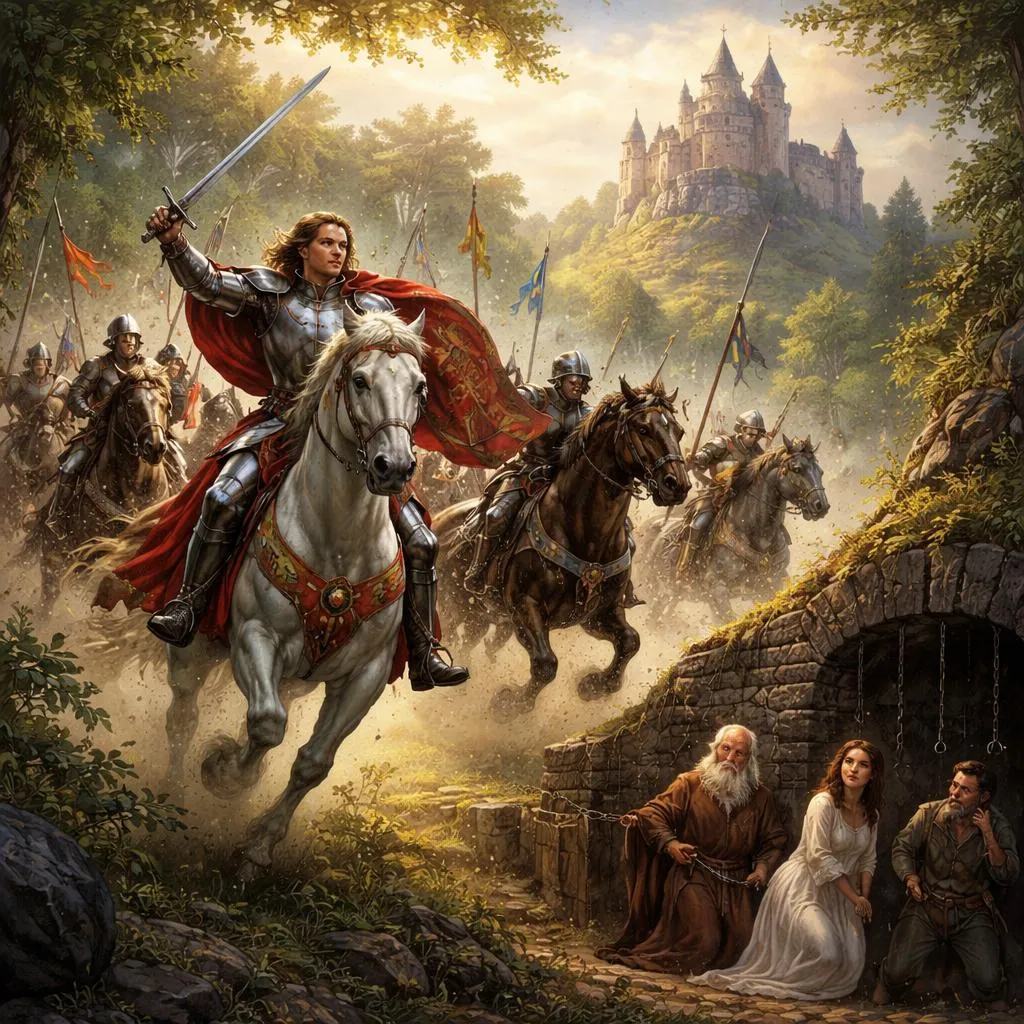
In a minute a third slave was struggling in the air. It was dreadful. I turned away my head a moment, and when I turned back I missed the king! They were blindfolding him! I was paralyzed; I couldn’t move, I was choking, my tongue was petrified. They finished blindfolding him, they led him under the rope. I couldn’t shake off that clinging impotence. But when I saw them put the noose around his neck, then everything let go in me and I made a spring to the rescue—and as I made it I shot one more glance abroad—by George! here they came, a-tilting!—five hundred mailed and belted knights on bicycles!
The grandest sight that ever was seen. Lord, how the plumes streamed, how the sun flamed and flashed from the endless procession of webby wheels!
I waved my right arm as Launcelot swept in—he recognized my rag —I tore away noose and bandage, and shouted:
“On your knees, every rascal of you, and salute the king! Who fails shall sup in hell to-night!”
I always use that high style when I’m climaxing an effect. Well, it was noble to see Launcelot and the boys swarm up onto that scaffold and heave sheriffs and such overboard. And it was fine to see that astonished multitude go down on their knees and beg their lives of the king they had just been deriding and insulting. And as he stood apart there, receiving this homage in rags, I thought to myself, well, really there is something peculiarly grand about the gait and bearing of a king, after all.
I was immensely satisfied. Take the whole situation all around, it was one of the gaudiest effects I ever instigated.
And presently up comes Clarence, his own self! and winks, and says, very modernly:
“Good deal of a surprise, wasn’t it? I knew you’d like it. I’ve had the boys practicing this long time, privately; and just hungry for a chance to show off.”
Background and Author Introduction
This vivid passage is a creative retelling inspired by the legendary tales of King Arthur and his knights, set against a dramatic and theatrical backdrop. The story draws on the rich tradition of Arthurian legends, which have been told and retold for centuries. These legends originated in medieval Britain and have been adapted by countless authors, poets, and playwrights. The author of this particular narrative uses a modern, somewhat humorous tone to bring new life to the classic story, blending historical imagery with a touch of satire and surprise.
Detailed Interpretation and Significance
The scene captures a moment of tension and spectacle: the condemned king and his companions are mocked by a hostile crowd, yet the king’s dignity and the loyalty of his knights ultimately turn the tide. The arrival of the knights on bicycles, a humorous and anachronistic twist, symbolizes hope, bravery, and the triumph of justice against cruelty and injustice. The story explores themes of loyalty, courage, dignity in adversity, and the power of leadership.
The king’s refusal to be broken by the crowd’s mockery highlights the importance of inner strength and self-respect. The knights’ dramatic rescue demonstrates the value of standing up for what is right, even when the odds seem overwhelming. This story also touches on the idea that true nobility comes not from outward appearance or social status, but from actions and character.
Lessons and Insights for Students
-
Courage and Resilience: The king and his followers face humiliation and danger but do not give up. Students can learn the importance of standing firm in their beliefs and values, even when others mock or oppose them.
-
Loyalty and Friendship: The knights’ loyalty to their king teaches the value of supporting friends and standing together in difficult times.
-
Leadership and Dignity: The king’s calm and majestic bearing, despite his rags and wounds, shows that true leadership is about character, not just power or appearance.
-
Justice and Fairness: The story’s climax, where the knights rescue the king from unjust execution, encourages students to think about fairness and the courage to defend what is right.
Applying These Lessons in Daily Life
-
In School: Students can practice resilience by not giving up when facing challenges, such as difficult subjects or social pressures. They can also show loyalty by supporting classmates and standing against bullying.
-
In Friendships: Like the knights, students should be reliable and supportive friends, helping each other through tough times.
-
In Leadership: Whether in group projects or clubs, students can learn to lead with dignity and fairness, inspiring others by their example.
-
In Social Situations: Standing up for justice and fairness, even in small ways, helps create a kinder and more respectful community.
Cultivating Positive Qualities from the Story
-
Build Inner Strength: Practice self-confidence and calmness, especially when facing criticism or setbacks.
-
Develop Loyalty: Value and nurture friendships, showing kindness and support.
-
Embrace Courage: Take on challenges bravely and speak out against unfairness.
-
Practice Leadership: Lead by example, with respect and integrity.
Reflection and Appreciation
This story invites readers to reflect on what it means to be truly noble and brave. It challenges us to look beyond appearances and to value courage, loyalty, and justice. By engaging with such stories, students can develop empathy, moral awareness, and a deeper understanding of human character. These qualities will serve them well not only in literature but in all areas of life.
In summary, this imaginative retelling of an Arthurian moment is more than just an entertaining tale. It is a rich source of inspiration and guidance for young readers, encouraging them to cultivate virtues that will help them grow into thoughtful, courageous, and compassionate individuals.
