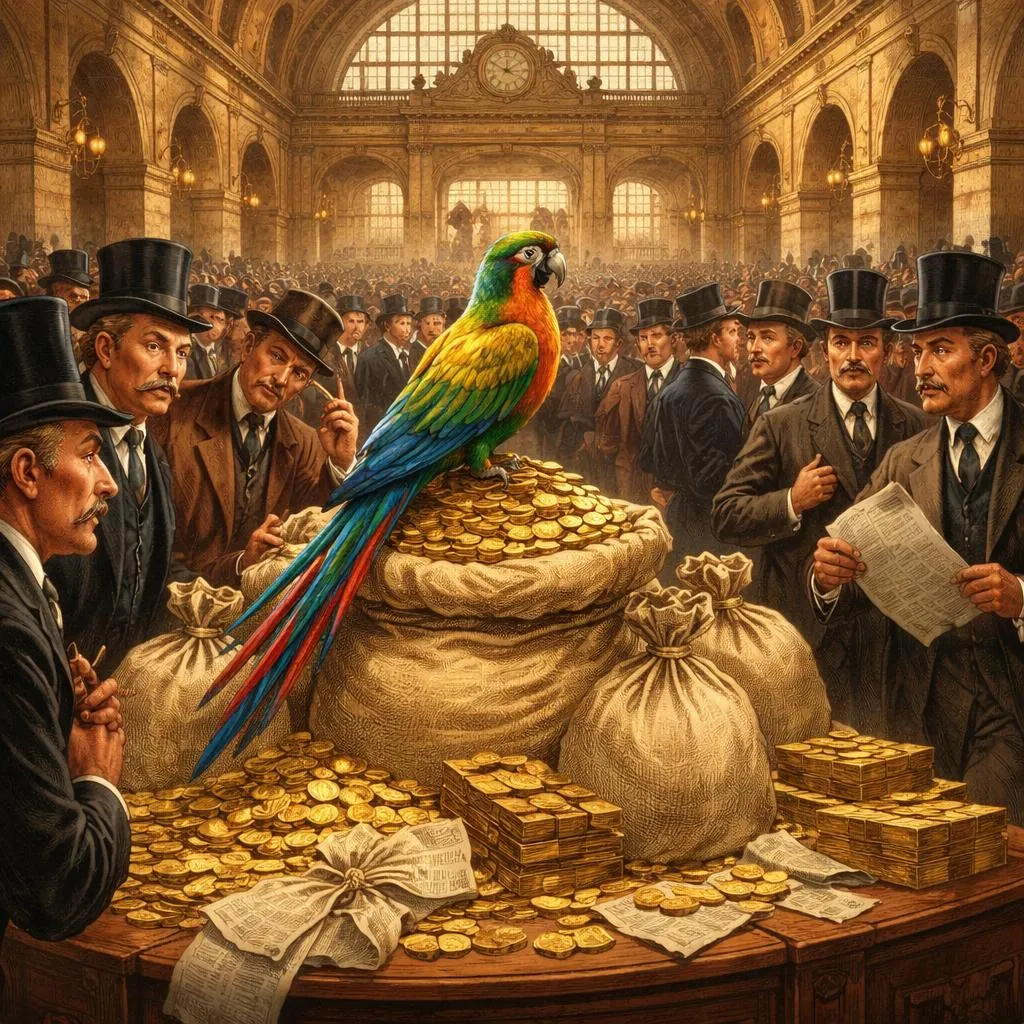

Phileas Fogg rightly suspected that his departure from London would create a lively sensation at the West End. The news of the bet spread through the Reform Club, and afforded an exciting topic of conversation to its members. From the club it soon got into the papers throughout England. The boasted "tour of the world" was talked about, disputed, argued with as much warmth as if the subject were another Alabama claim. Some took sides with Phileas Fogg, but the large majority shook their heads and declared against him; it was absurd, impossible, they declared, that the tour of the world could be made, except theoretically and on paper, in this minimum of time, and with the existing means of travelling. The Times, Standard, Morning Post, and Daily News, and twenty other highly respectable newspapers scouted Mr. Fogg's project as madness; the Daily Telegraph alone hesitatingly supported him. People in general thought him a lunatic, and blamed his Reform Club friends for having accepted a wager which betrayed the mental aberration of its proposer.
Articles no less passionate than logical appeared on the question, for geography is one of the pet subjects of the English; and the columns devoted to Phileas Fogg's venture were eagerly devoured by all classes of readers. At first some rash individuals, principally of the gentler sex, espoused his cause, which became still more popular when the Illustrated London News came out with his portrait, copied from a photograph in the Reform Club. A few readers of the Daily Telegraph even dared to say, "Why not, after all? Stranger things have come to pass."
At last a long article appeared, on the 7th of October, in the bulletin of the Royal Geographical Society, which treated the question from every point of view, and demonstrated the utter folly of the enterprise.
Everything, it said, was against the travellers, every obstacle imposed alike by man and by nature. A miraculous agreement of the times of departure and arrival, which was impossible, was absolutely necessary to his success. He might, perhaps, reckon on the arrival of trains at the designated hours, in Europe, where the distances were relatively moderate; but when he calculated upon crossing India in three days, and the United States in seven, could he rely beyond misgiving upon accomplishing his task? There were accidents to machinery, the liability of trains to run off the line, collisions, bad weather, the blocking up by snow—were not all these against Phileas Fogg? Would he not find himself, when travelling by steamer in winter, at the mercy of the winds and fogs? Is it uncommon for the best ocean steamers to be two or three days behind time? But a single delay would suffice to fatally break the chain of communication; should Phileas Fogg once miss, even by an hour; a steamer, he would have to wait for the next, and that would irrevocably render his attempt vain.
This article made a great deal of noise, and, being copied into all the papers, seriously depressed the advocates of the rash tourist.
Everybody knows that England is the world of betting men, who are of a higher class than mere gamblers; to bet is in the English temperament. Not only the members of the Reform, but the general public, made heavy wagers for or against Phileas Fogg, who was set down in the betting books as if he were a race–horse. Bonds were issued, and made their appearance on 'Change; "Phileas Fogg bonds" were offered at par or at a premium, and a great business was done in them. But five days after the article in the bulletin of the Geographical Society appeared, the demand began to subside: "Phileas Fogg" declined. They were offered by packages, at first of five, then of ten, until at last nobody would take less than twenty, fifty, a hundred!
Lord Albemarle, an elderly paralytic gentleman, was now the only advocate of Phileas Fogg left. This noble lord, who was fastened to his chair, would have given his fortune to be able to make the tour of the world, if it took ten years; and he bet five thousand pounds on Phileas Fogg. When the folly as well as the uselessness of the adventure was pointed out to him, he contented himself with replying, "If the thing is feasible, the first to do it ought to be an Englishman."
The Fogg party dwindled more and more, everybody was going against him, and the bets stood a hundred and fifty and two hundred to one; and a week after his departure an incident occurred which deprived him of backers at any price.
The commissioner of police was sitting in his office at nine o'clock one evening, when the following telegraphic dispatch was put into his hands:
Suez to London.
Rowan, Commissioner of Police, Scotland Yard:
I've found the bank robber, Phileas Fogg. Send with out delay warrant of arrest to Bombay.
Fix, Detective.
The effect of this dispatch was instantaneous. The polished gentleman disappeared to give place to the bank robber. His photograph, which was hung with those of the rest of the members at the Reform Club, was minutely examined, and it betrayed, feature by feature, the description of the robber which had been provided to the police. The mysterious habits of Phileas Fogg were recalled; his solitary ways, his sudden departure; and it seemed clear that, in undertaking a tour round the world on the pretext of a wager, he had had no other end in view than to elude the detectives, and throw them off his track.
Background and Author Introduction
This excerpt is from the classic novel Around the World in Eighty Days by Jules Verne, a French author known for his pioneering works in science fiction and adventure literature. Written in 1873, the story captures the spirit of the 19th century’s fascination with exploration, technology, and the shrinking of the world through advances in transportation. Verne’s vivid imagination and detailed research made his novels both entertaining and educational, inspiring generations of readers to dream about faraway places and daring adventures.
Story Overview and Significance
The story follows Phileas Fogg, a precise and wealthy English gentleman, who wagers that he can circumnavigate the globe in just eighty days. This bold bet sets the stage for an exciting journey filled with challenges, cultural encounters, and moments of suspense. The passage describes the initial public reaction to Fogg’s plan, highlighting skepticism and disbelief from newspapers and the public, as well as the social dynamics around betting and reputation in Victorian England.
Fogg’s journey is not just a physical adventure but also a test of human determination, ingenuity, and the power of modern technology. The story explores themes such as time, progress, and the clash between tradition and innovation. It also reflects on human nature—how society reacts to the unconventional and the unknown, often with doubt or fear.
Lessons and Insights for Students
-
Courage and Determination: Phileas Fogg’s willingness to take on an almost impossible challenge teaches students the value of courage and persistence. Even when faced with widespread doubt and obstacles, staying committed to one’s goals is crucial.
-
Critical Thinking and Skepticism: The public’s reaction shows how people often judge ideas based on their own experiences and biases. Students can learn to evaluate new ideas carefully but also remain open-minded to possibilities beyond current limitations.
-
The Importance of Planning and Adaptability: Fogg’s journey depends on precise timing and coordination, but unexpected events threaten his success. This highlights the need for careful planning and the ability to adapt when things don’t go as expected.
-
Cultural Awareness: As Fogg travels around the world, he encounters diverse cultures and environments. This encourages students to appreciate global diversity and develop empathy and curiosity about other ways of life.
-
The Role of Technology: The story showcases how technological advances (like railways and steamships) can transform society. Students can reflect on how innovation impacts daily life and the importance of embracing change.
Applying These Lessons in Life and Learning
-
In School: Students can apply Fogg’s example by setting challenging but achievable goals, managing their time well, and persevering through difficulties in their studies.
-
In Social Situations: Fogg’s calm and respectful demeanor, despite criticism, teaches the importance of confidence and integrity when facing peer pressure or skepticism.
-
In Personal Growth: Embracing new experiences and learning from different cultures can broaden one’s perspective and foster open-mindedness.
Cultivating Positive Qualities from the Story
-
Resilience: Like Fogg, students should learn to bounce back from setbacks and keep moving forward.
-
Curiosity and Exploration: Encouraging a spirit of adventure in learning—whether through reading, travel, or new hobbies—can enrich life.
-
Respect for Others: Understanding and valuing diversity, as Fogg does during his travels, helps build better relationships.
Reflection and Appreciation
Reading Around the World in Eighty Days invites students to imagine the thrill of adventure while thinking critically about the challenges of change and progress. It is a story that celebrates human ingenuity and the desire to push boundaries, inspiring readers to dream big and act boldly. Through Fogg’s journey, young readers gain not only entertainment but also valuable life lessons that encourage them to be brave, thoughtful, and open-hearted in their own lives.
