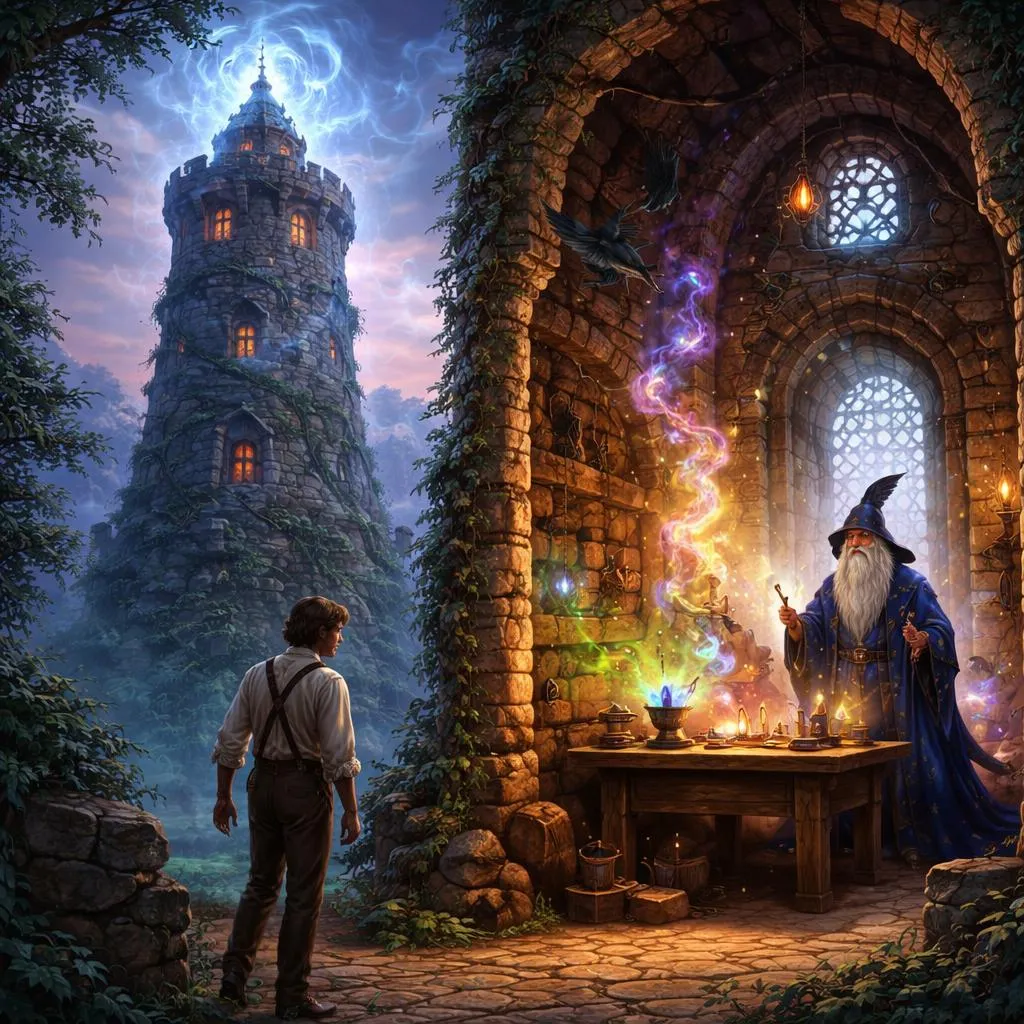

This passage is an excerpt from a classic narrative that explores themes of power, responsibility, and human ingenuity through the experiences of a protagonist who suddenly finds himself elevated to a position of great authority and scrutiny. The story vividly portrays the challenges and discomforts of adapting to a new role, the societal expectations placed upon a person in power, and the creative problem-solving required to maintain authority and respect.
Background and Author Introduction
The story is reminiscent of the style and themes found in 19th-century adventure and fantasy literature, where protagonists often face extraordinary circumstances that test their character and intellect. Such works frequently blend elements of magic, political intrigue, and personal growth. The author of this passage, while not explicitly named here, likely belongs to a tradition of writers who use allegory and fantasy to reflect on human nature and societal structures. Their writing invites readers to consider the complexities of leadership and the human capacity to adapt and innovate in the face of adversity.
Detailed Interpretation and Significance
At its core, the narrative delves into the protagonist’s transition from an ordinary individual to a figure of immense power—second only to the king. This sudden change brings not only lavish surroundings and authority but also isolation and discomfort. The protagonist’s reflections on the lack of simple comforts, such as soap, matches, and pictures, highlight how material and cultural elements shape our sense of home and identity.
The story also explores the public’s reaction to the protagonist’s newfound status, fueled by superstition and awe. The people’s demand for miracles and the protagonist’s strategic response reveal the dynamics of power and public expectation. The imprisonment of Merlin, a rival magician, and the orchestrated destruction of his tower symbolize the struggle to maintain control and legitimacy.
Moreover, the protagonist’s inventive use of technology—constructing a lightning rod and using explosives—illustrates the triumph of reason and innovation over superstition and fear. This aspect of the story encourages readers to value knowledge, preparation, and courage when confronting challenges.
Lessons and Insights for Students
-
Adaptability and Resilience
The protagonist’s ability to adjust to uncomfortable circumstances and find creative solutions is a powerful lesson in adaptability. Students can learn that change, even when difficult, can be managed with patience and ingenuity. -
Critical Thinking and Innovation
The story emphasizes the importance of thinking critically and using available resources to solve problems. The protagonist’s plan to counter Merlin’s influence with science and strategy encourages students to value education and creativity. -
Leadership and Responsibility
Being in a position of power comes with significant responsibilities and public scrutiny. The protagonist’s experience teaches students about the weight of leadership and the need to balance authority with fairness and strategic thinking. -
Understanding Human Nature and Society
The public’s reaction to the eclipse and the protagonist’s role as a magician reflect how fear and superstition can influence society. Students can explore how knowledge and communication are vital in overcoming misinformation and panic.
Practical Applications in Life and Learning
- In School: Students can apply the protagonist’s problem-solving approach by breaking down complex tasks into manageable steps and seeking innovative solutions when faced with academic challenges.
- In Social Settings: Understanding the importance of empathy and communication can help students navigate peer pressure and societal expectations, much like the protagonist manages public opinion.
- Personal Growth: Cultivating resilience and a positive attitude towards change can empower students to face uncertainties in their own lives with confidence.
Cultivating Positive Traits from the Story
- Curiosity and Lifelong Learning: The protagonist’s passion for art and knowledge, despite initial discomfort, encourages students to pursue their interests and remain open to new experiences.
- Courage and Initiative: Taking decisive action in difficult situations, as the protagonist does, is a valuable trait that students can develop through leadership roles and extracurricular activities.
- Integrity and Justice: The fair treatment of Merlin, despite their rivalry, highlights the importance of justice and respect for others, even in conflict.
Reflection and Appreciation
Reading this story invites students to reflect on the nature of power and the human spirit’s capacity to overcome adversity through intelligence and moral strength. It also encourages appreciation for history, culture, and the arts as essential components of a fulfilling life. By engaging with such narratives, students can deepen their understanding of themselves and the world around them, fostering empathy, creativity, and a sense of responsibility.
In summary, this passage offers rich material for literary exploration and personal development. It challenges young readers to think critically about leadership, innovation, and the social dynamics that shape human experience, providing timeless lessons that resonate across contexts and generations.
