
This passage is an excerpt from Lewis Carroll's timeless classic, Alice's Adventures in Wonderland. It captures a moment of Alice's curious and often bewildering journey through a fantastical world where logic is turned upside down and the ordinary becomes extraordinary.
Background and Author Introduction
Lewis Carroll, the pen name of Charles Lutwidge Dodgson, was a 19th-century English writer, mathematician, and logician. He wrote Alice's Adventures in Wonderland in 1865, inspired by a real-life boat trip with the Liddell sisters, particularly Alice Liddell, who became the model for the story’s protagonist. Carroll’s work is celebrated for its playful use of language, imaginative characters, and the blending of fantasy with philosophical ideas. The story has captivated readers of all ages for over a century, becoming a cornerstone of children’s literature.
Detailed Interpretation and Significance
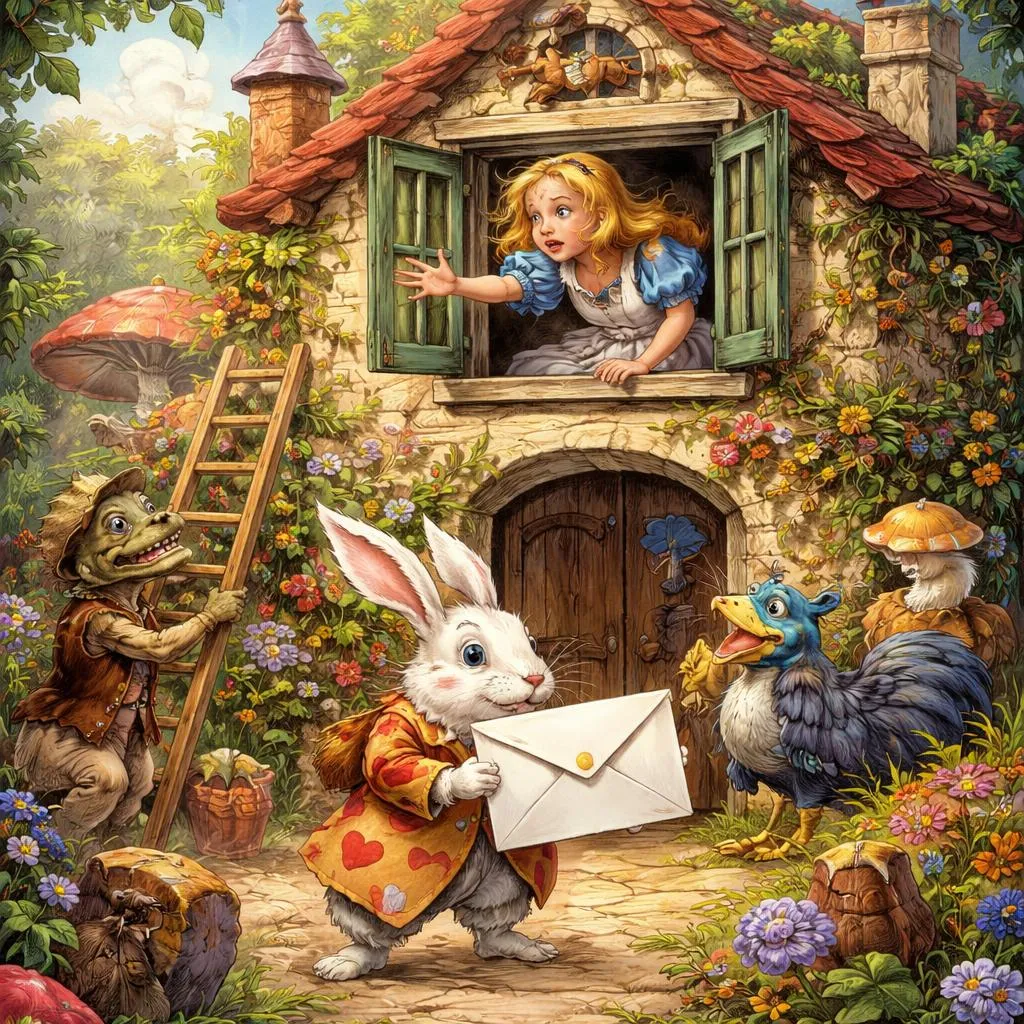
In this passage, Alice encounters the White Rabbit again, who is anxiously searching for his fan and gloves. Mistaken for the Rabbit’s housemaid, Alice embarks on a quest to find these items, leading her into a series of magical transformations. Drinking from a mysterious bottle causes her to grow uncontrollably large, trapping her in a room, and then eating a cake shrinks her down to escape. This sequence symbolizes the challenges of growing up—feeling too big or too small for the world, struggling with identity, and navigating confusing social roles.
The surreal events reflect the unpredictability and absurdity of life, especially through the eyes of a child. The story explores themes of curiosity, courage, and adaptability. Alice’s encounters with strange creatures and situations encourage readers to question reality and embrace imagination.
Lessons and Insights for Students
-
Curiosity and Exploration: Alice’s journey encourages young readers to be curious and open-minded. Even when situations seem strange or frightening, exploring new ideas and experiences can lead to growth and understanding.
-
Adaptability: Alice’s changing size represents how we must adapt to different circumstances in life. Sometimes we feel out of place or overwhelmed, but learning to adjust helps us overcome challenges.
-
Critical Thinking: The story invites readers to think critically about what they see and hear. Alice questions the logic of Wonderland, reminding students to analyze information and not accept everything at face value.
-
Imagination and Creativity: Carroll’s fantastical world shows the power of imagination. Students can learn to use creativity to solve problems and express themselves.
Applying These Lessons in Daily Life
-
In Learning: Like Alice, students should approach new subjects with curiosity and not fear mistakes or confusion. Embracing challenges as opportunities to grow can make learning more enjoyable and effective.
-
In Social Situations: Alice’s experience of being mistaken for someone else highlights the importance of communication and understanding. Students can learn empathy, patience, and the value of clear expression in their interactions.
-
In Personal Growth: The theme of changing size can be seen as a metaphor for self-confidence. Students may sometimes feel too small or insignificant, but recognizing their own worth and abilities is essential for self-esteem.
Cultivating Positive Qualities from the Story
-
Courage: Alice faces bizarre and sometimes intimidating situations without giving up. Encouraging students to be brave in unfamiliar situations fosters resilience.
-
Curiosity: Maintaining a desire to learn and discover new things keeps the mind active and engaged.
-
Open-mindedness: Accepting different perspectives and ideas helps build tolerance and understanding.
-
Creativity: Using imagination to approach problems can lead to innovative solutions.
Reflection and Appreciation
Reading Alice’s Adventures in Wonderland is not only entertaining but also enriching. Students can reflect on how Alice’s adventures mirror their own experiences of growing up and facing the unknown. The story’s playful tone combined with deeper philosophical questions makes it a valuable text for developing both emotional intelligence and intellectual curiosity.
In conclusion, Lewis Carroll’s work offers timeless wisdom wrapped in whimsy. It teaches young readers to embrace change, think independently, and cherish the wonders of imagination—lessons that are as relevant today as they were over 150 years ago.