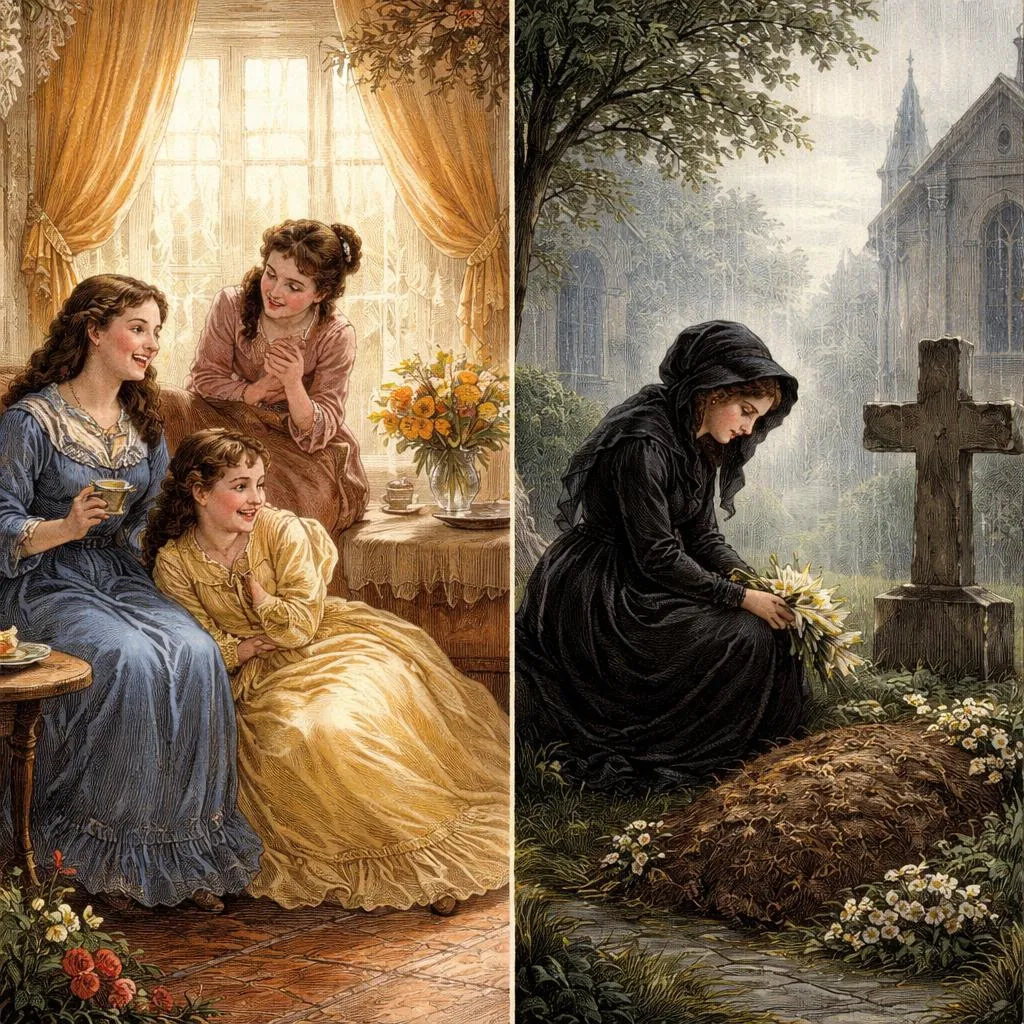

The first of June finally arrived, marking a significant turning point in the life of Rosalie Murray, who was now Lady Ashby. She looked stunning in her wedding attire, radiating beauty and excitement. After the ceremony, she rushed into the schoolroom, her cheeks flushed with joy and a hint of reckless abandon.
“Now, Miss Grey, I’m Lady Ashby!” she exclaimed. “It’s done, my fate is sealed: there’s no turning back now. I’ve come to receive your congratulations and say goodbye; then I’m off to Paris, Rome, Naples, Switzerland, London—oh, what a lot I’ll see and hear before I return. But don’t forget me—I won’t forget you, even though I’ve been a naughty girl. Come, why don’t you congratulate me?”
“I cannot congratulate you,” I replied, “until I know whether this change is truly for the better. But I sincerely hope it is, and I wish you true happiness and all the best blessings.”
“Well, goodbye—the carriage is waiting, and they’re calling me.”
She kissed me quickly and hurried away, but then suddenly returned and embraced me with more warmth than I expected. Tears welled in her eyes as she left. Poor girl! I truly loved her then and forgave her from my heart for all the harm she had caused me and others. I was sure she hadn’t fully realized it, and I prayed God would pardon her too.
The rest of that day was filled with a bittersweet sadness. I was too unsettled to focus on anything steady, so I wandered with a book in hand, thinking more than reading. Later, I took the chance to visit my old friend Nancy, apologizing for my long absence and telling her about the wedding day. She was glad to see me, though her eyes were nearly healed and she needed less help now. Nancy was interested in the wedding but sighed often, sharing my mixed feelings—more sorrow than joy. We talked for a long time, but no one else came.
I must confess, I sometimes glanced toward the door, half hoping to see Mr. Weston enter, as he had once before. On my way home through the lanes and fields, I slowed my pace, savoring the evening, but felt a deep emptiness when I reached the house without seeing anyone except a few laborers.
Sunday was coming, and I hoped to see Mr. Weston then. Now that Miss Murray was gone, I could have my old corner again. I wanted to judge by his looks and manner if her marriage had affected him. Happily, I saw no change: he was just as honest, clear, and sincere as ever.
I walked home with Miss Matilda, but he did not join us. Matilda was lonely, her brothers at school, her sister married and gone, and she too young for society. She was beginning to desire the company of gentlemen, inspired by Rosalie’s example. But at this dull time of year, with no hunting or shooting, and her mother forbidding her from the stables and coach-house, Matilda was deprived of many amusements.
Her mother was strict now, trying to reform Matilda’s rough manners and forbidding her from visiting the yards and kennels. Though Matilda did not always obey, she found it easier to avoid these places. I, too, was often reprimanded and reminded to amuse Matilda differently, but she was hard to please.
One day, during a walk, we met Mr. Weston. I had long hoped for this meeting, but my heart beat so fast I feared showing my emotion. He greeted us briefly and asked if Matilda had heard from her sister, who was in Paris and very happy. Mr. Weston expressed concern about Rosalie’s marriage, seeing it as a pity that such a young, lively girl should be “thrown away” on a man like Sir Thomas, though it was her mother’s and her own wish.
Matilda showed off a leveret she had caught, which Mr. Weston commented on with quiet sarcasm. Later, he gave me a bunch of bluebells, remembering they were my favorite flowers. We spoke about study and life, and he advised against losing sight of everything else by devoting oneself too much to study.
That evening was a rare moment of happiness for me, but it was soon overshadowed by a letter from my mother about my father’s worsening illness. I hurried home, only to learn that he had died. The shock was overwhelming.
Background and Author Introduction
This passage is from a classic 19th-century novel that explores themes of love, loss, social expectations, and personal growth. The story is set in a rural English estate, reflecting the social customs and class distinctions of the time. The author, a keen observer of human nature and society, often wrote about the challenges faced by women in a rigid social structure, emphasizing moral integrity and emotional resilience.
Detailed Interpretation and Significance
The narrative centers on Rosalie Murray’s transformation through marriage and the emotional impact this has on those around her, especially the narrator, Miss Grey. Rosalie’s marriage symbolizes a major life change that brings both excitement and sorrow. The story contrasts youthful hope and joy with the harsh realities of life, such as illness and death.
Mr. Weston’s character represents steadiness and wisdom. His concern for Rosalie and his advice about balancing study with life’s other pleasures highlight the importance of moderation and self-awareness. Matilda’s struggles with her mother’s strictness and her own desires illustrate the tension between personal freedom and social expectations.
The story also touches on themes of forgiveness and compassion, as Miss Grey forgives Rosalie despite past hurts. This reflects the author’s belief in the power of empathy and understanding.
Lessons and Insights for Students
-
Emotional Resilience: The story teaches young readers how to cope with change and loss. Rosalie’s marriage and the narrator’s father’s death show that life is full of ups and downs, and resilience is essential.
-
Forgiveness and Compassion: Miss Grey’s forgiveness of Rosalie encourages students to understand others’ mistakes and to forgive, fostering healthier relationships.
-
Balance in Life: Mr. Weston’s advice about balancing study and life reminds students not to become so absorbed in one area that they neglect others, promoting well-rounded personal development.
-
Social Awareness: The story offers insight into social roles and expectations, helping students understand historical contexts and the importance of kindness beyond social status.
Applying These Lessons in Daily Life
-
In School: Students can learn to balance their academic work with hobbies, friendships, and rest, avoiding burnout while achieving success.
-
In Social Situations: Practicing forgiveness and empathy can improve friendships and family relationships, reducing conflict and building trust.
-
In Personal Growth: Understanding that life includes both joy and sorrow helps students develop emotional maturity and prepare for future challenges.
Cultivating Positive Qualities from the Story
-
Empathy: Try to see situations from others’ perspectives before judging.
-
Patience: Recognize that change and growth take time and sometimes involve setbacks.
-
Courage: Face difficult emotions and situations bravely, as the narrator does.
-
Responsibility: Take charge of your own learning and behavior, as advised by Mr. Weston’s balanced approach.
By reflecting on the characters’ experiences and the story’s themes, students can gain valuable insights into human nature and the importance of kindness, balance, and resilience in their own lives.
