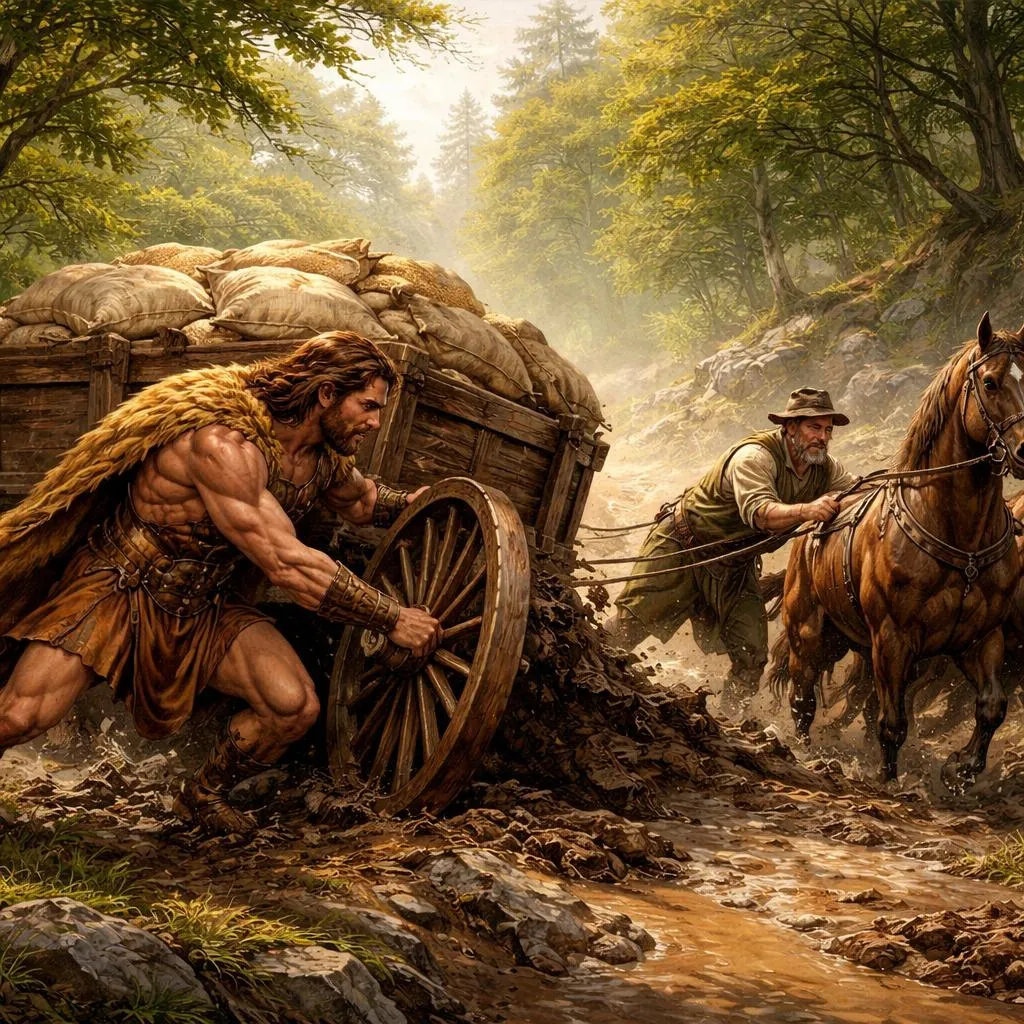

A Waggoner was once driving a heavy load along a very muddy way. At last he came to a part of the road where the wheels sank half-way into the mire, and the more the horses pulled, the deeper sank the wheels. So the Waggoner threw down his whip, and knelt down and prayed to Hercules the Strong. “O Hercules, help me in this my hour of distress,” quoth he. But Hercules appeared to him, and said:
“Tut, man, don’t sprawl there. Get up and put your shoulder to the wheel.”
The gods help them that help themselves.
Background and Author Introduction
This story is a classic fable that has been passed down through generations, often attributed to Aesop, the ancient Greek storyteller known for his moral tales. Although the exact origin of this particular story is uncertain, it embodies the timeless wisdom found in many of Aesop’s fables. These stories were originally told orally and later written down to teach important life lessons through simple narratives. The character Hercules, a hero from Greek mythology, symbolizes strength and courage, making the story relatable and memorable for young readers.
Detailed Interpretation and Meaning
At its core, this story teaches the value of self-reliance and effort. The Waggoner finds himself stuck in the mud, a difficult situation that seems impossible to overcome. Instead of immediately taking action, he chooses to pray for divine help. Hercules, representing strength and assistance, appears not to grant a miraculous rescue but to encourage the Waggoner to help himself first. The phrase “The gods help them that help themselves” is a powerful reminder that external help is often ineffective without personal effort.
The muddy road and sinking wheels symbolize the challenges and obstacles we face in life. The Waggoner’s initial reaction—praying without acting—is a common human tendency to seek easy solutions. Hercules’ advice to “put your shoulder to the wheel” means to work hard and actively try to solve problems rather than waiting passively for help.
Lessons and Insights for Students
-
Self-Responsibility: The story encourages students to take responsibility for their own problems. Whether it’s academic struggles, personal challenges, or social difficulties, relying solely on others or wishing for an easy fix will not lead to success.
-
Perseverance and Effort: Just as the Waggoner must push the wheel himself, students learn the importance of persistence. Hard work and determination are crucial in overcoming obstacles.
-
Practical Action Over Wishful Thinking: While it’s natural to hope for support from teachers, friends, or family, this story teaches that positive results come from combining hope with action.
-
Problem-Solving Skills: The Waggoner’s situation invites readers to think critically about how to approach difficulties. It’s a call to be proactive and resourceful.
Application in Daily Life
-
In Learning: When students face difficult subjects or assignments, instead of giving up or hoping for help, they should try to understand the material, ask questions, and practice regularly. This story inspires them to “put their shoulder to the wheel” in their studies.
-
In Social Situations: If conflicts or misunderstandings arise, students can learn to take initiative in resolving issues rather than waiting for others to fix them.
-
In Personal Growth: Developing habits of self-discipline, responsibility, and perseverance will prepare students for future challenges in life.
Cultivating Positive Attitudes and Behaviors
To internalize the story’s message, students can:
- Set small goals and work steadily toward them, building confidence in their ability to overcome difficulties.
- Reflect on moments when they relied on themselves to solve problems and celebrate those successes.
- Practice resilience by viewing setbacks as opportunities to learn and grow.
- Encourage a mindset that values effort and initiative, understanding that help from others is most effective when combined with their own hard work.
Conclusion
This simple yet profound story invites young readers to embrace the idea that while help and support are valuable, the first and most important step toward solving any problem is their own effort. By learning to be proactive and persistent, students can develop the strength and character needed to face life’s challenges with confidence and determination.
