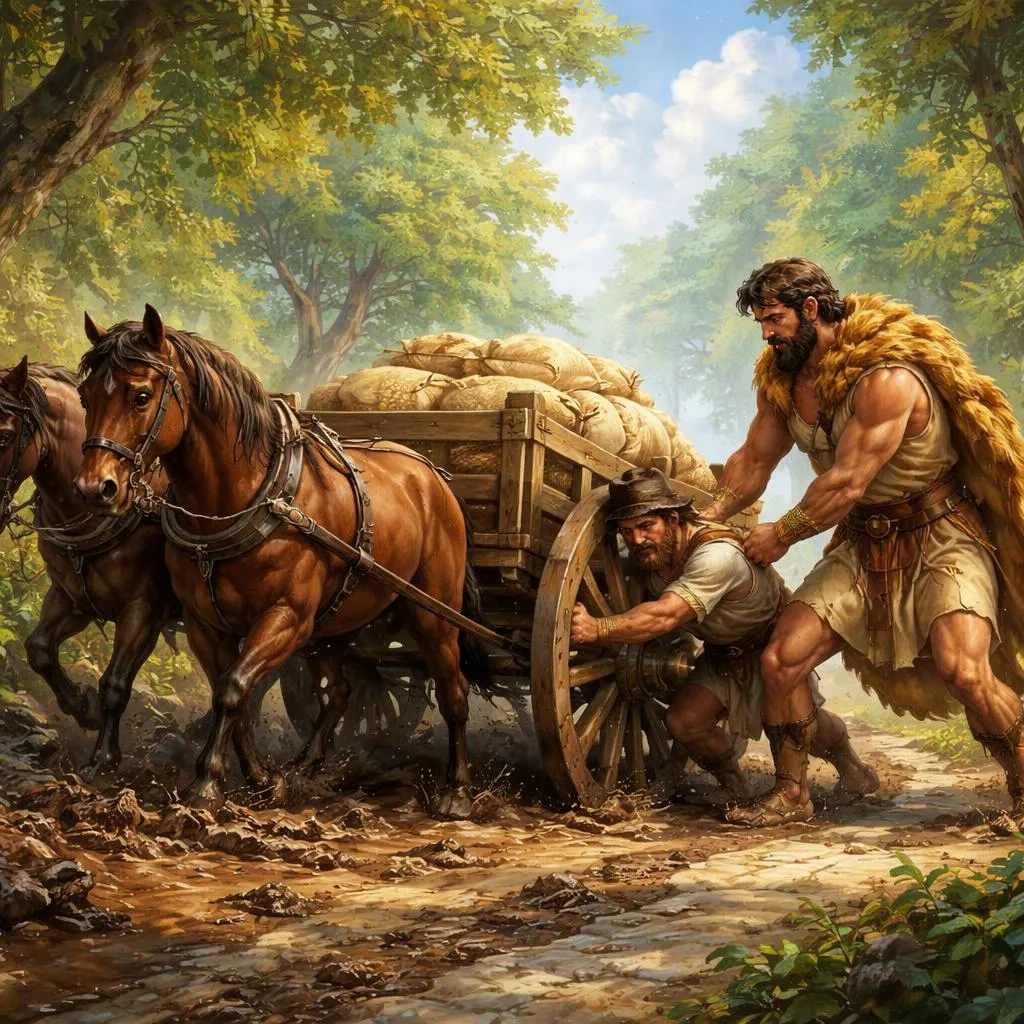

A carter was driving a wagon along a country lane, when the wheels sank down deep into a rut. The rustic driver, stupefied and aghast, stood looking at the wagon, and did nothing but utter loud cries to Hercules to come and help him. Hercules, it is said, appeared and thus addressed him: “Put your shoulders to the wheels, my man. Goad on your bullocks, and never more pray to me for help, until you have done your best to help yourself, or depend upon it you will henceforth pray in vain.”
Self-help is the best help.
Background and Origin of the Story
This short tale is a classic example of a fable or moral story that has been passed down through generations. It is often attributed to ancient Greek folklore involving Hercules, the mythological hero renowned for his strength and heroic deeds. The story reflects a timeless lesson about self-reliance and personal effort, values that have been emphasized in many cultures throughout history.
The phrase “Self-help is the best help” encapsulates the core message of the story. While the exact author is unknown, the tale belongs to a tradition of moral stories designed to teach important life lessons, especially to young people. Such stories were commonly used by teachers and parents to instill virtues like perseverance, responsibility, and independence.
Detailed Interpretation and Meaning
At its heart, this story teaches that relying solely on external help without making an effort oneself is futile. The carter, faced with a difficult situation, immediately calls for divine intervention rather than trying to solve the problem himself. Hercules’ response is a powerful reminder that help from others, even from the gods, will only come after one has done their best to help themselves.
This story emphasizes the importance of taking initiative. The carter’s inaction and dependence on Hercules symbolize a passive attitude, while Hercules’ advice encourages active participation and hard work. It suggests that success and progress depend largely on one’s own efforts.
Lessons for Children and Students
-
Self-Reliance and Responsibility: The story encourages young readers to take responsibility for their problems instead of waiting for others to solve them. It teaches that they should first try their best before seeking help.
-
Perseverance: The carter’s situation is challenging, but giving up or only praying for help is not the solution. The story inspires students to keep trying, even when things seem difficult.
-
Practical Effort: It highlights the value of practical action — pushing the wheels and urging the bullocks forward — rather than passive hope.
-
Positive Attitude: Hercules’ words also encourage a mindset of self-confidence and determination, which are crucial for personal growth.
How to Apply These Lessons in Daily Life
-
In Learning: When students face difficult subjects or assignments, instead of immediately asking for help, they should first try to understand and solve problems on their own. This builds problem-solving skills and confidence.
-
In Social Situations: If conflicts or misunderstandings arise, young people can try to resolve issues themselves by communicating and thinking critically before seeking external mediation.
-
In Personal Challenges: Whether it’s a sports goal, a hobby, or a personal habit, the story reminds children that consistent effort and self-discipline are key to success.
Cultivating the Spirit of Self-Help
To nurture the positive values shown in this story, educators and parents can:
- Encourage children to set small goals and work towards them independently.
- Praise effort and persistence rather than just outcomes.
- Teach problem-solving strategies and critical thinking.
- Share similar stories and discuss their meanings to reinforce the message.
- Model self-reliant behavior themselves, showing how to tackle challenges proactively.
Reflection and Appreciation
This simple yet profound story remains relevant today because it addresses a universal human truth: success and help come to those who first help themselves. It empowers young readers to believe in their own abilities and to understand that while asking for help is sometimes necessary, it should never replace their own efforts.
By internalizing this lesson, students can develop resilience, independence, and a proactive approach to life’s challenges. These qualities will serve them well not only in school but throughout their personal and professional lives.
