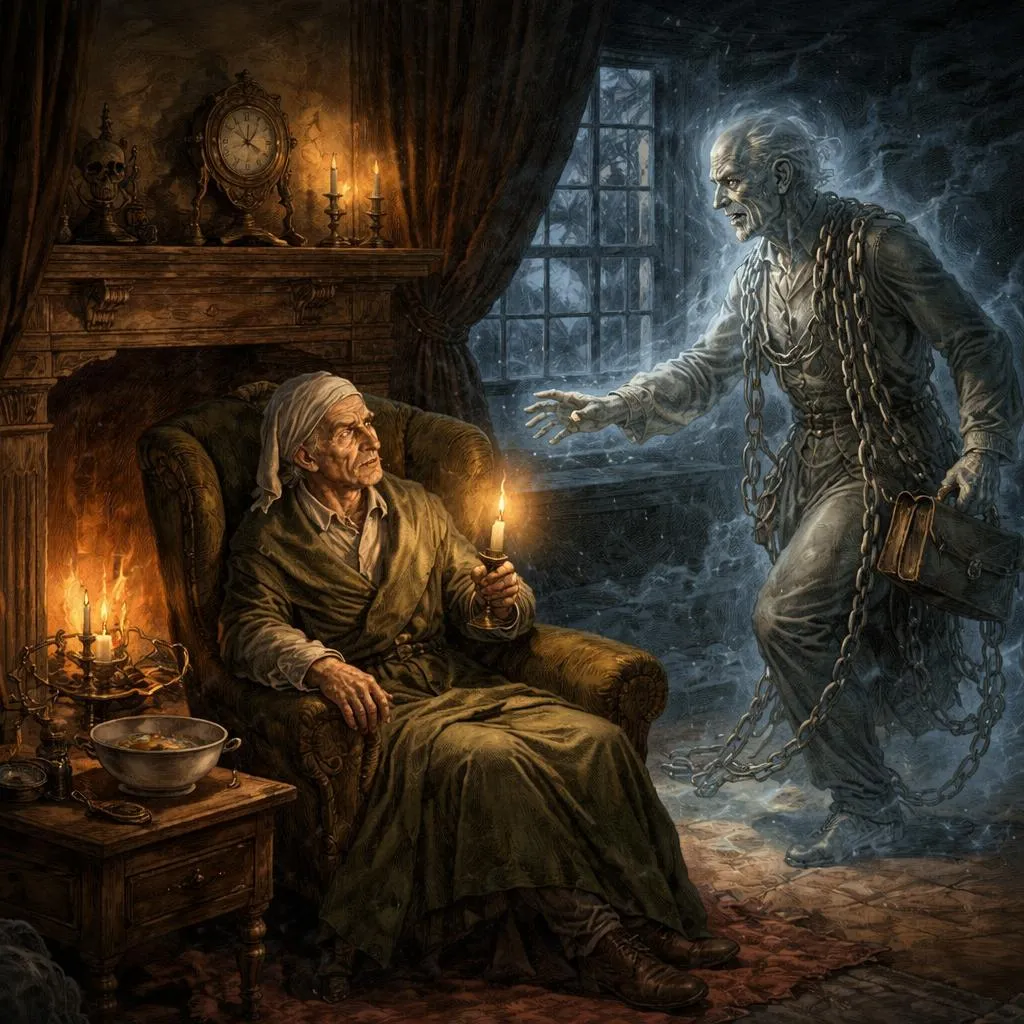

Marley’s Ghost is an excerpt from Charles Dickens’s classic novella A Christmas Carol, first published in 1843. This story introduces Ebenezer Scrooge, a miserly old man who is visited by the ghost of his former business partner, Jacob Marley. Marley’s ghost warns Scrooge that he will be visited by three spirits who will offer him a chance to change his ways and avoid Marley’s own dreadful fate.
Background and Author Introduction
Charles Dickens was one of the most famous English writers of the Victorian era. Known for his vivid characters and social commentary, Dickens often highlighted the struggles of the poor and criticized the harshness of social inequality. A Christmas Carol was written during a time when Dickens was deeply concerned about the conditions of the working class in England. The novella was intended to inspire kindness, generosity, and social responsibility during the Christmas season and beyond. Dickens’s storytelling combines supernatural elements with moral lessons, making his work both entertaining and thought-provoking.
Detailed Interpretation and Significance
The story of Marley’s ghost serves as a powerful opening to A Christmas Carol. It sets the tone for the supernatural journey that Scrooge will undertake. Marley’s ghost is a symbol of regret and the consequences of a life lived selfishly. The heavy chain Marley drags behind him represents the burdens of greed and neglect of others. Marley’s warning to Scrooge is clear: if Scrooge does not change, he will suffer the same eternal punishment.
Scrooge himself is portrayed as cold-hearted and isolated, rejecting human connection and joy. His famous catchphrase, “Bah! Humbug!” expresses his disdain for Christmas and the spirit of generosity. Yet, the story promises transformation and hope, as Scrooge is given the opportunity to learn from the spirits and embrace kindness.
Lessons and Insights for Students
-
The Importance of Compassion and Generosity
Marley’s ghost reminds us that selfishness and greed can weigh heavily on a person’s soul. The story encourages readers to think about how their actions affect others and to practice generosity, especially toward those in need. -
Reflection and Self-Improvement
Scrooge’s journey is about self-awareness and change. Students can learn that it is never too late to reflect on their behavior and make positive changes in their lives. -
The Value of Human Connection
Scrooge’s isolation contrasts with the warmth and joy of community and family. The story highlights the importance of building relationships and supporting one another. -
Facing Consequences
Marley’s ghost is a reminder that our choices have consequences, not just for ourselves but for those around us. This can inspire students to consider the long-term effects of their decisions.
Applying the Story’s Spirit in Daily Life
-
In School: Students can practice kindness by helping classmates, sharing resources, and showing empathy. Understanding the importance of generosity can foster a positive learning environment.
-
In Social Situations: Like Scrooge’s nephew, who invites him to join the family celebration, students can learn to reach out to others, even those who seem distant or unfriendly. Building bridges rather than walls is a valuable social skill.
-
In Personal Growth: Reflecting on one’s actions, as Scrooge eventually does, helps develop maturity and responsibility. Students can keep journals or talk with trusted adults about how to improve their behavior.
Cultivating Positive Values from the Story
-
Empathy: By imagining how others feel, students can develop deeper understanding and kindness.
-
Responsibility: Recognizing that every action matters encourages thoughtful decision-making.
-
Hope and Change: The story shows that no matter how difficult a person’s past, change is possible with effort and openness.
Conclusion
Marley’s Ghost is more than just a ghost story; it is a moral lesson wrapped in a captivating narrative. Through Dickens’s vivid writing, students are invited to explore themes of generosity, regret, and redemption. By reflecting on these ideas, young readers can learn valuable lessons that apply to their own lives—encouraging them to be kinder, more thoughtful, and more connected to the world around them. This story remains a timeless reminder that the spirit of Christmas—and the spirit of humanity—lies in caring for one another.
