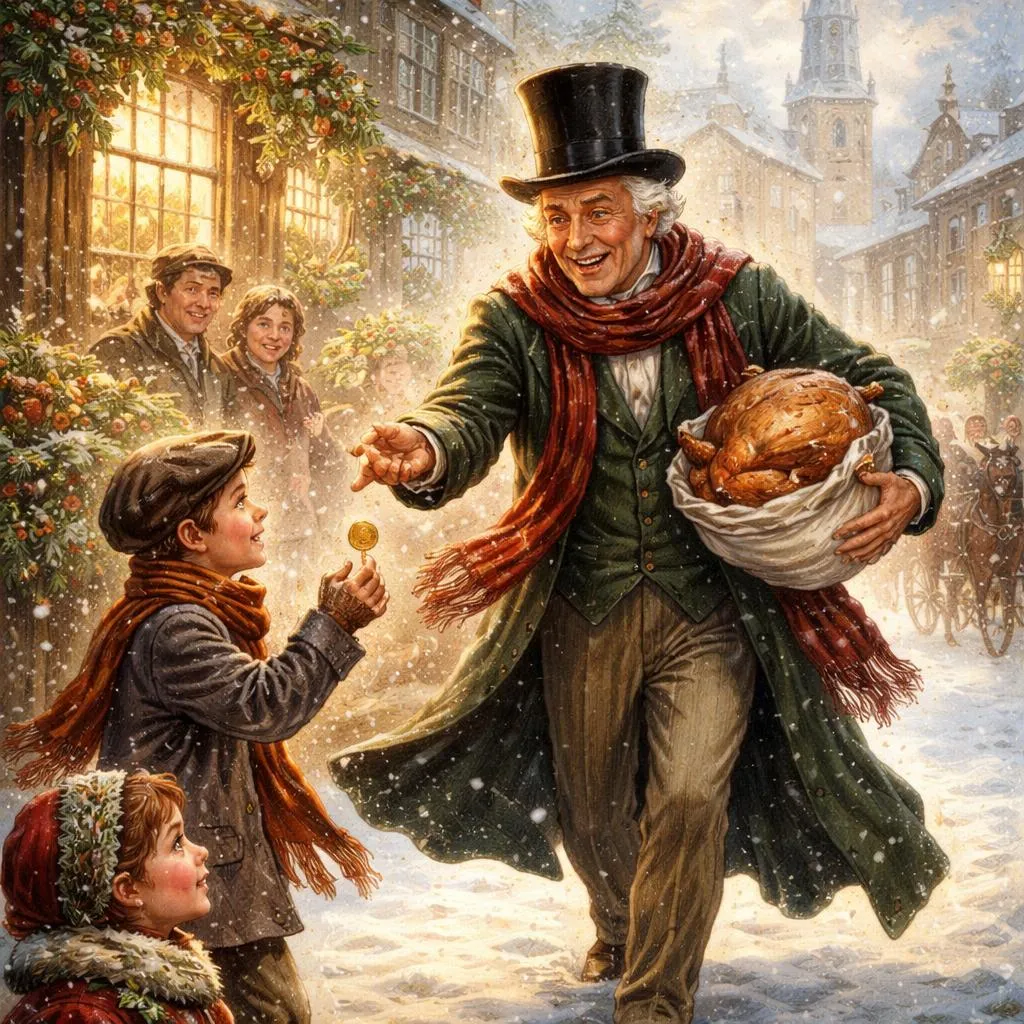

The passage above is an excerpt from Charles Dickens' classic novella A Christmas Carol, specifically the joyful conclusion where Ebenezer Scrooge embraces his newfound generosity and kindness after being visited by three spirits. This story, first published in 1843, remains one of the most beloved and enduring tales in English literature, celebrated for its powerful message of redemption, compassion, and the true spirit of Christmas.
Background and Author Introduction
Charles Dickens (1812–1870) was a renowned English writer and social critic whose works often highlighted the struggles of the poor and the injustices of Victorian society. A Christmas Carol was written during a time when Dickens was deeply concerned about the harsh living conditions faced by many in England, especially children and the working class. The novella was intended to inspire readers to reflect on their own behavior and to encourage generosity and kindness during the Christmas season and beyond.
Dickens’ vivid storytelling and memorable characters have made A Christmas Carol a timeless piece, adapted countless times into plays, films, and other media. The story’s themes of transformation and hope continue to resonate with readers of all ages.
Detailed Interpretation and Significance of the Story
The story follows Ebenezer Scrooge, a miserly old man who despises Christmas and all things joyful. Over the course of one night, he is visited by the Ghosts of Christmas Past, Present, and Yet to Come. These spirits show him scenes from his own life, the lives of others, and the bleak future that awaits if he does not change his ways.
The excerpt above captures Scrooge’s awakening. After seeing the consequences of his selfishness and cruelty, he joyfully resolves to live a life of kindness, generosity, and empathy. This moment symbolizes the power of self-reflection and the possibility of personal redemption.
The story’s message is clear: no matter how lost or hardened a person may seem, change is always possible. It encourages readers to consider how their actions affect others and to embrace the spirit of giving and compassion.
Lessons and Insights for Students and Young Readers
-
The Power of Change
Scrooge’s transformation teaches us that it is never too late to change for the better. Students can learn that mistakes or poor choices do not define their future; with effort and intention, they can become kinder and more thoughtful individuals. -
Empathy and Compassion
By witnessing the hardships of others, Scrooge develops empathy. Young readers can understand the importance of looking beyond themselves and caring for those around them, whether family, friends, or strangers. -
The Value of Generosity
Scrooge’s newfound generosity, especially towards Bob Cratchit and his family, highlights the joy and fulfillment that come from helping others. This encourages students to practice generosity in daily life, whether through sharing, volunteering, or simply being kind. -
Reflection and Self-Awareness
The story emphasizes the importance of self-reflection. Students can learn to pause and think about their actions and attitudes, fostering emotional intelligence and personal growth. -
The Spirit of Christmas as a Year-Round Attitude
While the story is set during Christmas, its lessons apply every day. Students can be inspired to carry the spirit of kindness, forgiveness, and goodwill throughout their lives, not just during holidays.
Applying the Story’s Lessons in Daily Life
-
In School: Students can practice kindness by helping classmates, sharing resources, and standing against bullying. Reflecting on their behavior can improve relationships and create a positive learning environment.
-
At Home: Showing gratitude and helping family members with chores or emotional support reflects Scrooge’s change and strengthens family bonds.
-
In Social Settings: Being inclusive and respectful towards others, especially those who may be different or less fortunate, fosters empathy and community spirit.
-
Personal Growth: Keeping a journal to reflect on daily actions and feelings can help students develop self-awareness and recognize areas for improvement.
Cultivating Positive Values Inspired by the Story
-
Generosity: Encourage small acts of giving, such as sharing snacks, donating old clothes, or volunteering time.
-
Forgiveness: Like Scrooge forgiving himself and others, students can learn to forgive mistakes and move forward positively.
-
Gratitude: Recognizing and appreciating what one has can lead to greater happiness and contentment.
-
Joy in Helping Others: Finding joy in making others happy can motivate students to continue kind behaviors.
Conclusion
A Christmas Carol is more than just a festive story; it is a profound lesson in humanity and kindness. For students and young readers, it offers a blueprint for personal transformation and social responsibility. By embracing the values Dickens champions—empathy, generosity, and reflection—young people can grow into compassionate, thoughtful adults who contribute positively to their communities and the world. The story encourages us all to believe in the possibility of change and to act with kindness every day.
