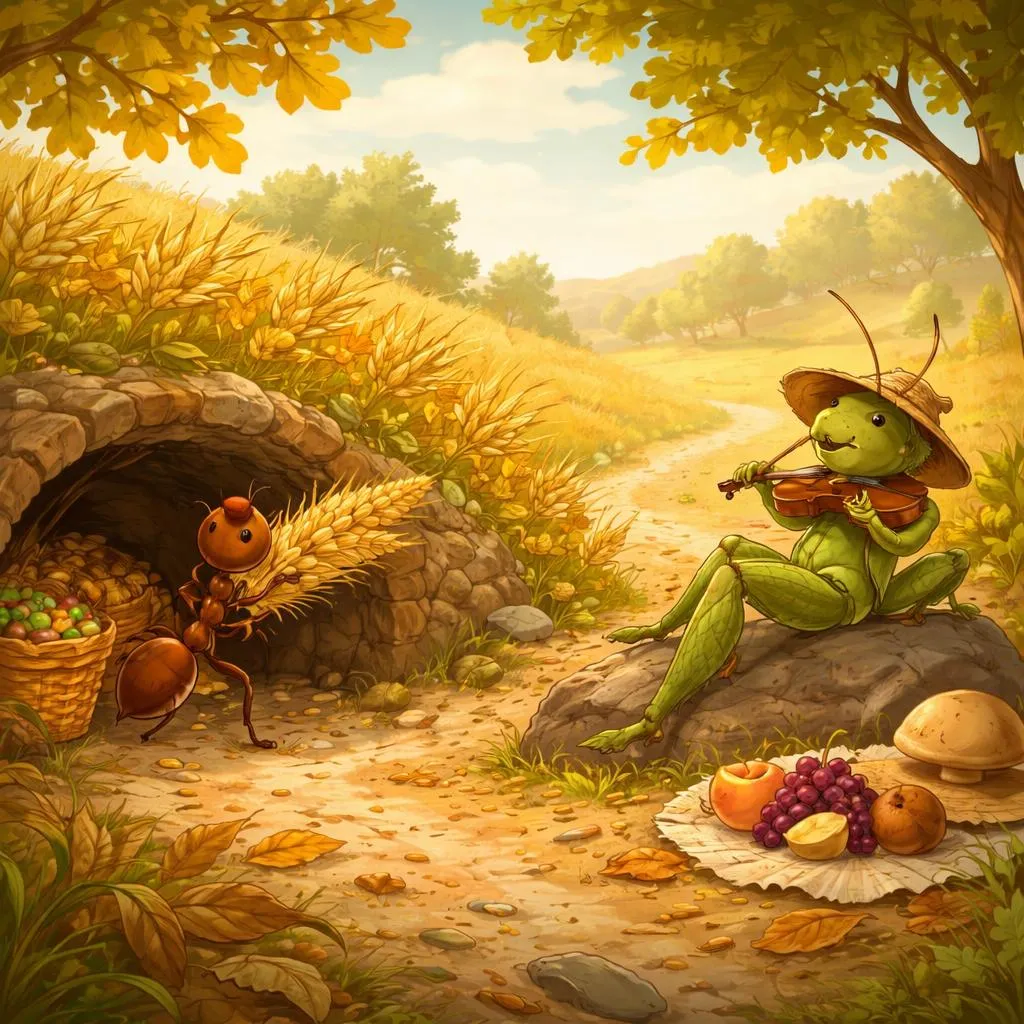

THE ANTS were spending a fine winter’s day drying grain collected in the summertime. A Grasshopper, perishing with famine, passed by and earnestly begged for a little food. The Ants inquired of him, “Why did you not treasure up food during the summer?’ He replied, “I had not leisure enough. I passed the days in singing.” They then said in derision: “If you were foolish enough to sing all the summer, you must dance supperless to bed in the winter.”
Background and Author Introduction
This story is a classic fable attributed to Aesop, an ancient Greek storyteller believed to have lived around the 6th century BCE. Aesop’s fables are short tales that use animals and simple narratives to convey moral lessons. These stories have been passed down through generations and remain popular worldwide because of their timeless wisdom and easy-to-understand messages.
Detailed Interpretation and Meaning
The fable of "The Ant and the Grasshopper" contrasts two different approaches to life: hard work and preparation versus leisure and procrastination. The ants represent diligence, foresight, and responsibility. They collect and store food during the summer, preparing for the harsh winter ahead. The grasshopper, on the other hand, symbolizes carelessness and a lack of planning, choosing to spend his time singing and enjoying the moment without considering future consequences.
The story teaches the importance of planning and working hard to secure one’s future. It warns against idleness and the risks of ignoring responsibilities. The ants’ refusal to share their food with the grasshopper highlights the natural consequences of neglecting preparation.
Lessons and Insights for Students and Children
-
The Value of Hard Work and Preparation: The ants’ behavior shows that success and security come from consistent effort and planning. Students can learn that dedicating time to study, practice, and prepare for exams or projects is crucial for achieving good results.
-
Time Management: The grasshopper’s choice to sing all summer instead of preparing serves as a lesson in managing time wisely. Enjoyment and relaxation are important, but balancing them with responsibilities is key.
-
Consequences of Actions: The fable illustrates that every choice has consequences. Ignoring duties can lead to hardship later, while responsible behavior brings rewards.
-
Self-Reliance and Responsibility: The ants do not give in to the grasshopper’s pleas because he did not take responsibility for himself. This teaches students to be accountable for their actions and not rely on others to fix their problems.
Applying the Story’s Lessons in Daily Life
-
In Learning: Students can apply this fable by setting goals, making study plans, and avoiding procrastination. Preparing for tests ahead of time rather than cramming last minute reflects the ants’ foresight.
-
In Social Situations: The story encourages being dependable and responsible in friendships and group work. Just as ants work together and prepare, students should contribute fairly and not expect others to do all the work.
-
In Personal Growth: Developing habits of discipline, such as completing homework on time and practicing skills regularly, helps build a strong foundation for future success.
Cultivating Positive Attitudes and Behaviors
To embody the spirit of the ants, children and teenagers can:
-
Set Priorities: Learn to balance fun and work by prioritizing important tasks first.
-
Plan Ahead: Use calendars or planners to organize study schedules and personal activities.
-
Develop Perseverance: Understand that consistent effort, even when challenging, leads to long-term benefits.
-
Be Prepared: Cultivate habits of saving and preparing, whether it’s for school, sports, or life challenges.
Reflection and Appreciation
Reading and reflecting on this fable helps students appreciate the wisdom behind traditional stories and understand how simple narratives can teach complex life lessons. It encourages them to think critically about their choices and motivates them to adopt positive behaviors that will benefit them throughout their lives.
In conclusion, "The Ant and the Grasshopper" is more than just a children’s story; it is a guide to responsible living, time management, and the rewards of hard work. By embracing its lessons, young readers can build a strong character and prepare themselves for a successful future.
