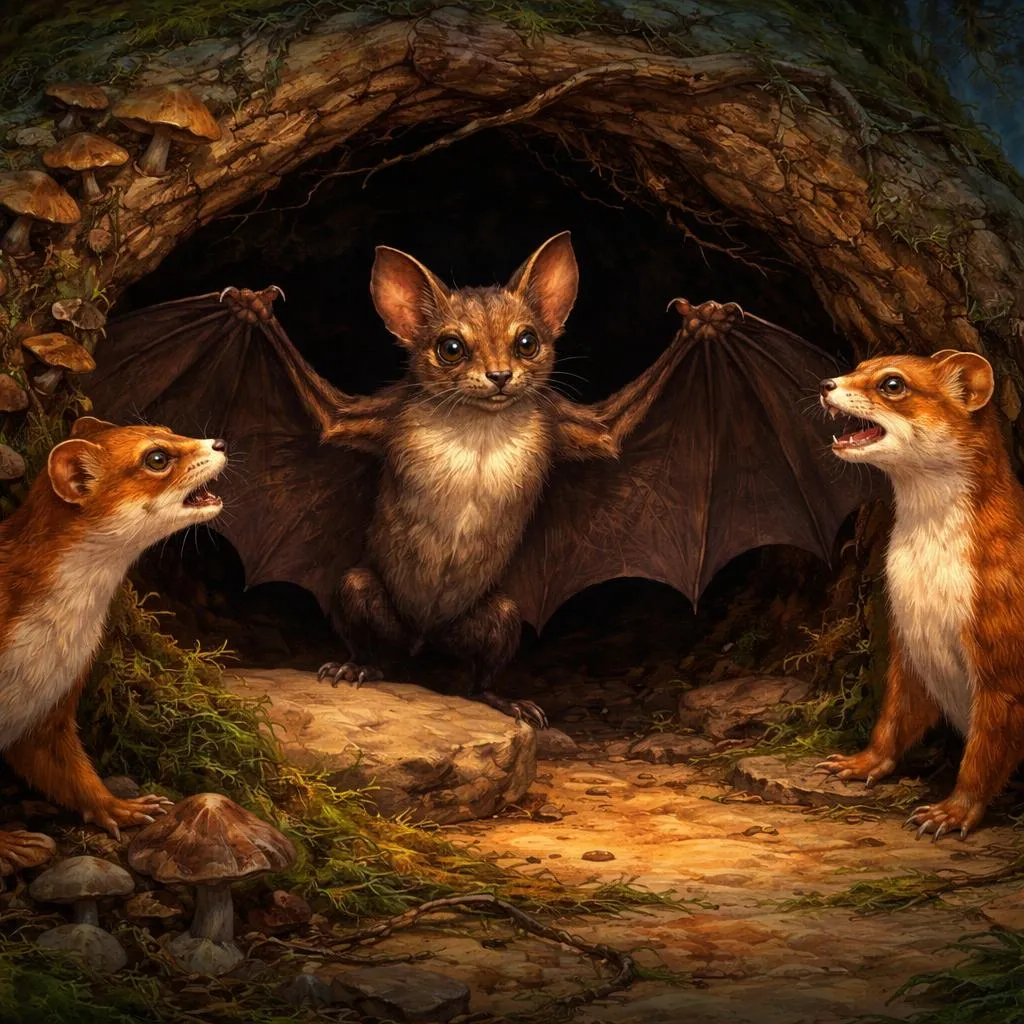

A BAT who fell upon the ground and was caught by a Weasel pleaded to be spared his life. The Weasel refused, saying that he was by nature the enemy of all birds. The Bat assured him that he was not a bird, but a mouse, and thus was set free. Shortly afterwards the Bat again fell to the ground and was caught by another Weasel, whom he likewise entreated not to eat him. The Weasel said that he had a special hostility to mice. The Bat assured him that he was not a mouse, but a bat, and thus a second time escaped.
It is wise to turn circumstances to good account.
Background and Author Introduction
This story is a classic fable attributed to Aesop, an ancient Greek storyteller believed to have lived around the 6th century BCE. Aesop’s fables are short tales that use animals with human traits to teach moral lessons. These stories have been passed down through generations and remain popular worldwide because they convey wisdom in simple, memorable ways. The tale of the bat and the weasel is one of many that illustrate the importance of cleverness and adaptability in difficult situations.
Detailed Interpretation and Meaning
At its core, this fable highlights the bat’s ability to think quickly and adapt to survive danger. When caught by the first weasel, the bat cleverly claims to be a mouse, which spares its life. When caught by the second weasel, it switches identity again, saying it is a bat, thus escaping once more. The moral, "It is wise to turn circumstances to good account," means that being flexible and resourceful can help us overcome challenges.
The story also subtly teaches about the power of perception and identity. The bat changes how it is seen to suit the situation, showing that sometimes how we present ourselves can influence outcomes. However, it also warns us to be cautious about deception and reminds us that cleverness should be used wisely.
Lessons and Insights for Students and Young Readers
-
Adaptability is Key: Life often presents unexpected challenges. Like the bat, students can learn to be flexible and think creatively when facing problems, whether in schoolwork, friendships, or family situations.
-
Quick Thinking Saves the Day: The bat’s quick responses show the value of staying calm and using intelligence to navigate tough moments instead of panicking.
-
Understanding Perspectives: The bat’s changing identity teaches us that understanding how others see us can help in communication and conflict resolution.
-
Moral Boundaries: While the bat’s actions are clever, students should also reflect on honesty and integrity. Sometimes, being truthful is more important than escaping trouble through trickery.
Applying the Story’s Wisdom in Daily Life
-
In Learning: When students encounter difficult subjects or assignments, they can try different approaches rather than giving up. Flexibility in study methods can lead to better understanding and success.
-
In Social Situations: If conflicts arise with friends or classmates, thinking from others’ perspectives and adapting communication styles can help resolve misunderstandings.
-
In Personal Growth: Developing problem-solving skills and emotional resilience will prepare young people to face future challenges confidently.
Cultivating Positive Traits from the Story
-
Encourage Critical Thinking: Teachers and parents can use this fable to prompt discussions about decision-making and consequences.
-
Promote Resourcefulness: Activities that require creative solutions can help children practice adaptability.
-
Balance Cleverness with Honesty: It’s important to teach that while being smart is valuable, it should not come at the cost of trustworthiness.
Reflection and Appreciation
Reading this fable invites students to appreciate the timeless nature of storytelling and how simple tales can carry deep meanings. It encourages them to think about their own responses to challenges and inspires them to develop qualities like flexibility, intelligence, and ethical awareness. By internalizing these lessons, young readers can grow into thoughtful, capable individuals ready to face the complexities of life.
