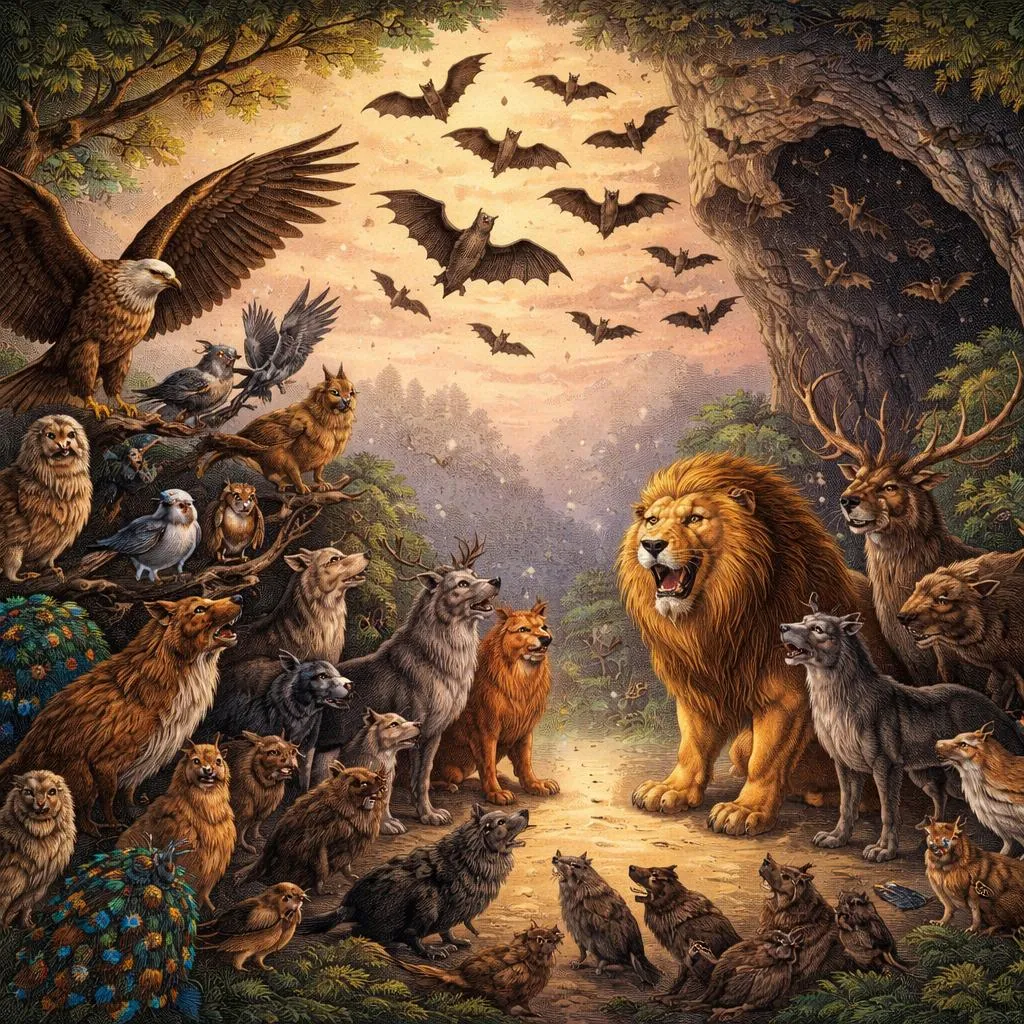

A great conflict was about to come off between the Birds and the Beasts. When the two armies were collected together the Bat hesitated which to join. The Birds that passed his perch said: “Come with us”; but he said: “I am a Beast.” Later on, some Beasts who were passing underneath him looked up and said: “Come with us”; but he said: “I am a Bird.” Luckily at the last moment peace was made, and no battle took place, so the Bat came to the Birds and wished to join in the rejoicings, but they all turned against him and he had to fly away. He then went to the Beasts, but soon had to beat a retreat, or else they would have torn him to pieces. “Ah,” said the Bat, “I see now,”
He that is neither one thing nor the other has no friends.”
Background and Author Introduction
This story is a classic fable from Aesop, a storyteller believed to have lived in ancient Greece around the 6th century BCE. Aesop's fables are short tales that use animals as characters to teach moral lessons. They have been passed down through generations and remain popular worldwide for their simple yet profound insights into human nature and behavior. This particular fable about the Bat, the Birds, and the Beasts highlights themes of identity, loyalty, and the consequences of indecision.
Detailed Interpretation and Meaning
The story revolves around a conflict between two groups—the Birds and the Beasts. The Bat, an animal that shares characteristics of both groups, struggles to decide which side to support. When asked by the Birds to join them, the Bat claims to be a Beast, and when the Beasts invite him, he claims to be a Bird. This indecisiveness leads to his rejection by both sides once peace is achieved.
The key message is about the importance of having a clear identity and loyalty. The Bat’s attempt to belong to both groups ultimately leaves him isolated. The fable warns against trying to please everyone or refusing to commit to a clear stance, as this can lead to mistrust and loneliness.
Lessons and Insights for Students
-
Understanding Identity: The story encourages young readers to reflect on their own identity and values. It shows that knowing who you are and standing by your principles is important for building trust and meaningful relationships.
-
The Value of Loyalty: Loyalty is a key theme. The Bat’s failure to commit to one side causes him to lose the respect and friendship of both. This teaches students the importance of being reliable and faithful to their friends and communities.
-
Consequences of Indecision: The Bat’s hesitation and contradictory behavior lead to his isolation. This highlights how indecision and trying to fit into conflicting groups can harm one’s social standing and self-respect.
-
Courage to Choose: The story inspires courage in making choices. Even when decisions are difficult, standing firm in one’s beliefs and commitments is crucial.
Applications in Daily Life
-
In School: Students can apply this lesson by choosing their friends and activities thoughtfully, rather than trying to fit in with everyone. This helps build genuine friendships based on trust.
-
In Social Situations: Being honest about who they are and what they believe in helps young people avoid misunderstandings and gain respect from peers.
-
In Personal Growth: Understanding oneself and making clear decisions fosters confidence and self-esteem. It encourages students to develop a strong sense of self.
Cultivating Positive Qualities from the Story
-
Self-Awareness: Encourage students to explore their interests, values, and strengths to build a solid sense of identity.
-
Commitment: Teach the importance of commitment in friendships, schoolwork, and personal goals.
-
Integrity: Promote honesty and consistency in words and actions to build trustworthiness.
-
Decision-Making Skills: Help students practice making thoughtful decisions and accepting responsibility for their choices.
Conclusion
The fable of the Bat, the Birds, and the Beasts remains a timeless lesson for young readers. It teaches that trying to be everything to everyone can lead to isolation, while having a clear sense of identity and loyalty builds strong relationships and personal integrity. By reflecting on this story, students can learn valuable life skills that will help them navigate social challenges, make wise decisions, and grow into confident, trustworthy individuals.
