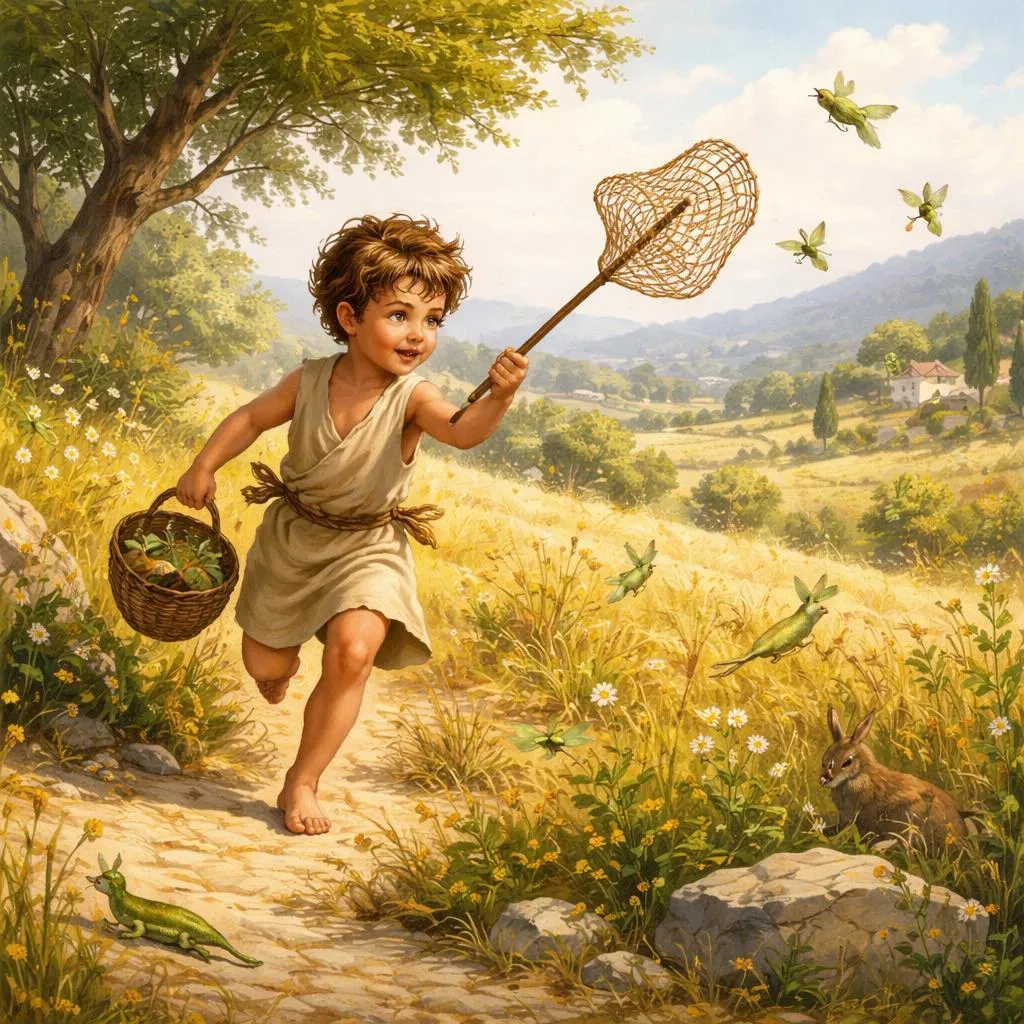

A BOY was hunting for locusts. He had caught a goodly number, when he saw a Scorpion, and mistaking him for a locust, reached out his hand to take him. The Scorpion, showing his sting, said: If you had but touched me, my friend, you would have lost me, and all your locusts too!”
Background and Author Introduction
This short fable is a classic example of a moral story often found in folklore and children’s literature. The tale of the boy and the scorpion is a simplified version of a well-known fable that teaches lessons about caution, trust, and the nature of certain beings. While the specific author of this brief story is unknown, it belongs to the tradition of oral storytelling that has been passed down through generations across many cultures. Such stories are designed to convey wisdom in a memorable and engaging way, often using animals or simple characters to represent human traits.
Detailed Interpretation and Meaning
At its core, this story warns about the dangers of misunderstanding and misplaced trust. The boy, eager to catch locusts, mistakes the scorpion for one of his prey. The scorpion’s warning highlights the potential consequences of careless actions. The sting symbolizes harm that can come from not recognizing true nature or danger.
The story can also be seen as a metaphor for situations in life where appearances can be deceiving. Just because something looks harmless or beneficial does not mean it is safe. The scorpion’s sting is a reminder that some dangers are hidden beneath a friendly or innocent exterior.
Lessons and Insights for Students and Children
-
Be Careful and Observant: The boy’s mistake teaches the importance of paying attention and being careful before acting. In life, rushing into decisions without full understanding can lead to trouble.
-
Understand True Nature: The story encourages students to look beyond surface appearances and understand the true character or nature of people, situations, or things.
-
Respect Boundaries: The scorpion’s warning shows that some things or beings have natural defenses or limits that should be respected.
-
Think Before You Act: Impulsiveness can cause harm not only to oneself but also to others, as the boy risked losing all his locusts.
Application in Daily Life
-
In Learning: Students can apply this story by being careful when choosing friends or trusting information. Critical thinking and observation skills are essential in schoolwork and social interactions.
-
In Social Situations: The story reminds young people to be cautious about whom they trust and to recognize that not everyone who appears friendly has good intentions.
-
In Personal Growth: It encourages developing patience and mindfulness, learning to assess situations calmly rather than acting on impulse.
Cultivating Positive Traits from the Story
-
Awareness and Caution: Encourage children to develop awareness of their surroundings and think about consequences before acting.
-
Empathy and Understanding: While the scorpion’s sting is harmful, understanding why it acts that way can foster empathy. Not all harmful behavior is intentional; sometimes it is self-defense.
-
Responsibility: The boy’s experience teaches responsibility for one’s actions and the importance of learning from mistakes.
Reflection and Appreciation
This simple yet profound story invites readers to reflect on how quick judgments can lead to unintended consequences. It also highlights the value of wisdom and prudence. Students can appreciate the story’s use of vivid imagery and straightforward dialogue to convey a timeless message.
By discussing this story in class or at home, children can practice storytelling skills, enhance their moral reasoning, and engage in conversations about trust, safety, and respect. They can also be encouraged to share their own experiences where being cautious helped them avoid problems.
Overall, this fable is a valuable educational tool that combines entertainment with ethical teaching, helping young readers grow into thoughtful and careful individuals.
