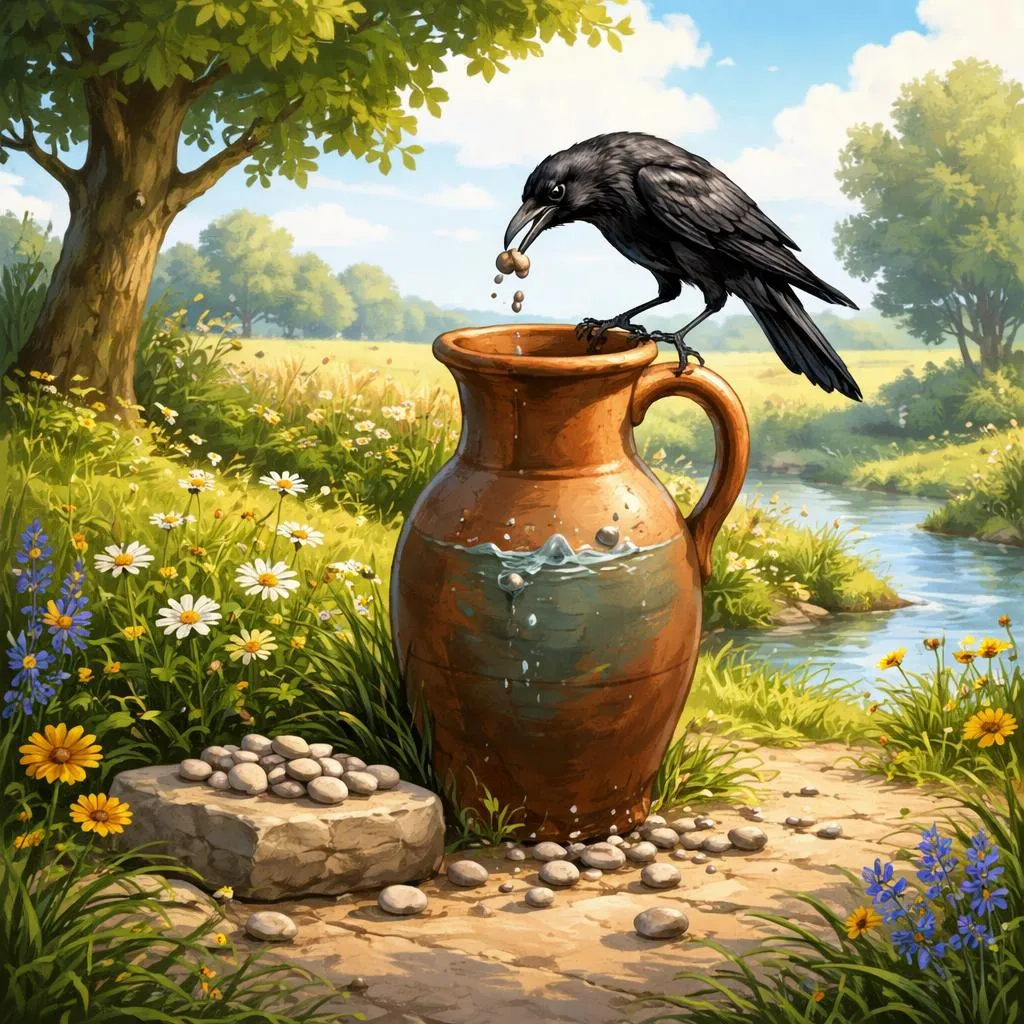

A Crow, half-dead with thirst, came upon a Pitcher which had once been full of water; but when the Crow put its beak into the mouth of the Pitcher he found that only very little water was left in it, and that he could not reach far enough down to get at it. He tried, and he tried, but at last had to give up in despair. Then a thought came to him, and he took a pebble and dropped it into the Pitcher. Then he took another pebble and dropped it into the Pitcher. Then he took another pebble and dropped that into the Pitcher. Then he took another pebble and dropped that into the Pitcher. Then he took another pebble and dropped that into the Pitcher. Then he took another pebble and dropped that into the Pitcher. At last, at last, he saw the water mount up near him, and after casting in a few more pebbles he was able to quench his thirst and save his life.
Little by little does the trick.
Background and Author Introduction
This story is one of Aesop’s Fables, a collection of short tales attributed to Aesop, a storyteller believed to have lived in ancient Greece around the 6th century BCE. Aesop’s Fables have been passed down through generations and are famous for teaching moral lessons through simple yet profound stories involving animals and everyday situations. The story of "The Crow and the Pitcher" is a classic example that illustrates ingenuity and perseverance.
Detailed Interpretation and Significance
At its core, this story highlights the power of intelligence and persistence in overcoming difficulties. The crow, faced with a life-threatening problem—thirst and lack of accessible water—does not give up despite initial failure. Instead, it uses its wit to solve the problem by dropping pebbles into the pitcher to raise the water level.
This tale teaches that challenges can often be solved not by brute force but by clever thinking and steady effort. The crow’s actions symbolize how patience and creativity can lead to success, even in seemingly impossible situations.
Lessons and Insights for Students and Children
-
Problem-Solving Skills: The crow’s approach encourages students to think critically and creatively when faced with difficulties. Instead of giving up, they should analyze the problem and try different methods to find a solution.
-
Perseverance: The story emphasizes the importance of persistence. The crow does not quit after the first few attempts but keeps trying until it achieves its goal. This is a valuable lesson for students, reminding them that success often requires sustained effort.
-
Patience and Gradual Progress: The phrase "Little by little does the trick" teaches that progress may be slow but steady efforts accumulate to produce results. This is especially relevant for learning new skills or studying challenging subjects.
-
Adaptability: The crow adapts to the situation by using available resources (pebbles) to solve the problem. This teaches children to be flexible and resourceful in different circumstances.
Applications in Daily Life, Learning, and Social Situations
-
In Learning: Students can apply the lesson by breaking down complex tasks into smaller, manageable steps and working on them patiently. For example, mastering a difficult math concept or learning a new language requires consistent practice over time.
-
In Social Interactions: When facing conflicts or misunderstandings, children can learn to think creatively about solutions and not give up on resolving issues. Patience and persistence can help maintain friendships and build trust.
-
In Personal Growth: The story inspires cultivating a mindset of resilience. When encountering setbacks, instead of feeling defeated, students can remember the crow’s example and try alternative approaches.
How to Cultivate and Practice the Positive Spirit and Behavior from the Story
-
Encourage Curiosity and Experimentation: Teachers and parents can motivate children to ask questions and try different ways to solve problems rather than relying on immediate answers.
-
Praise Effort, Not Just Results: Reinforce the idea that trying hard and not giving up is as important as success itself. This helps build a growth mindset.
-
Model Problem-Solving Behavior: Adults can share their own experiences of overcoming challenges through persistence and creativity, making the lesson relatable.
-
Create Opportunities for Small Successes: Provide tasks that require incremental progress so children experience the satisfaction of “little by little” achievements.
Conclusion
"The Crow and the Pitcher" is more than just a simple fable; it is a timeless lesson in ingenuity, patience, and determination. By internalizing these values, students and children can develop essential life skills that will serve them well in academics, social relationships, and personal challenges. This story encourages young learners to face obstacles with a calm mind, think resourcefully, and persist until they reach their goals—proving that even the smallest steps can lead to great success.
