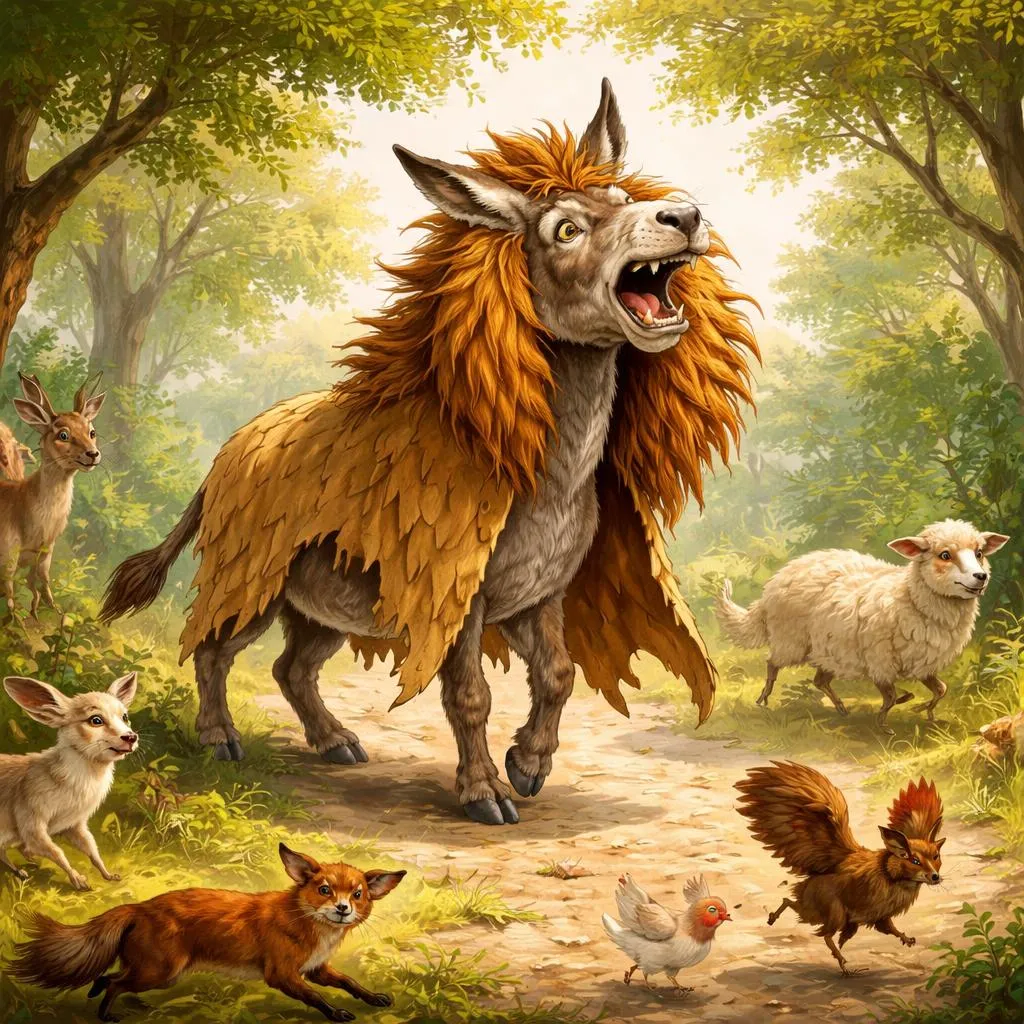

A donkey once found a Lion’s skin which the hunters had left out in the sun to dry. He put it on and went towards his native village. All fled at his approach, both men and animals, and he was a proud Donkey that day. In his delight he lifted up his voice and brayed, but then every one knew him, and his owner came up and gave him a sound cudgelling for the fright he had caused. And shortly afterwards a Fox came up to him and said: “Ah, I knew you by your voice.”
Fine clothes may disguise, but silly words will disclose a fool.
Background and Author Introduction
This story is a classic fable attributed to Aesop, a storyteller believed to have lived in ancient Greece around 620–564 BCE. Aesop’s fables are short tales that use animals with human traits to teach moral lessons. They have been passed down through generations and remain popular worldwide because of their simple yet profound messages. This particular fable, often called "The Donkey in the Lion's Skin," is one of many that highlight the importance of wisdom and self-awareness.
Detailed Interpretation and Meaning
At its core, this story teaches that outward appearances can be deceiving, but true nature is revealed through actions and words. The donkey, by wearing the lion’s skin, tries to appear powerful and fearsome. Initially, this disguise works because others judge him by his appearance. However, when the donkey brays—a sound that reveals his true identity—everyone realizes he is just a donkey, not a lion. The fox’s comment, “I knew you by your voice,” emphasizes that no matter how much one tries to pretend, their true self will eventually show.
The moral, “Fine clothes may disguise, but silly words will disclose a fool,” warns against pretending to be something one is not, especially when lacking the qualities that the disguise suggests. It also highlights the importance of authenticity and the consequences of foolish behavior.
Lessons and Insights for Students
-
Authenticity Matters: The story encourages students to be true to themselves rather than trying to impress others by pretending to be someone they are not. Authenticity builds trust and respect, while pretending can lead to embarrassment or loss of credibility.
-
Actions Speak Louder Than Appearances: Just like the donkey’s braying revealed his true identity, students learn that their actions and words reveal their character more than their looks or possessions.
-
The Danger of Pretending: Trying to appear more powerful or knowledgeable than one really is can backfire. It’s better to develop real skills and qualities than to rely on superficial appearances.
-
Self-awareness and Humility: Recognizing one’s strengths and weaknesses is important. The donkey’s pride in wearing the lion’s skin shows a lack of self-awareness, leading to his downfall.
Application in Daily Life
-
In School: Students can apply this lesson by focusing on genuine learning rather than trying to impress teachers or classmates with false claims. Being honest about what they know and don’t know encourages growth and helps build meaningful relationships.
-
In Social Settings: The fable reminds young people that true friendship and respect come from being genuine. Pretending to be someone else to fit in or gain popularity is often seen through and can damage relationships.
-
In Personal Development: This story motivates students to develop their own talents and character rather than relying on external appearances or status symbols. Building confidence through real achievements is more rewarding and sustainable.
Cultivating Positive Traits from the Story
- Honesty: Encourage students to speak and act truthfully, even when it’s difficult.
- Confidence in One’s Identity: Help students appreciate their unique qualities instead of comparing themselves to others.
- Critical Thinking: Teach students to look beyond appearances and question what they see or hear.
- Respect for Others: Understanding that everyone has their own strengths and weaknesses fosters empathy and kindness.
Reflection and Appreciation
After reading this fable, students might reflect on times when they or others have tried to appear different from who they really are. They can discuss how such behavior affected relationships or outcomes. This reflection helps deepen their understanding of the moral and how it applies to their own lives.
Conclusion
“The Donkey in the Lion’s Skin” is a timeless story that teaches valuable lessons about authenticity, humility, and the importance of inner qualities over outward appearances. By understanding and applying these lessons, students can grow into honest, confident, and thoughtful individuals who value true character above all else.
